
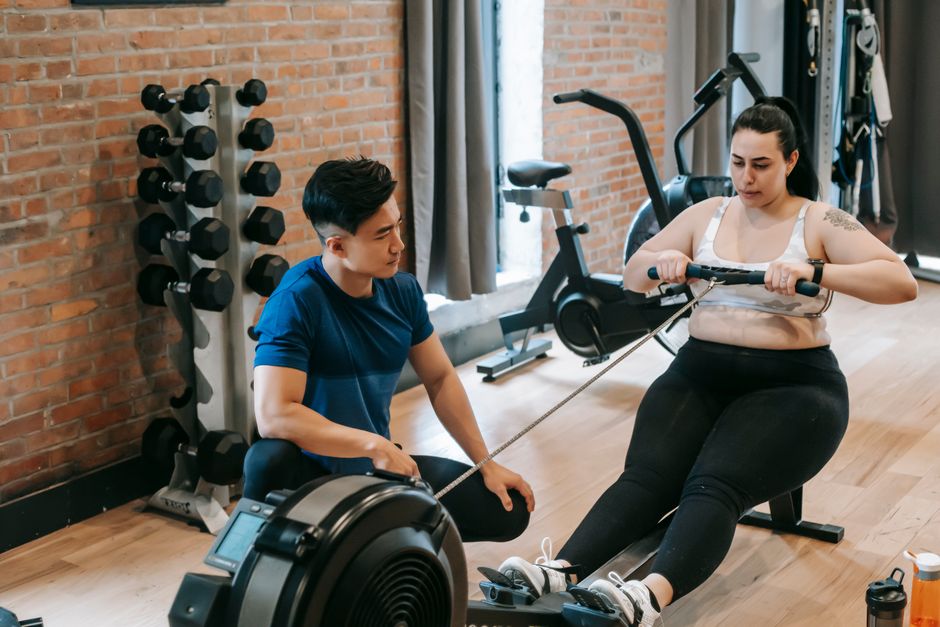
Yes, rowing machines burn fat, including belly fat. Rowing is a full-body, moderate-to-vigorous aerobic exercise, and aerobic exercise reduces total body fat when it is paired with a calorie deficit. It cannot target belly fat specifically. No exercise can. Fat loss happens across the whole body, and where you lose it first is largely determined by genetics and hormones, not by which machine you use.
Do Rowing Machines Burn Fat Including Belly Fat?
Rowing machines burn fat by raising your heart rate and keeping large muscle groups working for an extended period. The legs drive the stroke, the core stabilizes the torso, and the back and arms finish the pull. That adds up to a high energy cost per minute compared with many other cardio machines.
Whether that translates into fat loss depends on a simple energy balance. Your body stores excess energy as fat. When you consistently burn more energy than you take in, those stores shrink. Rowing contributes to the “burn more” side of that equation. It does not override the “take in” side.
Belly fat is where the honest part of this answer matters. You cannot spot-reduce fat from your abdomen by exercising your abdomen or by choosing a particular cardio machine. The American College of Sports Medicine and other exercise bodies have long held that localized fat reduction through targeted exercise is not supported by evidence. Rowing recruits your core muscles heavily, but that strengthens them. It does not preferentially strip fat from your midsection.
What rowing does do is help lower overall body fat, and belly fat is part of overall body fat. That is the accurate version of the claim, and it is still a meaningful one.
Why Belly Fat Is Worth Taking Seriously
Not all fat behaves the same way. Subcutaneous fat sits just under the skin and is the fat you can pinch. Visceral fat wraps around the internal organs deeper in the abdomen. Visceral fat is the type more closely linked to health problems, including insulin resistance, elevated blood pressure, and cardiovascular disease.
This distinction matters because visceral fat tends to respond to aerobic exercise and overall fat loss. Research has found that regular aerobic activity is associated with reductions in visceral fat, sometimes even without large changes on the scale. The evidence here is reasonably consistent, though the size of the effect varies between studies and individuals.
So when someone asks whether rowing burns belly fat, the useful reframing is this: rowing is a legitimate way to reduce total and visceral fat over time. It just does so as part of a whole-body process, not through a targeted effect on your waistline.
How Many Calories Does Rowing Actually Burn?
Rowing burns a substantial number of calories per session, but the exact figure depends on your body weight, intensity, and technique. A heavier person burns more than a lighter person doing the same workout. Harder effort burns more than an easy paddle.
Rather than quote a single number that will be wrong for most readers, it helps to understand the variables:
- Body weight: Energy cost scales with the mass you are moving.
- Intensity: A vigorous interval session costs more per minute than steady-state rowing.
- Duration: Total time on the machine drives total energy burned.
- Efficiency: Better technique means more work per stroke, not less.
Many rowing machines and fitness trackers display calorie estimates. Treat these as rough approximations. They are based on formulas and can be off by a meaningful margin. They are useful for tracking trends over time, not for precise accounting.
The practical point is that rowing is a genuinely demanding full-body exercise. It earns its place among effective cardio options. But a hard 30-minute row does not cancel out a large calorie surplus, and no cardio machine does.





Does Rowing Beat Other Cardio for Fat Loss?
Rowing is not superior to other forms of aerobic exercise for fat loss. The best cardio for fat loss is the one you will actually do consistently. That is not a dodge. It reflects what the evidence shows: total energy expenditure and adherence matter more than the specific modality.
Where rowing has real advantages is in what it demands of the body. It is low-impact, so it is gentler on the knees and hips than running. It works both the upper and lower body in one movement. And it can be scaled from easy to very hard by adjusting pace and resistance.
Its main drawback is technique. Poor rowing form — rounding the back, pulling mostly with the arms, or rushing the recovery — reduces efficiency and can strain the lower back. A few sessions with a qualified instructor or a careful review of proper sequencing (legs, then back, then arms on the drive) pays off. This is common coaching advice rather than something established by clinical trials, but the biomechanics are well understood.
What Actually Determines Whether You Lose Belly Fat?
Fat loss, including belly fat loss, is driven primarily by a sustained calorie deficit. Exercise increases the calories you burn. What you eat and drink determines the calories you take in. Both sides matter, and for most people the intake side has the larger effect.
Several other factors influence where and how quickly you lose fat:
- Genetics: Your body’s pattern of fat storage and fat loss is partly inherited.
- Hormones: Conditions affecting insulin, cortisol, and sex hormones can shift fat distribution.
- Sleep: Short sleep is associated with changes in appetite hormones and is linked to weight gain over time.
- Stress: Chronic stress can influence eating behavior and fat storage patterns.
- Age: Fat distribution tends to shift with age, often toward the abdomen.
Strength training deserves a mention. Building muscle raises resting energy expenditure modestly and helps preserve lean mass during weight loss. Rowing itself provides some resistance, but dedicated strength work complements it well. The combination of aerobic exercise and resistance training is generally recommended for adults by major health organizations.
How Should You Use a Rowing Machine to Support Fat Loss?
Consistency and progressive effort matter more than any single workout design. General physical activity guidelines for adults call for substantial amounts of moderate-intensity aerobic activity per week, or a smaller amount of vigorous activity, plus muscle-strengthening work on multiple days. Rowing can supply part or all of the aerobic portion.
Two broad approaches are common:
- Steady-state rowing: A sustained pace you can hold while still able to speak in short sentences. Good for building an aerobic base.
- Interval rowing: Alternating harder efforts with easier recovery. Efficient for fitting more work into less time.
Both can support fat loss when they contribute to an overall calorie deficit. Neither is magic. The interval approach burns more per minute but is more demanding and harder to recover from. Steady-state is easier to sustain several times a week.
If you are new to rowing, start with shorter sessions and focus on form before intensity. If you have back problems, heart conditions, or other health concerns, talk to a clinician before starting a new exercise program. That is standard guidance, not a formality.
One clarification worth making: fat loss is rarely linear. The scale can stall for weeks while body composition is still changing. Waist measurements and how clothes fit often tell a truer story than daily weigh-ins. Judge progress over months, not days.
What Rowing Cannot Do
Rowing cannot flatten your stomach on its own. It cannot out-train a poor diet. It cannot choose which fat your body releases first. And it cannot replace the role of overall nutrition in fat loss.
What it can do is provide an effective, low-impact, full-body form of aerobic exercise that contributes to the calorie deficit needed for fat loss, including belly fat. That is a real benefit, honestly stated. It is also the whole of the benefit, without the exaggeration that often surrounds fitness equipment marketing.
Frequently Asked Questions
Does rowing burn belly fat specifically?
No exercise can target belly fat specifically, including rowing. Rowing helps reduce total body fat, and belly fat is reduced as part of that whole-body process.
How long does it take to see fat loss from rowing?
There is no fixed timeline, because fat loss depends on your overall calorie balance, not just exercise. Some people notice changes in weeks, others over months, and progress is rarely linear.
Is rowing better than running for losing belly fat?
Neither is clearly better for belly fat; total energy balance and consistency matter more than the machine. Rowing is lower impact on the joints, which may make it easier to do regularly for some people.
Can I lose belly fat with rowing alone?
Rowing alone is unlikely to produce fat loss without attention to diet, since intake drives much of the calorie balance. Rowing supports fat loss best as part of a plan that includes nutrition and, ideally, strength training.
