
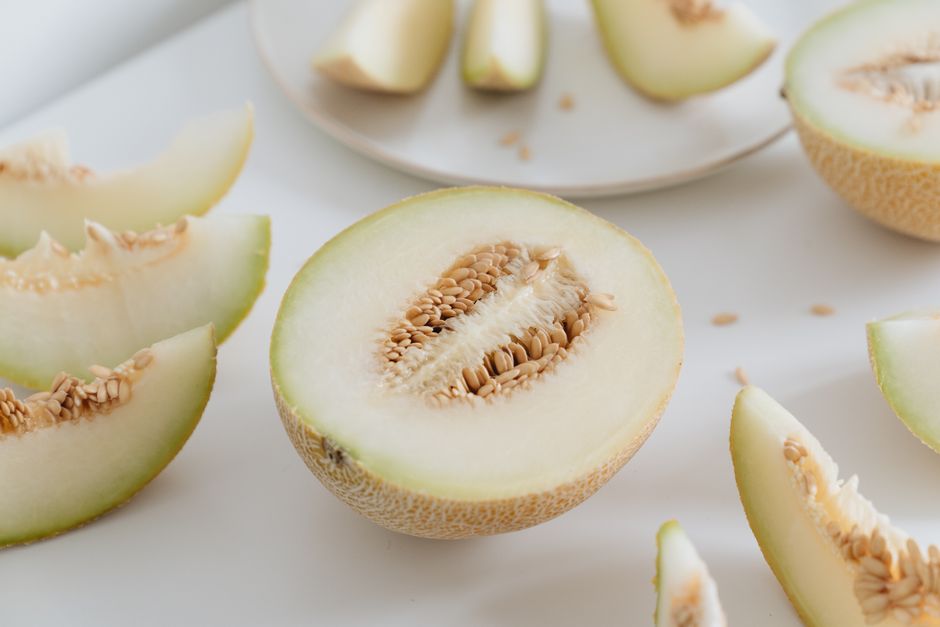
Honeydew melon is safe to eat during pregnancy for most people, and it can be a useful source of water, vitamin C, and folate. The main risks are not the fruit itself but contamination — from the outside rind, from cutting surfaces, and from melon that has been left out at room temperature too long. Wash it, cut it fresh, and refrigerate what you do not eat right away.
Pregnancy food guidance tends to focus on the scary headlines — raw fish, soft cheese, deli meat. Fruit rarely makes the list. That is mostly fair, but melons have been linked to a handful of foodborne illness outbreaks over the years, which is why they deserve a little more attention than an apple does. Honeydew is no exception.
Is Honeydew Safe And Healthy During Pregnancy?
Yes, for most pregnant women, honeydew is both safe and healthy. It is a low-calorie fruit with high water content and useful amounts of vitamin C and folate. No clinical guideline advises pregnant women to avoid honeydew.
The safety question is really about handling, not the fruit. Melons grow on the ground, their rinds can carry bacteria from soil and water, and once you cut into one, any contamination on the outside can be transferred to the flesh by the knife. That is the mechanism behind most melon-related foodborne illness. It applies to cantaloupe, watermelon, and honeydew alike.
On the health side, honeydew fits well into a pregnancy diet for a few practical reasons. It is hydrating. It is gentle on the stomach for many women dealing with nausea. And it provides nutrients that matter during pregnancy, without much calorie load.
What Nutrients Does Honeydew Provide During Pregnancy?
Honeydew is mostly water — roughly 90 percent by weight, according to USDA data. That matters more during pregnancy than it might otherwise, because blood volume increases substantially and fluid needs go up.
Per 100 grams of raw honeydew melon, USDA data lists approximately:
- About 36 calories
- Roughly 8–9 grams of carbohydrate, mostly simple sugars
- Around 18 milligrams of vitamin C
- Small amounts of potassium and folate
Vitamin C supports immune function and helps the body absorb iron from plant sources. Folate is important in early pregnancy for neural tube development, though fruit alone will not meet pregnancy folate needs — prenatal supplements and fortified foods are the standard way to hit the recommended intake.
Honeydew is not a standout source of any single nutrient. It is a decent, pleasant, hydrating fruit. Treating it as a “pregnancy superfood” would be overstating what the data shows. Treating it as a sensible everyday fruit is accurate.
What Are the Real Risks of Eating Honeydew While Pregnant?
The main risk is foodborne illness from contaminated melon. Pregnancy changes immune function in ways that can make infections more serious, and listeria in particular is a concern because it can cross the placenta. Melons have been implicated in outbreaks of Salmonella and Listeria in the past, usually traced to contaminated growing water, unsanitary packing, or poor handling after cutting.
Whole, uncut honeydew is low risk because the rind protects the flesh. The risk rises sharply once the melon is cut and left at room temperature. Bacteria on the rind get pushed into the flesh by the knife, and warm conditions let them multiply. Pre-cut melon from a grocery store or salad bar carries more risk than a whole melon you cut yourself, because you cannot verify how long it sat out or how clean the cutting environment was.
A secondary consideration is sugar. Honeydew is sweet, and its carbohydrates are mostly simple sugars. For most pregnant women this is not a problem. For women with gestational diabetes or pre-existing diabetes, portion size matters, and it is worth discussing fruit intake with a clinician or dietitian rather than guessing.



How Should You Wash and Prepare Honeydew Safely?
Wash the outside of the melon before you cut it. This is the step most people skip, and it is the one that matters most. Run the whole melon under cool running water and scrub the rind gently with a clean produce brush. You are not washing the part you eat — you are reducing what the knife will drag through the flesh.
After washing, dry the melon with a clean paper towel. Use a clean knife and a clean cutting board. Cut away the rind and discard it. Cut only what you plan to eat, and refrigerate the rest promptly in a sealed container.
The USDA recommends refrigerating cut melon within two hours at room temperature, or within one hour if the room is above 90°F. Cut melon kept in the refrigerator should be eaten within a few days. If it smells off, looks slimy, or has been sitting out longer than that, throw it out rather than risk it.
Skip pre-cut melon from salad bars and open display cases if you can. If you do buy pre-cut honeydew, choose packages that are refrigerated, and eat it soon after purchase.
Does Honeydew Help With Pregnancy Symptoms Like Nausea or Constipation?
Honeydew can help with hydration and may be easier to tolerate than heavier foods during bouts of nausea. Its high water content and mild flavor make it a reasonable choice when appetite is low. This is practical experience more than a rigorously tested intervention — no clinical trial has compared honeydew to other fruits for pregnancy nausea.
For constipation, honeydew contributes fluid and a modest amount of fiber, but it is not a high-fiber fruit. It will not do much on its own. Fiber from whole grains, legumes, vegetables, and other fruits, along with adequate fluid intake, is the more established approach.
One thing worth knowing: cold, juicy fruit is often better tolerated than warm or heavy foods during the first trimester. That is not a medical recommendation, just a pattern many women notice. If nausea is severe, persistent, or interfering with your ability to keep fluids down, that warrants a call to a clinician — it can be a sign of hyperemesis gravidarum, which needs medical management.
How Does Honeydew Compare to Other Melons During Pregnancy?
Honeydew, cantaloupe, and watermelon are broadly similar from a safety standpoint. All three grow on the ground, all three have rinds that can carry bacteria, and all three carry the same handling rules: wash, cut clean, refrigerate promptly.
Nutritionally they differ modestly. Cantaloupe is notably higher in vitamin A and beta-carotene. Watermelon is higher in lycopene. Honeydew is higher in vitamin C than watermelon and lower in vitamin A than cantaloupe. None of these differences are large enough to make one melon a “better” pregnancy choice than another — variety across fruits is more useful than optimizing for a single one.
The one practical difference is that cantaloupe has been linked to more foodborne illness outbreaks than honeydew, largely because its netted rind has more surface area for bacteria to cling to. That is not a reason to avoid cantaloupe, but it is a reason to scrub it thoroughly if you eat it.
When Should You Avoid Honeydew During Pregnancy?
Avoid honeydew if it has been sitting out at room temperature for more than two hours, if it came from an open salad bar, or if you cannot verify how it was handled. Avoid it if it looks or smells spoiled. These are the same rules that apply to anyone, but the consequences of foodborne illness during pregnancy are more serious, so the margin for error is smaller.
If you have gestational diabetes, talk to your care team about how fruit fits into your overall carbohydrate plan. Honeydew is not off-limits, but portion awareness matters.
If you have a known allergy to melons — rare but real, and sometimes linked to oral allergy syndrome in people allergic to ragweed or other pollens — avoid it as you normally would.
Frequently Asked Questions
Can I eat honeydew every day while pregnant?
Yes, for most pregnant women, a serving of honeydew daily is fine as part of a varied diet. If you have gestational diabetes, check with your care team about portion size.
Is pre-cut honeydew safe during pregnancy?
It carries more risk than a whole melon you cut yourself, because you cannot verify how long it sat out or how clean the cutting environment was. If you buy it, choose refrigerated packages and eat it soon.
Does honeydew cause miscarriage?
No. There is no evidence that honeydew causes miscarriage, and no clinical guidance advises avoiding it. The concern with any melon is foodborne contamination, not the fruit itself.
Is it safe to eat honeydew with the rind on?
The rind is not typically eaten and is not recommended. Wash it before cutting so bacteria on the outside do not transfer to the flesh, then discard it.
