
Cytoplasm is both prokaryotic and eukaryotic. Every cell on Earth has cytoplasm, but its structure differs depending on cell type. In prokaryotes, cytoplasm is the gel-like substance that fills the cell and holds the cell’s DNA, ribosomes, and other molecules. In eukaryotes, cytoplasm is everything inside the cell membrane except the nucleus. So the answer depends on which cell you are asking about.
The confusion usually comes from how textbooks describe these two cell types. Both have cytoplasm. What changes is what sits inside it and how it is organized.
What Is Cytoplasm Made Of?
Cytoplasm is mostly water. It also contains proteins, salts, sugars, and small molecules dissolved or suspended in that water. The watery part alone is called cytosol. Cytoplasm is the broader term that includes the cytosol plus everything floating in it.
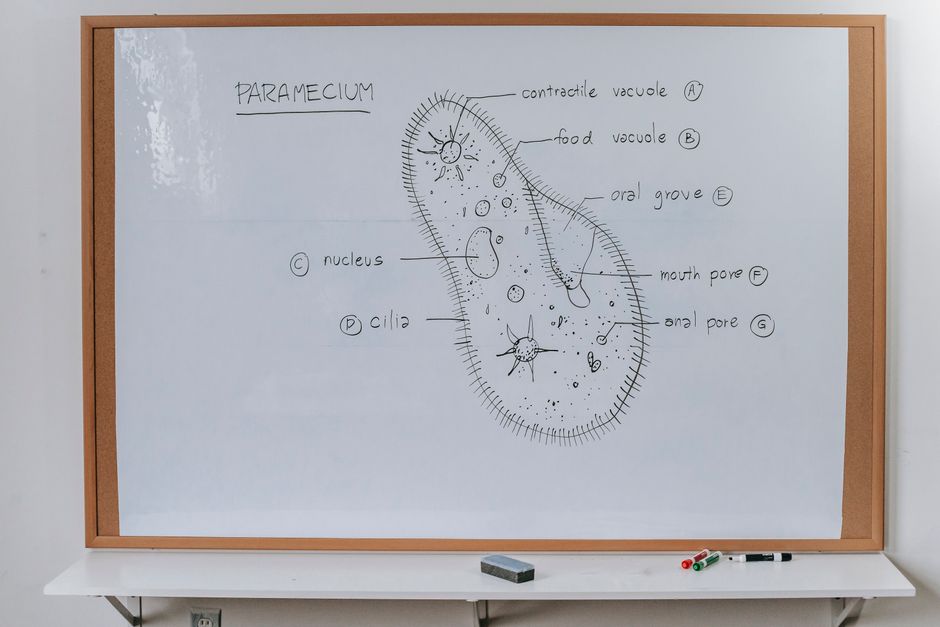
In eukaryotic cells, cytoplasm also holds the organelles. That includes mitochondria, the endoplasmic reticulum, the Golgi apparatus, and in plant cells, chloroplasts. These structures sit in the cytoplasm but are not part of it in the strictest sense. They are separate compartments suspended within it.
One detail that trips people up: the nucleus is not part of the cytoplasm in eukaryotic cells. The cytoplasm is defined as everything inside the cell membrane except the nucleus. That boundary matters because it separates where DNA is stored from where most cellular work happens.
How Does Cytoplasm Work in Prokaryotic Cells?
Prokaryotic cells are simpler. Bacteria and archaea are prokaryotes. They have no nucleus and no membrane-bound organelles. Their DNA sits directly in the cytoplasm, usually as a single circular chromosome in a region called the nucleoid.
Because there are no internal compartments, nearly everything a prokaryotic cell does happens in the cytoplasm. Protein synthesis, metabolism, and the chemical reactions that keep the cell alive all take place there. Ribosomes, the structures that build proteins, are scattered throughout the cytoplasm.
The cytoplasm of a prokaryote is also where the cell wall and cell membrane interact with the inside of the cell. It acts as the medium that holds all the cell’s machinery in place.
How Does Cytoplasm Work in Eukaryotic Cells?
Eukaryotic cells are more complex. Animals, plants, fungi, and protists are eukaryotes. Their DNA is enclosed in a nucleus, and their cytoplasm is packed with membrane-bound organelles.
In eukaryotes, the cytoplasm is a busy hub. Many metabolic reactions occur in the cytosol. Organelles carry out specialized tasks within the cytoplasm but stay separate from it. The cytoplasm also supports the cell’s shape and allows materials to move around inside the cell.
The cytoskeleton, a network of protein fibers, runs through the cytoplasm. It helps the cell maintain its shape and move substances from one place to another. This structure is present in both prokaryotes and eukaryotes, though it is more elaborate in eukaryotes.





Is Cytoplasm Prokaryotic Eukaryotic Or Both?
Cytoplasm is both. The term describes a location and a substance, not a cell type. Any cell with a cell membrane has cytoplasm inside it. That includes bacteria, plant cells, and human cells.
What differs is the composition. Prokaryotic cytoplasm is relatively uniform because it lacks membrane-bound organelles. Eukaryotic cytoplasm is more complex because it contains organelles and a cytoskeleton that organizes the space.
| Feature | Prokaryotic Cytoplasm | Eukaryotic Cytoplasm |
|---|---|---|
| Nucleus | Absent | Present (not part of cytoplasm) |
| Membrane-bound organelles | Absent | Present |
| DNA location | In the cytoplasm (nucleoid region) | In the nucleus |
| Ribosomes | Present, free in cytoplasm | Present, free and attached to ER |
| Cytoskeleton | Present, simpler | Present, more complex |
Why Do People Get Confused About Cytoplasm?
The confusion usually comes from mixing up cytoplasm with the nucleus and organelles. Because prokaryotes have no nucleus, their DNA sits in the cytoplasm. That makes it seem like cytoplasm is a prokaryotic feature. But eukaryotic cells also have cytoplasm. It just does not contain the DNA.
Another source of confusion is the word “cytoplasm” itself. In everyday science writing, it is sometimes used loosely to mean “everything inside the cell.” In stricter terms, eukaryotic cytoplasm excludes the nucleus. Both uses exist, which can make descriptions inconsistent.
Textbook diagrams often show a eukaryotic cell with a labeled nucleus and a shaded area around it labeled “cytoplasm.” That shading stops at the nuclear membrane. In a prokaryotic diagram, the shading fills almost the whole cell. The same word is used for both, but what it covers looks different.
What Does Cytoplasm Do in the Cell?
Cytoplasm is not just filler. It is the medium where many of the cell’s chemical reactions take place. In both prokaryotes and eukaryotes, the cytoplasm supports metabolism, protein building, and the movement of molecules.
In eukaryotic cells, the cytoplasm also helps transport materials. Organelles and vesicles move through the cytosol along the cytoskeleton. This movement is how the cell delivers proteins and other molecules to where they are needed.
The cytoplasm also helps maintain the cell’s internal environment. It holds ions and molecules at the right concentrations for enzymes to work. Without this environment, many of the cell’s reactions would not happen at a useful rate.
In prokaryotes, the cytoplasm is where the cell replicates its DNA and divides. Because there is no nucleus, these processes happen directly in the cytoplasm.
Does the Cytoplasm Differ Between Plant and Animal Cells?
Yes. Plant cells and animal cells are both eukaryotic, so their cytoplasm has the same basic features: it surrounds the nucleus, holds organelles, and supports metabolism. But plant cell cytoplasm also contains chloroplasts, which animal cells do not have.
Plant cells have a large central vacuole that takes up much of the cell’s volume. That vacuole pushes the cytoplasm toward the edges of the cell. In animal cells, the cytoplasm fills more of the cell’s interior because there is no large central vacuole.
These differences are structural. They do not change the basic definition of cytoplasm.
How Is Cytoplasm Studied?
Scientists study cytoplasm in several ways. Microscopy lets them see the general structure of cells and where organelles sit. Cell fractionation separates cytoplasm from organelles so researchers can study each part.
More recent methods let scientists track molecules moving through the cytoplasm in living cells. These techniques have shown that the cytoplasm is not a simple uniform fluid. It has structure and organization that affect how molecules move and interact.
Research on the physical properties of cytoplasm is still developing. Some studies suggest the cytoplasm behaves differently in different parts of a cell, but the details are not fully settled. The basic picture, that cytoplasm is a complex and organized environment, is well established.
Key Takeaways
- Cytoplasm is present in both prokaryotic and eukaryotic cells.
- In prokaryotes, cytoplasm holds the DNA because there is no nucleus.
- In eukaryotes, cytoplasm surrounds the nucleus but does not include it.
- The main difference is that eukaryotic cytoplasm contains membrane-bound organelles.
- Cytoplasm is the site of many of the cell’s chemical reactions in both cell types.
Frequently Asked Questions
Is cytoplasm prokaryotic or eukaryotic?
Cytoplasm is both. Every cell with a cell membrane has cytoplasm, whether it is a prokaryote or a eukaryote.
Do prokaryotic cells have cytoplasm?
Yes. Prokaryotic cells have cytoplasm, and it holds their DNA, ribosomes, and other molecules because they lack a nucleus.
Is the nucleus part of the cytoplasm?
No. In eukaryotic cells, the cytoplasm is everything inside the cell membrane except the nucleus.
What is the main difference between prokaryotic and eukaryotic cytoplasm?
Eukaryotic cytoplasm contains membrane-bound organelles such as mitochondria and the endoplasmic reticulum, while prokaryotic cytoplasm does not. Both contain ribosomes and a cytoskeleton.
