
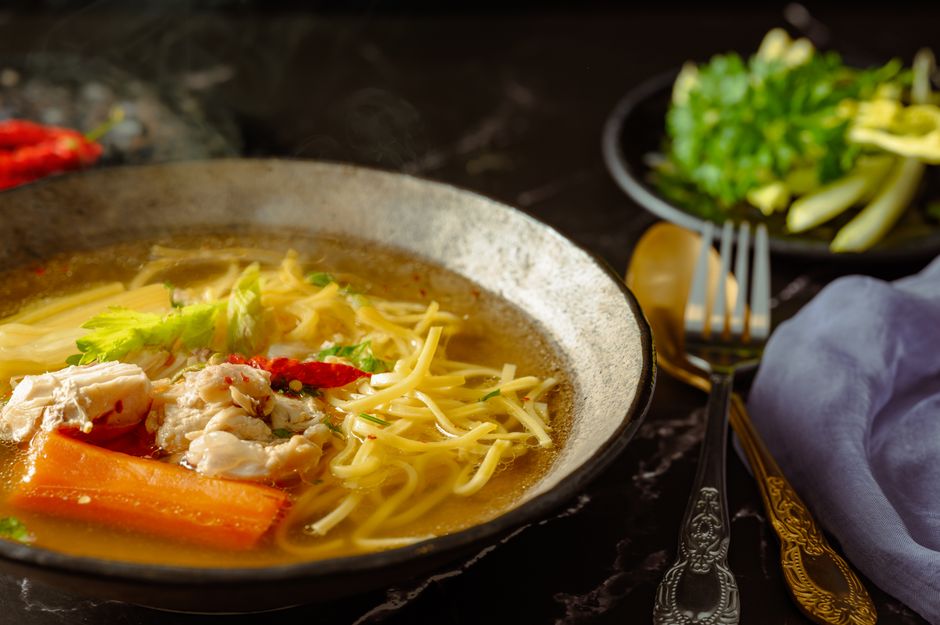
Chicken noodles are a popular comfort food, but whether they are healthy depends almost entirely on how they are made. A homemade version with lean chicken, vegetables, and a light broth can be a balanced meal. A packaged instant version with high sodium and refined noodles is a different story entirely. The short answer: chicken noodles can be healthy, but the version you choose matters more than the dish itself.
What Is Actually in Chicken Noodles?
Chicken noodles typically contain three main components: noodles, chicken, and broth or sauce. Each part brings different nutritional value to the table.
The noodles are usually made from refined wheat flour. Refined flour has been stripped of the bran and germ, which removes most of the fiber and several B vitamins. Some noodles are made with eggs, which adds protein and fat. Rice noodles and whole wheat noodles are common alternatives with different nutritional profiles.
The chicken provides protein, which helps with satiety and muscle maintenance. White meat chicken breast is leaner than dark meat or chicken with skin. The broth can range from a light, clear soup to a creamy, high-fat sauce. This variation is why “chicken noodles” is not one single food—it is a category with a wide nutritional range.
Vegetables, when included, add fiber, vitamins, and minerals. Many restaurant and instant versions include very few vegetables, which changes the overall nutritional picture significantly.
Is Chicken Noodles Healthy for Daily Eating?
Eating chicken noodles every day is not inherently harmful, but it depends on the specific recipe and portion size. A bowl made with whole grain noodles, plenty of vegetables, lean chicken, and low-sodium broth can be a nutritious daily meal.
Most people are not eating that version. Typical restaurant portions of chicken noodles can contain 800 to 1,200 calories or more, especially when served in creamy sauces or large bowls. Instant noodle packets are particularly concerning because they are high in sodium and often contain preservatives.
One key issue is sodium. Many chicken noodle products, especially instant ones, contain a significant portion of the daily recommended sodium limit in a single serving. The American Heart Association recommends limiting sodium to about 2,300 milligrams per day, with an ideal limit of 1,500 milligrams for most adults. A single serving of instant noodles can contain 1,000 to 1,800 milligrams of sodium.
Protein content is another consideration. A serving of chicken noodles typically provides 15 to 30 grams of protein, depending on the amount of chicken. That is a reasonable amount for a meal, but it is not exceptionally high.
Instant Chicken Noodles vs. Homemade: Key Differences
Instant chicken noodles are the most widely consumed version. They are cheap, quick, and convenient. They also tend to be the least healthy option.
Instant noodles are typically fried during manufacturing. This frying process adds significant fat, often saturated fat. The seasoning packets are loaded with sodium, monosodium glutamate (MSG), and artificial flavors. Some research has linked frequent instant noodle consumption with metabolic syndrome and poor diet quality, though the studies are observational and cannot prove causation.
Homemade chicken noodles give you full control over ingredients. You can choose whole grain noodles, use skinless chicken breast, add a variety of vegetables, and control the salt. The difference in nutritional quality between these two versions is substantial.
A practical middle ground exists. Some brands offer baked or air-dried noodles instead of fried ones. Low-sodium broth options are widely available. Adding fresh vegetables and extra chicken to an instant noodle dish improves its nutritional value considerably, even if the base is not perfect.





What About the Noodles Themselves?
The type of noodle changes the health profile more than most people realize. Refined wheat noodles are the standard, but they are not the only option.
Whole wheat noodles contain more fiber than refined noodles. Fiber slows digestion, helps control blood sugar, and supports digestive health. A serving of whole wheat noodles typically provides 6 grams of fiber compared to about 2 grams in refined noodles.
Rice noodles are gluten-free but are often lower in fiber than whole wheat options. They also tend to have a higher glycemic index, meaning they can raise blood sugar more quickly. Shirataki noodles, made from konjac root, are very low in calories and carbohydrates but have a different texture that not everyone enjoys.
Egg noodles fall somewhere in the middle. They contain more protein than plain wheat noodles because of the eggs, but they are still made from refined flour. For people managing blood sugar, portion control matters more than the specific noodle type.
Protein and Satiety: Does Chicken Make It Better?
Adding chicken to noodles improves the meal in several ways. Protein is the most satiating macronutrient, meaning it keeps you feeling full longer than carbohydrates or fat alone.
A typical serving of chicken noodles with 20 grams of protein will keep most people satisfied for several hours. The same noodles without chicken would likely lead to hunger sooner. This matters for weight management because people who feel full are less likely to snack later.
Chicken also provides essential nutrients. It is a good source of niacin, vitamin B6, phosphorus, and selenium. These nutrients support energy metabolism and immune function. The chicken in noodles is generally a positive addition, provided it is not fried or coated in heavy sauces.
How to Make Chicken Noodles Healthier
Small changes can significantly improve the nutritional quality of chicken noodles without sacrificing flavor.
- Use whole grain or legume-based noodles instead of refined wheat noodles
- Choose skinless chicken breast over dark meat or fried chicken
- Add at least one full cup of vegetables per serving—bok choy, carrots, mushrooms, and bell peppers all work well
- Use low-sodium broth and add flavor with garlic, ginger, and chili instead of salt
- Control portion size—a serving is about one cup of cooked noodles, not a heaping bowl
- If using instant noodles, use only half the seasoning packet and add your own fresh ingredients
These changes do not require special cooking skills. They simply shift the balance of the meal toward more fiber, more nutrients, and less sodium and saturated fat.
Are There Any Real Health Risks?
For most people, chicken noodles are not dangerous. The risks come from specific patterns of consumption rather than the dish itself.
Frequent consumption of instant noodles has been associated with higher sodium intake, which can raise blood pressure over time. High blood pressure is a major risk factor for heart disease and stroke. People with existing hypertension or kidney disease should be especially careful with sodium-heavy noodle dishes.
Portion distortion is another concern. Restaurant servings of chicken noodles are often two to three times the recommended serving size. Eating those portions regularly can contribute to excess calorie intake and weight gain.
MSG in instant noodles is safe for most people, but some individuals report sensitivity symptoms like headaches or flushing. The evidence for MSG sensitivity is mixed, and most research finds it affects only a small percentage of people.
Frequently Asked Questions
Are instant chicken noodles bad for you?
Instant chicken noodles are high in sodium and often contain saturated fat from frying. Eating them occasionally is fine, but regular consumption can contribute to high blood pressure and poor diet quality.
Can chicken noodles help with weight loss?
Homemade chicken noodles with lean protein, vegetables, and controlled portions can fit into a weight loss plan. Instant versions with high calories and low nutrients are not helpful for weight loss.
Are chicken noodles high in protein?
A serving with a full portion of chicken provides 15 to 30 grams of protein. The exact amount depends on how much chicken is in the dish, not the noodles themselves.
What is the healthiest type of noodle?
Whole wheat and legume-based noodles offer the most fiber and nutrients. Refined wheat and rice noodles are lower in fiber and can raise blood sugar more quickly.
