
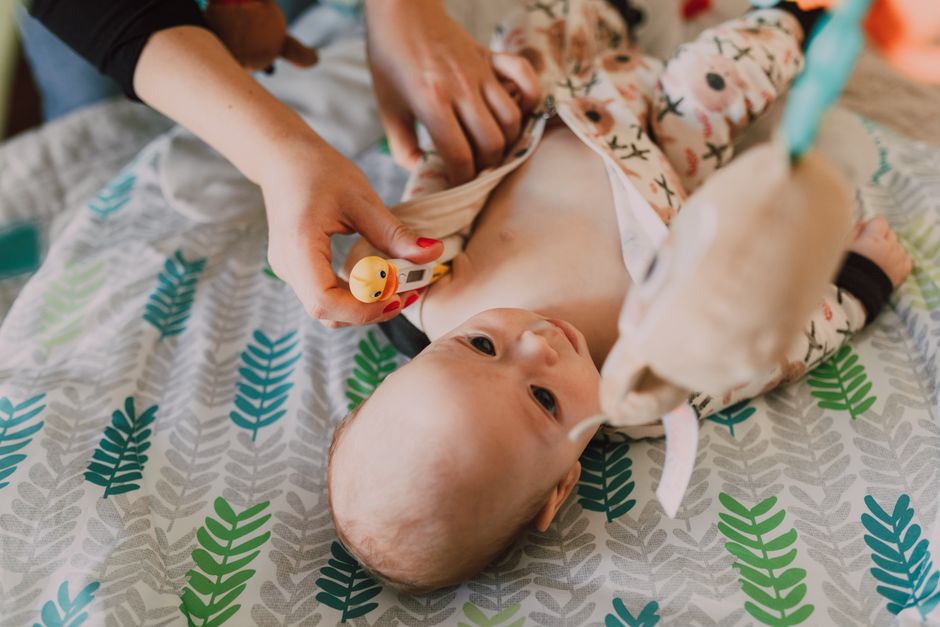
If you’re a parent who has seen CBD oils, gummies, or lotions marketed as calming products, you may have wondered whether they could ever help a fussy baby or a sick child. The short answer is no. CBD is not recommended for babies or children, no regulatory body has approved it for pediatric use, and giving it to an infant carries real and poorly understood risks.
Babies have a developing brain, immature liver enzymes, and far less body weight than adults. Those factors change how any drug or chemical behaves in their system. Because CBD research in infants is essentially nonexistent, there is no safe dose, no established benefit, and no way to predict how a baby will react.
Is CBD Harmful to Babies? What Parents Should Know
CBD is not harmless in infants, and the evidence base for using it in babies is close to zero. That combination — known biological activity plus almost no safety data in this population — is why every major health authority advises against it.
CBD, or cannabidiol, is one of many compounds found in the cannabis plant. It does not produce the “high” associated with THC, the main psychoactive compound in marijuana. But “non-intoxicating” is not the same as “safe for a baby.” CBD interacts with the body’s endocannabinoid system, a network of receptors and signaling molecules involved in brain development, immune function, and how the nervous system matures.
That system is especially active in early life. Interfering with it during a period of rapid brain development is not something researchers can currently assure parents is risk-free. No clinical trials have tested CBD in infants. No pediatric dosing guidelines exist. When there is no data, the responsible position is caution, not experimentation.
What Happens to a Baby’s Body When Exposed to CBD?
A baby’s liver processes drugs differently than an adult’s. The enzyme systems that break down CBD are not fully mature in infants, which means the compound could stay in the body longer and at higher relative levels than it would in an adult taking the same amount.
Weight matters too. A small infant given even a modest amount of CBD receives a much larger dose per kilogram of body weight than an adult would. This is the same reason many medications are dosed by weight in children rather than given as a standard adult amount.
Documented effects of CBD in adults and older children include:
- Sleepiness and fatigue
- Changes in appetite
- Diarrhea or stomach upset
- Liver enzyme elevations, which in some cases have required medical monitoring
- Interactions with other medications that are broken down by the same liver enzymes
In a baby, these effects could be more pronounced or harder to recognize. A sleepy infant may simply seem calm. A baby with appetite changes may not feed well. These are subtle signs that a parent could easily miss or misread.
Can CBD Help a Fussy or Sick Baby?
No. There is no clinical evidence that CBD helps with infant fussiness, colic, teething, sleep problems, or any other condition in babies. Claims that it does are marketing, not medicine.
This is an important distinction. CBD has been studied in specific contexts, most notably for certain severe forms of childhood epilepsy under close medical supervision. That research involved children, not infants, and it used a prescription formulation given by neurologists. It does not extend to over-the-counter CBD products, and it does not suggest that CBD is appropriate for general pediatric use.
Some parents turn to CBD because they are exhausted and looking for anything that might help a crying baby. That instinct is understandable. But a baby’s crying is communication — it can signal hunger, pain, reflux, an ear infection, or something else that needs a doctor’s attention. Masking symptoms with an unregulated product could delay a real diagnosis.





What About CBD in Breast Milk?
CBD can pass into breast milk, and the amount a baby would receive is not well understood. This is one of the clearest areas of concern for nursing mothers.
Research on CBD in human milk is limited but growing. Studies have detected cannabinoids in breast milk after maternal use, and because infants have immature liver function, the compound may accumulate. The Academy of Breastfeeding Medicine and other clinical bodies have advised caution, and some recommend avoiding cannabis products while breastfeeding. Established guidance on this topic continues to evolve, so it is worth discussing with a doctor or lactation consultant rather than relying on general advice.
The practical point: if you are breastfeeding and using CBD, your baby may be exposed. That exposure is not currently considered safe or well-characterized.
Are CBD Products Regulated Enough to Trust?
No. In the United States, CBD products sold outside of prescription channels are not held to the same standards as medications. There is no federal requirement that a CBD product contain what its label says.
Independent testing has repeatedly found that CBD products sometimes contain more or less CBD than listed, and some have contained THC, heavy metals, pesticides, or other contaminants. For an adult, that is a quality problem. For an infant, it is a safety problem.
The one CBD-based medication approved by the FDA is a prescription product for specific severe epilepsy syndromes. It is not available over the counter and is not intended for infants outside of specialist care.
What Should Parents Do Instead?
If your baby is fussy, not sleeping, or seems unwell, the right first step is a call to your pediatrician. There are evidence-based approaches for common infant problems, and they do not involve unproven supplements.
Depending on the issue, a doctor may suggest:
- Feeding adjustments or burping techniques for reflux and gas
- Checking for ear infections, teething, or other treatable causes of discomfort
- Safe sleep practices and soothing methods for nighttime wakefulness
- Referral to a specialist if symptoms suggest something more serious
None of these are exciting. They are simply what the evidence supports. When a product promises to calm a baby or improve sleep with no prescription, that promise is a warning sign, not a selling point.
Is CBD Ever Appropriate for Children?
In rare cases, yes — but only under the care of a neurologist, and only with a prescription formulation for specific epilepsy syndromes. That is a medical decision made by specialists, not a parent choosing a product off a shelf.
Outside of those narrow situations, CBD is not recommended for children of any age. The younger the child, the greater the caution. For infants, the answer is straightforward: no.
How Can Parents Spot Misleading CBD Marketing?
Watch for language that sounds medical but makes no specific claim. Phrases like “supports calm” or “gentle formula for little ones” are designed to suggest benefit without stating one. That is not an accident — it is how companies avoid regulatory scrutiny.
Red flags include:
- Products marketed for babies, toddlers, or “the whole family”
- Claims about sleep, mood, or behavior without clinical evidence
- Labels that do not list exact CBD content or third-party testing
- Testimonials from parents presented as proof
If a product is aimed at infants, treat that as a reason to walk away. Legitimate medicine for babies is prescribed by doctors, not sold in a dropper bottle at a wellness shop.
Frequently Asked Questions
Is CBD safe for babies?
No. There are no clinical trials establishing safety or dosing for CBD in infants, and health authorities advise against it. Without safety data, the risk cannot be ruled out.
Can CBD help a baby sleep or calm down?
No clinical evidence supports using CBD for infant sleep, fussiness, or colic. Claims like these come from marketing, not medical research.
Does CBD pass into breast milk?
Yes, cannabinoids including CBD have been detected in breast milk after maternal use, and the effects on a nursing infant are not well understood. Many clinicians advise avoiding CBD while breastfeeding.
What should I do if my baby accidentally ate a CBD product?
Call Poison Control at 1-800-222-1222 or your pediatrician right away, even if your baby seems fine. Symptoms like unusual sleepiness or poor feeding can take time to appear.
