
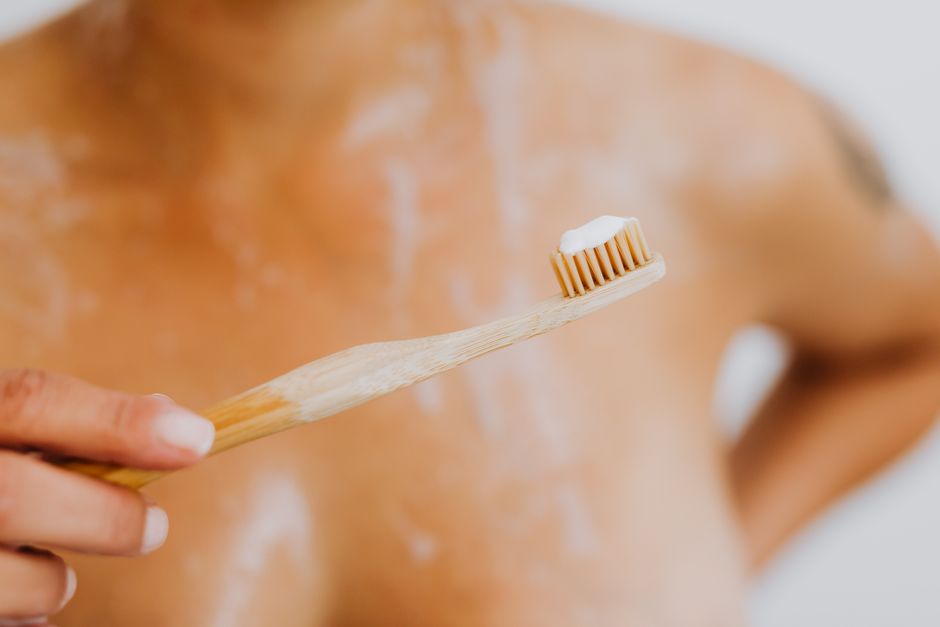
Baking soda can help clean teeth, but it is not a replacement for fluoride toothpaste. The evidence shows it is a mild abrasive that removes surface stains and can reduce plaque when used as part of a proper brushing routine. It does not strengthen enamel the way fluoride does, and brushing with it too often or too hard can wear down the protective outer layer of your teeth.
Is Baking Soda Good For Brushing Teeth?
Yes, with limits. Sodium bicarbonate — the chemical name for baking soda — is a mild abrasive. When you brush with it, the tiny particles help scrub away food debris and surface stains from the outer layer of your teeth. That is a real effect, and it is why baking soda appears in many commercial toothpastes.
What baking soda does not do is protect your teeth from decay the way fluoride does. Fluoride works by helping to remineralize enamel — the hard outer shell of your teeth — and by making enamel more resistant to acid attacks from bacteria and food. Baking soda has no fluoride. So if you replace your fluoride toothpaste entirely with plain baking soda, you lose that protection.
The American Dental Association recognizes baking soda as a safe and effective cleaning agent in toothpaste when it is combined with fluoride and other ingredients. Plain baking soda on its own is a different story. It cleans. It does not fortify.
What Does Baking Soda Actually Do to Your Teeth?
Baking soda works in two main ways. First, it is abrasive enough to lift surface stains without being harsh enough to scratch enamel under normal use. Its particles are softer than enamel but hard enough to remove the film of plaque and stain that builds up on the surface of teeth.
Second, baking soda is alkaline. It can neutralize acids in your mouth for a short time after you brush. That matters because acid is what demineralizes enamel. Every time you eat or drink something sugary or acidic, bacteria in your mouth produce acid that pulls minerals out of your enamel. Saliva normally balances this out. Baking soda can help tip that balance back toward neutral, at least temporarily.
Some research suggests baking soda toothpaste may reduce plaque and gingivitis more than non-baking-soda toothpaste. But the studies are not large, and many of them are short-term. The effect appears modest. It is not a stand-alone treatment for gum disease.
Can Baking Soda Whiten Your Teeth?
Baking soda can remove surface stains. That is different from whitening.
Surface stains sit on the outside of the tooth. They come from coffee, tea, red wine, tobacco, and dark-colored foods. A mild abrasive like baking soda can scrub some of that away. Your teeth may look brighter as a result.
Whitening, by contrast, involves changing the color of the tooth itself. That requires bleaching agents like hydrogen peroxide or carbamide peroxide, which penetrate the enamel and break apart pigment molecules inside the tooth. Baking soda cannot do that. No evidence supports baking soda as a true whitening agent.
If your teeth look yellow because of stains on the surface, baking soda may help. If they look yellow because of the natural color of your dentin — the layer under your enamel — baking soda will not change that. And as you age, enamel gets thinner and dentin shows through more. That is a structural change, not a stain.


What Are the Risks of Brushing With Baking Soda?
The main risk is enamel erosion. Baking soda is abrasive. Used occasionally, that is not a problem. Used daily, or used with heavy pressure, it can gradually wear down enamel. Enamel does not grow back. Once it is gone, it is gone.
Signs that you may be brushing too hard or too often with an abrasive include:
- Teeth that feel sensitive to cold or hot foods and drinks
- Teeth that look more yellow over time, because enamel is thinning and dentin is showing through
- Rounded or worn edges on your front teeth
- Gum recession, which exposes the softer root surface of the tooth
There is also the fluoride problem. If you brush with plain baking soda twice a day and skip fluoride toothpaste, you are missing the single most effective home measure for preventing cavities. That trade-off is not worth it for most people.
One more thing: baking soda is high in sodium. You are not swallowing it when you brush, so this is not a concern for most people. But if you are on a sodium-restricted diet and you accidentally swallow a lot of it, it could matter. That is uncommon with normal brushing.
How Should You Use Baking Soda If You Want to Try It?
If you want to use baking soda, the safest approach is to use a toothpaste that already contains it alongside fluoride. That way you get the cleaning benefit without losing cavity protection. Many major brands sell baking soda toothpastes with fluoride.
If you want to use plain baking soda directly, treat it as an occasional extra, not your main routine. A common approach is to dip a wet toothbrush into a small amount of baking soda and brush gently for about two minutes, then rinse. Some people mix it with a little water to form a paste. Do not press hard. Let the bristles do the work.
Do not use baking soda as a substitute for fluoride toothpaste on a regular basis. Do not use it more than a few times a week if you are using it alone. And if you have gum recession, exposed roots, or already sensitive teeth, talk to your dentist before using it. Exposed root surfaces are softer than enamel and wear down faster.
No clinical guidelines currently recommend plain baking soda as a primary oral care product. The evidence supports it as an ingredient in toothpaste, not as a replacement for one.
How Does Baking Soda Compare to Regular Toothpaste?
The comparison comes down to what each product is designed to do. Regular fluoride toothpaste cleans and protects. Baking soda cleans but does not protect.
| Feature | Baking Soda (plain) | Fluoride Toothpaste |
|---|---|---|
| Removes surface stains | Yes | Yes |
| Reduces plaque | Some | Yes |
| Strengthens enamel | No | Yes |
| Prevents cavities | No | Yes |
| Whitens teeth (beyond surface) | No | No (unless it contains bleach) |
| Abrasive | Mild | Varies by product |
Some toothpastes combine both. They contain baking soda for cleaning and fluoride for protection. For most people, that is the better option than choosing one or the other.
What About Other Home Remedies for Brushing?
Baking soda is one of the few home ingredients that has some evidence behind it as a cleaning agent. Others do not hold up as well.
Activated charcoal toothpastes have become popular. The evidence for them is weak. Some research suggests they may be too abrasive and could wear enamel over time. They also do not contain fluoride unless added separately. The American Dental Association has not approved any charcoal toothpaste for safety and effectiveness.
Lemon juice and vinegar are sometimes suggested as natural whiteners. Both are highly acidic. They can soften and erode enamel. Using them on your teeth is more likely to cause harm than benefit.
Hydrogen peroxide is a legitimate bleaching agent in controlled concentrations used in dental products. Using household peroxide as a mouth rinse or brushing agent is not the same thing and can irritate gums and soft tissue.
If you are looking for a home option that actually works, fluoride toothpaste is still the standard. It is cheap, widely available, and backed by decades of research.
When Should You See a Dentist?
See a dentist if you notice sensitivity that does not go away, if your gums are bleeding or receding, or if your teeth look more yellow or worn than they used to. These can be signs of enamel loss or gum disease, and both get worse without treatment.
Regular dental checkups — typically every six months for most adults, though your dentist may recommend a different schedule — are the best way to catch problems early. Brushing and flossing at home matter, but they do not replace professional cleanings and exams.
Frequently Asked Questions
Can I brush my teeth with baking soda every day?
You can, but it is not recommended as your only method. Daily use of plain baking soda without fluoride increases your risk of enamel wear and leaves your teeth unprotected against cavities.
Does baking soda whiten teeth?
It can remove surface stains, which may make teeth look brighter. It does not change the natural color of the tooth itself the way bleaching agents do.
Is baking soda safe for sensitive teeth?
It depends on why your teeth are sensitive. If sensitivity comes from worn enamel or exposed roots, baking soda’s abrasiveness could make it worse. Ask your dentist before using it regularly.
Can baking soda replace toothpaste?
No. Baking soda cleans but does not provide fluoride, which is the main ingredient that protects against cavities. Most dentists recommend using a fluoride toothpaste, with or without baking soda in it.
