
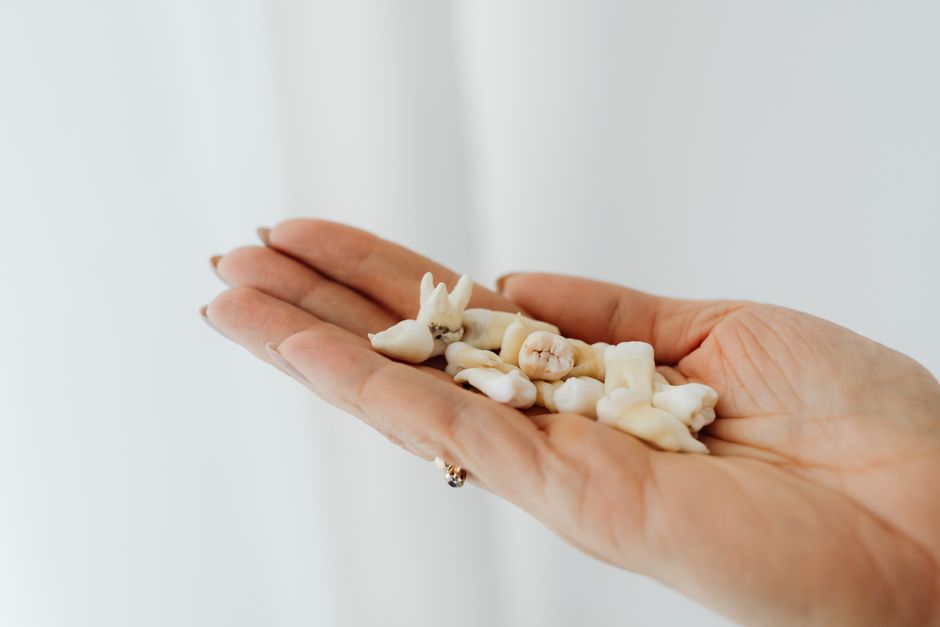
A full adult mouth holds 32 teeth, including four wisdom teeth. Most people end up with 28 working teeth if those wisdom teeth are removed. That number is stable and well established. What changes from person to person is how many of those teeth stay in the mouth over a lifetime.
Tooth loss is common but not inevitable. Knowing the normal count, the names of each tooth type, and what drives loss helps you track your own oral health with more clarity.
How Many Teeth Should An Adult Have?
A complete adult set is 32 teeth. Dentists call this the permanent dentition. It replaces the 20 baby teeth that children lose between roughly age 6 and age 12.
The 32 teeth break down into four types, each shaped for a specific job:
- Incisors — 8 total. The four front teeth on top and four on the bottom. They cut food.
- Canines — 4 total. The pointed teeth beside the incisors. They tear food.
- Premolars — 8 total. Also called bicuspids. They crush and grind.
- Molars — 12 total, counting the four wisdom teeth. They grind food into a paste for swallowing.
That adds up to 32. Remove the four wisdom teeth and you have 28. Both counts are considered normal in adults, depending on whether the wisdom teeth erupted or were extracted.
What Are Wisdom Teeth and Do You Need Them?
Wisdom teeth are the third set of molars. They sit at the very back of the mouth and usually appear between the late teens and mid-twenties, though some people never develop them at all.
Many mouths simply do not have room for four more large teeth. When space runs short, a wisdom tooth can grow in at an angle, stay trapped under the gum, or push against the molar in front of it. Dentists call this impaction.
Not every wisdom tooth needs to come out. A wisdom tooth that has fully erupted, sits in a healthy position, and can be cleaned properly may cause no problems. The decision to remove one usually rests on signs like pain, decay, gum inflammation around the tooth, or damage to the neighboring molar.
This is where practice and evidence do not line up perfectly. Removing asymptomatic wisdom teeth is common in the United States, but the evidence that every impacted wisdom tooth must be extracted is not settled. Some clinicians recommend removal to prevent future problems. Others suggest monitoring a problem-free wisdom tooth instead. That is a conversation to have with your own dentist, ideally before symptoms start.
How Many Teeth Do Most Adults Actually Have?
Most adults have 28 teeth after wisdom tooth removal. The number drops from there with age, and the drop is not evenly spread across the population.
Tooth loss has fallen sharply in the US over the past several decades. Older national survey data show that complete tooth loss, called edentulism, has declined substantially compared with earlier generations. Adults who are now in their 40s and 50s are keeping more of their natural teeth than their parents did at the same age.
Still, losing at least one permanent tooth is common. The gap between “should have” and “does have” usually comes down to a handful of preventable causes.





What Causes Adults to Lose Teeth?
Two conditions account for most adult tooth loss: gum disease and tooth decay. Both are largely preventable and both are treatable when caught early.
Gum disease (periodontal disease) is the leading cause of tooth loss in adults. It starts as gingivitis, an inflammation of the gums that causes redness and bleeding when you brush. Gingivitis is reversible. If it progresses to periodontitis, the infection reaches the tissue and bone that anchor the tooth. Over time, that support erodes and the tooth loosens. Smoking is one of the strongest risk factors for periodontitis, and it also masks the bleeding that would otherwise signal a problem.
Tooth decay is the other major driver. Bacteria in plaque feed on sugar and produce acid that dissolves tooth enamel. A small cavity can be filled. A deep one that reaches the pulp can kill the nerve and require a root canal or extraction.
Other causes include:
- Trauma or injury to a tooth
- Bruxism, or habitual teeth grinding, which wears teeth down over time
- Certain medications that cause dry mouth, since saliva protects against decay
- Medical conditions that affect the gums or bone
Age by itself is not a cause. Older adults lose more teeth than younger ones, but that reflects decades of accumulated risk, not the passage of time.
What Is a Normal Tooth Count by Age?
The expected count changes across the lifespan. This table reflects typical development, not a guarantee for any one person.
| Stage | Typical tooth count |
|---|---|
| Baby teeth (complete set, around age 2–3) | 20 |
| Mixed dentition (baby and adult teeth together) | 20 to 32, varies |
| Adult with wisdom teeth | 32 |
| Adult after wisdom tooth removal | 28 |
Baby teeth usually begin to appear around 6 months and the full set of 20 is generally in place by age 3. Adult teeth start arriving around age 6 and the process continues into the early teens for most of the set. Wisdom teeth come last, if they come at all.
What Happens When You Lose an Adult Tooth?
An adult tooth does not grow back. Once a permanent tooth is gone, the bone that held it begins to shrink. This is called bone resorption, and it starts within the first year after loss.
Neighboring teeth can also drift into the empty space. The tooth above or below may over-erupt because it no longer meets a matching surface. These shifts can change your bite and make cleaning harder, which raises the risk of decay and gum disease in the remaining teeth.
Replacement options include dental implants, bridges, and removable partial dentures. Each has trade-offs in cost, procedure, and long-term maintenance. Implants replace the tooth root and help preserve bone, but they require adequate bone and a commitment to oral hygiene. A dentist can explain which options fit your situation.
How Can You Keep Your Natural Teeth?
Prevention works, and the basics are well established. The goal is to keep the teeth you have rather than replace them later.
- Brush twice a day with fluoride toothpaste.
- Clean between teeth daily with floss or another interdental tool.
- Limit sugary drinks and frequent snacking, which feed cavity-causing bacteria.
- Do not smoke. Smoking raises the risk of gum disease and slows healing.
- See a dentist for regular checkups and professional cleanings.
Gum disease often progresses quietly. Early periodontitis can develop without pain, which is why routine exams matter more than waiting for symptoms. Bleeding gums, persistent bad breath, receding gums, and loose teeth are signs to bring up with a dentist rather than ignore.
One point worth separating from the marketing: no toothpaste or rinse replaces professional treatment for periodontitis. Once the supporting bone is lost, it does not grow back on its own. Managing the disease is about stopping further loss, not restoring what is gone.
Frequently Asked Questions
How many teeth should an adult have?
A full adult set is 32 teeth, including four wisdom teeth. Most adults have 28 if their wisdom teeth were removed.
Is it normal to have 28 teeth instead of 32?
Yes. Having 28 teeth after wisdom tooth removal is considered normal and does not affect function for most people.
Do all adults need their wisdom teeth removed?
No. A wisdom tooth that is fully erupted, healthy, and cleanable may not need removal. Extraction is usually recommended when a tooth is impacted, decayed, or damaging nearby teeth.
Can you regrow an adult tooth once it falls out?
No. Permanent teeth do not grow back, and the jawbone in that area begins to shrink over time. Replacement options include implants, bridges, and dentures.
