
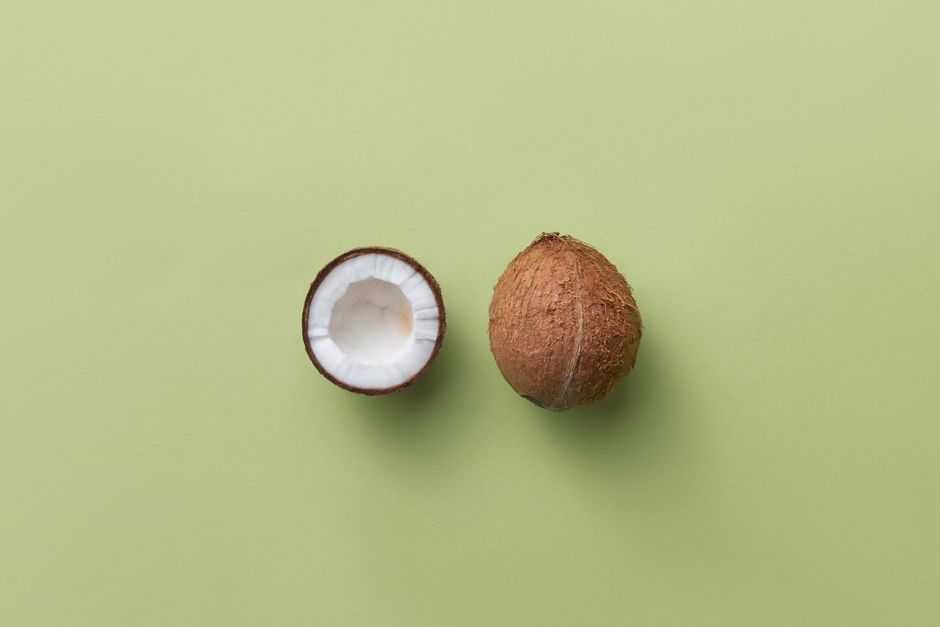
A coconut looks like a nut, acts like a fruit in the kitchen, and botanists have a clear answer that surprises most people. Botanically speaking, a coconut is a drupe — not a true nut and not a botanical fruit in the everyday sense. A drupe is a fleshy fruit with a hard stone inside that contains the seed. Think of peaches, plums, and cherries. The coconut is their tropical cousin. The confusion happens because we call it a “nut” in the grocery store and cook with it like a fruit. But science has a specific definition, and the coconut fits neatly into the drupe category.
What Exactly Is a Drupe and How Does a Coconut Fit?
A drupe has three layers. The outer skin is the exocarp. The fleshy middle is the mesocarp. And the hard inner shell is the endocarp — that is the “stone” that holds the seed. In a peach, you eat the mesocarp and throw away the pit. In a coconut, you eat the seed inside that pit.
The coconut we buy in the store is actually the inner part of the drupe. The green or brown outer husk is the exocarp and mesocarp combined. That thick fibrous layer gets stripped off before shipping. What remains is the hard endocarp (the shell) with the seed (the white meat and water) inside.
Botanists classify the coconut as a fibrous drupe. This is the same category as walnuts and almonds — but wait, those are also drupes, not true nuts. The confusion runs deep. Most of what we call “nuts” in the kitchen are actually drupes botanically. True nuts, like acorns and chestnuts, have a hard shell that does not split open at maturity. A coconut shell does not split open on its own either, which is one reason people call it a nut. But the layered structure makes it a drupe.
Is a Coconut a Fruit in the Botanical Sense?
Yes, but not in the way most people think. A botanical fruit is the mature ovary of a flowering plant that contains seeds. By that definition, a coconut is absolutely a fruit. Every drupe is a fruit. So the coconut is a fruit first, and a drupe second.
The confusion comes from how we use the word “fruit” in daily life. We call sweet things fruit — apples, oranges, berries. We call savory or bland things vegetables or nuts. Coconuts are not sweet like a peach. They are fatty and mild. So our brain says “nut” even though the biology says “fruit.”
In cooking, coconut acts like both. Coconut milk and cream work in savory curries. Shredded coconut goes into sweet desserts. This dual role in the kitchen adds to the identity confusion. But biology is clear: the coconut is a fruit, specifically a drupe.
What Does Research on Coconut Classification Show?
Botanical classification is not a matter of opinion. It is based on observable structure and development. The coconut palm (Cocos nucifera) produces a flower that develops into a fruit. That fruit has a seed inside a hard shell surrounded by a fleshy layer. That is the textbook definition of a drupe.
Research published in the Annals of Botany has examined the development of coconut fruits and confirmed their drupe structure. The fibrous mesocarp is unique among drupes — most drupes have a soft fleshy middle layer. Coconuts evolved a tough fibrous mesocarp to protect the seed as it floats across oceans. That adaptation is what makes coconuts look different from peaches, but the underlying structure is the same.
The confusion between nuts and drupes is ancient. The word “nut” in common language predates modern botanical classification by thousands of years. People called anything with a hard shell a nut. Botanists later created precise categories that do not always match everyday speech. So when someone asks “Is a coconut a nut?” the honest answer is: botanically no, but culinarily yes, and both answers are correct depending on context.




How Does This Compare to Other Foods We Mislabel?
The coconut is not alone in being misidentified. Many foods we call nuts are actually drupes. The table below shows common examples.
| Common Name | Botanical Classification | Why the Confusion |
|---|---|---|
| Coconut | Fibrous drupe | Hard shell looks nut-like; used in nut-free diets |
| Almond | Drupe | We eat the seed inside the pit; the “nut” is actually the kernel |
| Walnut | Drupe | Green outer husk is the fruit; we eat the seed inside the hard shell |
| Cashew | Drupe | Grows on a “cashew apple”; the nut is the seed attached to the fruit |
| Peanut | Legume | Grows underground like a potato; related to beans and peas |
| Brazil nut | True nut (botanically) | Hard shell does not split; seed is the edible part |
This table shows that most of what we call nuts are not nuts at all. Only a few, like chestnuts and Brazil nuts, are true botanical nuts. The coconut sits in the drupe category alongside almonds and walnuts. But the coconut is unique because its fibrous outer layer makes it look different from the typical drupe.
Does It Matter for People with Nut Allergies?
This is where the classification question becomes important for health. If you have a tree nut allergy, you need to know whether coconut is safe. The FDA classifies coconut as a tree nut for food labeling purposes. This means packaged foods must list coconut as a tree nut allergen if it is an ingredient.
But the actual allergy risk is different. Tree nut allergies are caused by proteins found in true nuts like almonds, walnuts, and cashews. Coconut has a different protein profile. Many people with tree nut allergies can eat coconut without any reaction. Some cannot.
Research published in the Journal of Allergy and Clinical Immunology has found that coconut allergy is rare compared to other tree nut allergies. Most people who react to coconut have a separate coconut allergy, not a cross-reaction from tree nut allergy. However, because the FDA requires labeling, people with tree nut allergies should check labels carefully.
The key point is this: coconut is not botanically a nut, but it is legally labeled as one. If you have a nut allergy, talk to your allergist before assuming coconut is safe. Some allergists will test specifically for coconut allergy. Others will advise avoiding it if your allergy is severe. There is no universal answer.
How Should You Think About Coconuts in Your Diet?
For most people, the botanical classification does not change how they eat coconut. It is a nutritious food regardless of what you call it. Coconut meat is high in healthy fats called medium-chain triglycerides (MCTs). These fats are metabolized differently than the long-chain fats found in most foods. Some studies suggest MCTs may help with weight management and brain function, though the evidence is not conclusive.
Coconut water is a natural source of electrolytes like potassium and magnesium. It is lower in sugar than most sports drinks. Coconut oil is popular for cooking at high temperatures because it resists oxidation. But it is also high in saturated fat, so moderation makes sense.
The confusion about whether coconut is a fruit or a nut does not change its nutritional value. It is a whole food that can be part of a balanced diet. The bigger issue is recognizing that food labels use legal definitions, not botanical ones. A coconut is a drupe that acts like a fruit in cooking and gets labeled like a nut for safety reasons.
Common Misconceptions About Coconuts
One common myth is that coconut water is the same as coconut milk. They are completely different. Coconut water is the clear liquid inside a young green coconut. Coconut milk is made by grating the white meat and mixing it with water. Coconut cream is the thick fatty layer that rises to the top of canned coconut milk.
Another misconception is that coconuts are high in sugar. The meat has very little sugar — about 5 grams per cup. Most of the sweetness you taste in coconut products comes from added sugar. Unsweetened coconut is actually quite low in sugar.
Some people believe that coconut oil is a miracle food that cures everything. This is overhyped. Coconut oil has some benefits, but it is not a cure for Alzheimer’s, heart disease, or any other condition. The claims you see on social media are not supported by strong clinical evidence. Coconut oil is a useful cooking fat, not a medicine.
A final misconception is that all coconuts are the same. There are many varieties. Young green coconuts have more water and softer meat. Mature brown coconuts have firmer meat and less water. The type you buy depends on what you are making.
Frequently Asked Questions
Is a coconut a fruit or a nut for allergy purposes?
The FDA classifies coconut as a tree nut for food labeling. But botanically it is a drupe, and many people with tree nut allergies can eat it safely.
Can you eat coconut if you have a nut allergy?
Some people with tree nut allergies can eat coconut without problems. Others cannot. You should ask your allergist for a specific test before trying it.
Why do people call coconut a nut if it is not one?
The word “nut” in everyday language refers to any food with a hard shell. Botanical classification uses different rules based on the fruit structure, not the shell hardness.
What is the difference between a drupe and a true nut?
A drupe has a fleshy outer layer surrounding a hard shell with a seed inside. A true nut has a hard shell that does not split open and is not surrounded by flesh.
