
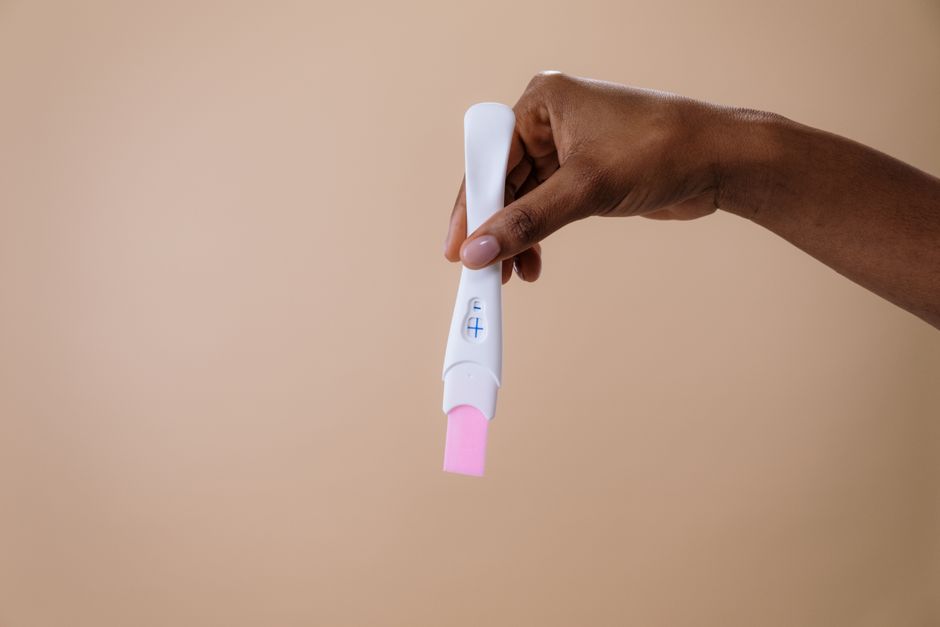
Yes, testing at 5 DPO is too early. At five days past ovulation, a pregnancy test cannot give you a reliable answer, whether it is a urine test from the drugstore or a blood test at a clinic. The reason is simple biology: if conception has happened at all, the embryo has not yet implanted in the uterus, and without implantation the body does not produce the hormone that pregnancy tests detect.
Is 5 Dpo Too Early To Take A Pregnancy Test?
Five days past ovulation is too early. A test taken at this point is very likely to come back negative even if you are going to be pregnant this cycle. That negative result would not mean you are not pregnant. It would only mean the hormone the test looks for has not appeared in your system yet.
Pregnancy tests work by detecting human chorionic gonadotropin, usually called hCG. This hormone is produced by the cells that will eventually form the placenta. Those cells only begin producing hCG after the fertilized egg attaches to the lining of the uterus, a process called implantation.
Before implantation, there is no hCG to detect. At 5 DPO, implantation typically has not occurred yet. So the test has nothing to find, no matter how sensitive it claims to be.
What Happens In Your Body At 5 DPO?
At five days past ovulation, the most likely event is that a fertilized egg is still traveling through the fallopian tube toward the uterus. It has not yet buried itself into the uterine lining.
Ovulation releases an egg from the ovary. The egg survives for roughly 12 to 24 hours. If sperm are present, fertilization can happen during that window. The resulting cluster of cells, called a blastocyst, then takes several more days to move down the fallopian tube.
Implantation generally begins somewhere around 6 to 12 days after ovulation. That range comes from research on when hCG first becomes detectable in urine, and it varies from person to person and even from cycle to cycle.
So at day five, you are sitting in the middle of a process that has not finished. The body has not yet signaled that a pregnancy is underway, because the signal itself does not exist yet.
When Does Implantation Usually Happen?
Implantation most often occurs between 8 and 10 days past ovulation, though it can happen earlier or later within the 6 to 12 day window. The timing matters because hCG production starts only once the embryo attaches.
After implantation, hCG levels begin to rise. In a healthy early pregnancy, the level typically doubles roughly every 48 hours in the first weeks. But it starts from a very low number, so it takes time to build up to a level a home test can detect.
This is why the day of implantation, not the day of ovulation, is the real starting line for testing. Two people who ovulated on the same day can get positive tests several days apart, simply because their embryos implanted at different times.


Why Do Some People Get A Positive Test Early?
Early positive tests do happen, but they reflect early implantation, not an early ability to detect a pregnancy that has not implanted. If someone tests positive at what they believe is 5 DPO, one of a few things is usually going on.
- Ovulation happened earlier than estimated, so the real date was later than 5 DPO.
- Implantation occurred unusually early, at the very start of the 6 to 12 day window.
- The test was taken later in the day than assumed, or the ovulation date was miscalculated.
Ovulation tracking is not exact. Calendar apps, basal body temperature, and even ovulation predictor kits can be off by a day or more. A person who thinks they are at 5 DPO may actually be at 7 or 8 DPO, which changes everything.
This is the non-obvious part: most “impossibly early” positive tests are not impossible at all. They are usually the result of a miscalculated ovulation date rather than a test that detected hCG before implantation.
How Early Can A Pregnancy Test Detect hCG?
Home urine tests vary in sensitivity. Many can detect hCG at concentrations around 20 to 25 milli-international units per milliliter (mIU/mL), and some are labeled as sensitive to about 10 mIU/mL. These thresholds are set by the manufacturers.
Blood tests are more sensitive than urine tests. A quantitative blood test can measure very low levels of hCG, and some can detect the hormone before a home urine test would turn positive. Even so, no test can detect hCG that the body has not yet produced.
The table below shows the general relationship between days past ovulation and what testing can realistically show. These are general patterns, not guarantees for any one person.
| Days Past Ovulation | What Is Typically Happening | Test Reliability |
|---|---|---|
| 1 to 5 DPO | Egg travels; implantation has not occurred | Too early; negative result is not meaningful |
| 6 to 12 DPO | Implantation window; hCG begins rising | Possible but unreliable; may be too early |
| Around 12 DPO onward | hCG often high enough for detection | More reliable, though still not certain |
| First day of missed period | hCG usually detectable if pregnant | Most reliable time for a home test |
Most test manufacturers recommend waiting until the first day of a missed period. That guidance exists because it is the point at which results are most accurate for the largest number of people.
Does A Negative Test At 5 DPO Mean Anything?
A negative test at 5 DPO tells you almost nothing about whether you are pregnant. It does not rule pregnancy in or out. It mainly confirms that hCG was not yet detectable at that moment, which is expected at this stage.
Testing this early often leads to a cycle of repeated testing, anxiety, and wasted tests. Each negative result can feel discouraging, even though it carries no real information. If you want a meaningful answer, the timing of the test matters more than the number of tests you take.
If you do get a negative result at 5 DPO, the reasonable next step is to wait and retest. Testing again a few days later, or after a missed period, gives you information that an early test simply cannot provide.
What Is The Best Time To Take A Pregnancy Test?
The most reliable time to take a home pregnancy test is the first day of a missed period. By that point, if you are pregnant, hCG has usually had enough time to rise to a detectable level.
If you want to test before a missed period, waiting until at least 12 DPO improves your odds of an accurate result. Testing earlier than that raises the chance of a false negative, meaning a negative result that later turns positive.
First-morning urine is often recommended because hCG concentrations tend to be higher after an overnight hold. This matters most for early testing. Once hCG levels are higher, the time of day matters less.
If you have an irregular cycle, or you are not sure when you ovulated, the missed-period rule is still the most dependable guide. When ovulation timing is uncertain, counting days past ovulation becomes unreliable.
When Should You See A Healthcare Provider?
Talk to a healthcare provider if you have a positive test and want to confirm the pregnancy, or if you have symptoms that concern you, such as pain or bleeding. A provider can order a blood test to measure hCG directly.
If you have been trying to conceive for some time without success, or if your cycles are very irregular, a provider can help assess what is going on. Guidance on how long to try before seeking evaluation depends on your age and health history, so it is best discussed individually.
No home test, at any stage, replaces a conversation with a clinician about your specific situation. Testing is one tool. It is not a diagnosis on its own.
Frequently Asked Questions
Can I get a positive pregnancy test at 5 DPO?
A true positive at exactly 5 DPO is very unlikely because implantation has usually not happened yet. Most early positives are the result of an ovulation date that was later than estimated.
How many days after ovulation can I test?
Waiting until at least 12 DPO improves accuracy, and testing on the first day of a missed period is the most reliable option. Testing before 6 DPO cannot detect a pregnancy that has not implanted.
Why is my test negative at 5 DPO if I feel pregnant?
Early pregnancy symptoms and premenstrual symptoms overlap closely, so how you feel is not a reliable sign at this stage. A negative result at 5 DPO usually means hCG has not risen enough to be detected yet.
Is a blood test more accurate than a urine test at 5 DPO?
Blood tests are more sensitive and can detect lower hCG levels than urine tests. Even so, no test can detect hCG before implantation, so a blood test at 5 DPO may still be too early.
