
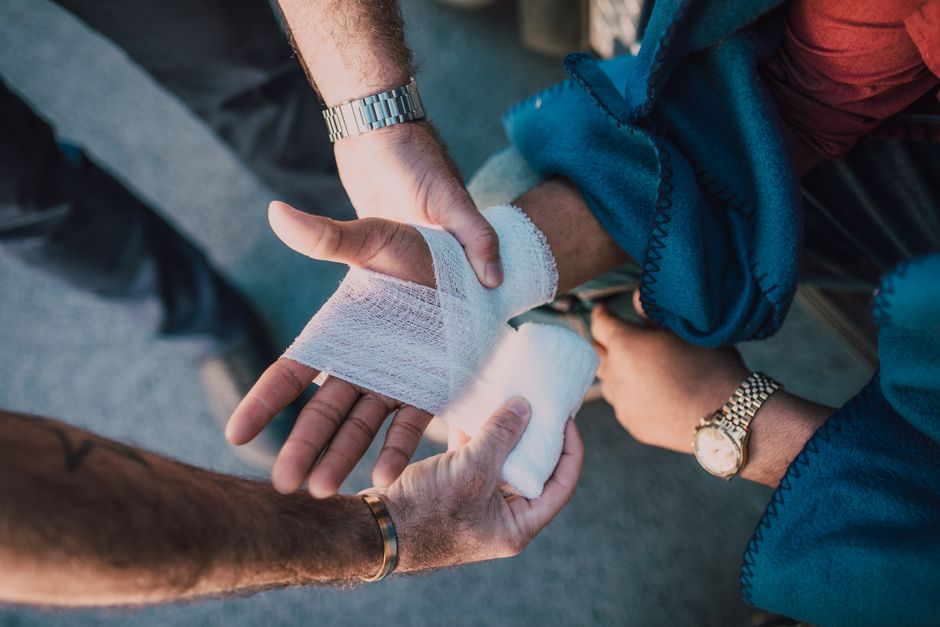
Wrapping an ankle with an Ace bandage is a basic skill that can help with swelling, support, and recovery. The correct method involves starting at the toes, wrapping in a figure-eight pattern around the ankle, and finishing above the calf with the bandage snug but not tight. You want compression that supports movement without cutting off circulation. Here is the step-by-step method that doctors and physical therapists actually use.
How Do You Prepare the Ankle and Bandage Before Wrapping?
Start with a clean, dry ankle. If there is an open wound or broken skin, do not apply an Ace bandage directly over it — use a sterile gauze pad first. The American Academy of Orthopaedic Surgeons recommends keeping the ankle in a neutral position, roughly at a 90-degree angle to the leg.
Unroll the Ace bandage completely before you begin. Most standard Ace bandages are 4 to 6 inches wide. For an adult ankle, a 4-inch width is usually best. A 6-inch bandage can work but may be harder to manage around the heel. Sit down with your leg extended so the ankle is slightly elevated if possible. This reduces blood flow to the area and helps control swelling before you even start wrapping.
Hold the bandage so the rolled part is facing up. The loose end should be on the outside of your foot, near the base of your toes. This orientation lets you wrap toward your heart, which is the correct direction for reducing swelling.
What Is the Correct Step by Step Wrapping Technique?
Place the loose end of the bandage on the top of your foot, just behind the toes. Wrap it once around the foot near the base of the toes. This first anchor wrap should be snug but not tight. You should be able to slide one finger under the bandage easily.
From there, wrap diagonally across the top of the foot toward the ankle bone on the opposite side. Bring the bandage under the heel, then back up across the top of the foot. This creates the first part of the figure-eight pattern. Continue wrapping in figure-eights around the ankle and foot for two to three passes. Each pass should overlap the previous layer by about half the bandage width.
After the figure-eight wraps, continue wrapping upward around the lower calf. Each wrap should overlap by half. Stop about 2 to 3 inches above the ankle bone. Secure the end with the metal clips that come with most Ace bandages, or use medical tape.
Here is a quick reference table for the wrapping sequence:
| Step | Action | Key Detail |
|---|---|---|
| 1 | Anchor wrap at toes | One full wrap around the foot base |
| 2 | Diagonal across foot top | Go toward opposite ankle bone |
| 3 | Under the heel | Bring bandage under heel and back up |
| 4 | Figure-eight repeat | Two to three total figure-eight passes |
| 5 | Spiral up the calf | Overlap each layer by half |
| 6 | Secure at top | Use clips or tape, 2-3 inches above ankle |
How Tight Should an Ace Bandage Be on the Ankle?
The bandage should feel supportive, not squeezing. A common mistake is wrapping too tight, which can cause numbness, tingling, or discoloration in the toes. The CDC advises that compression bandages should not cause pain or restrict movement. If your toes turn blue, purple, or white, the bandage is too tight and needs to be reapplied immediately.
A simple test: after wrapping, try to wiggle your toes. You should have full range of motion. If you cannot move them freely, loosen the bandage. Also check the color of your toes against the other foot. Any difference in color is a warning sign.
Research published in the Journal of Athletic Training found that compression levels between 15 and 25 mmHg are effective for ankle swelling without risking circulation. Most people cannot measure this at home, so the finger test is the practical standard. One finger should slide easily under the bandage at the ankle and at the top of the calf wrap.





How Long Should You Keep an Ace Bandage on Your Ankle?
For acute injuries like a sprain, you can keep the bandage on for 48 to 72 hours. Remove it at night while you sleep unless your doctor tells you otherwise. The body naturally reduces swelling during rest, and prolonged compression can cause skin irritation or fluid buildup below the bandage.
If you are using the bandage for activity support, such as during sports or walking, wear it only during the activity and remove it afterward. Wearing an Ace bandage continuously for more than 8 hours a day increases the risk of skin breakdown and reduced blood flow, especially in older adults or people with diabetes.
Replace the bandage if it loses elasticity. Ace bandages stretch out over time and lose their compression ability. A bandage that feels loose after wrapping is no longer providing useful support. Most standard Ace bandages need replacement every 3 to 6 months with regular use.
What Are Common Mistakes When Wrapping an Ankle?
The most common error is wrapping too tightly at the ankle and too loosely above it. This creates a tourniquet effect, where blood pools in the foot. The bandage should have even tension from toes to calf. If the top of the wrap feels looser than the bottom, unwrap and restart.
Another mistake is starting the wrap too high on the foot. If you begin at the mid-foot rather than the toes, the bandage can shift during movement and bunch up, causing pressure points. Always start at the base of the toes.
Some people also wrap in straight circles around the ankle rather than using the figure-eight pattern. Straight wraps do not provide adequate support for the ankle joint. The figure-eight pattern stabilizes the ankle while allowing normal range of motion. Without it, the bandage is just a sleeve, not a support.
Here are the key mistakes to avoid:
- Wrapping too tight — check for toe color and movement
- Starting too high on the foot — begin at the toes
- Skipping the figure-eight pattern — this is what provides actual joint support
- Using a bandage that is too old or stretched out — replace every 3-6 months
- Leaving the bandage on all night — remove during sleep unless instructed otherwise
When Should You Not Use an Ace Bandage on an Ankle?
Do not use an Ace bandage if you suspect a fracture. Symptoms of a fracture include inability to bear weight, sharp pain at a specific point, and swelling that does not improve with elevation. The American Academy of Orthopaedic Surgeons recommends seeing a doctor for X-rays if these signs are present. Wrapping a fracture can cause bone displacement and worsen the injury.
Ace bandages should also be avoided if you have peripheral artery disease or diabetes with neuropathy. Reduced blood flow in these conditions makes compression dangerous. The bandage can cause tissue damage without you feeling it. If you have these conditions, ask your doctor before using any compression wrap.
If the skin around the ankle is red, warm, or has a rash, do not apply a bandage. This could indicate an infection or cellulitis. Compression over an infection can spread bacteria deeper into the tissue. Seek medical treatment first.
For severe sprains where the ankle cannot bear any weight at all, an Ace bandage alone is not enough. Research in the British Journal of Sports Medicine shows that grade 2 and 3 ankle sprains often require a brace or walking boot for proper healing. A simple Ace wrap provides only light support in these cases.
Frequently Asked Questions
Can I sleep with an Ace bandage on my ankle?
It is generally not recommended to sleep with an Ace bandage on your ankle. Remove it at night unless your doctor specifically told you to keep it on.
How do I know if my Ace bandage is too tight?
Check your toes for color changes, numbness, or tingling. If your toes turn blue or white, or if you cannot wiggle them freely, the bandage is too tight.
Should I wrap my ankle with the foot at a 90-degree angle?
Yes, keep your foot at a 90-degree angle to your leg while wrapping. This prevents the bandage from restricting normal ankle movement.
How often should I reapply an Ace bandage to my ankle?
Remove and reapply the bandage every 4 to 6 hours during the day. This lets you check the skin and adjust tension as swelling changes.
