
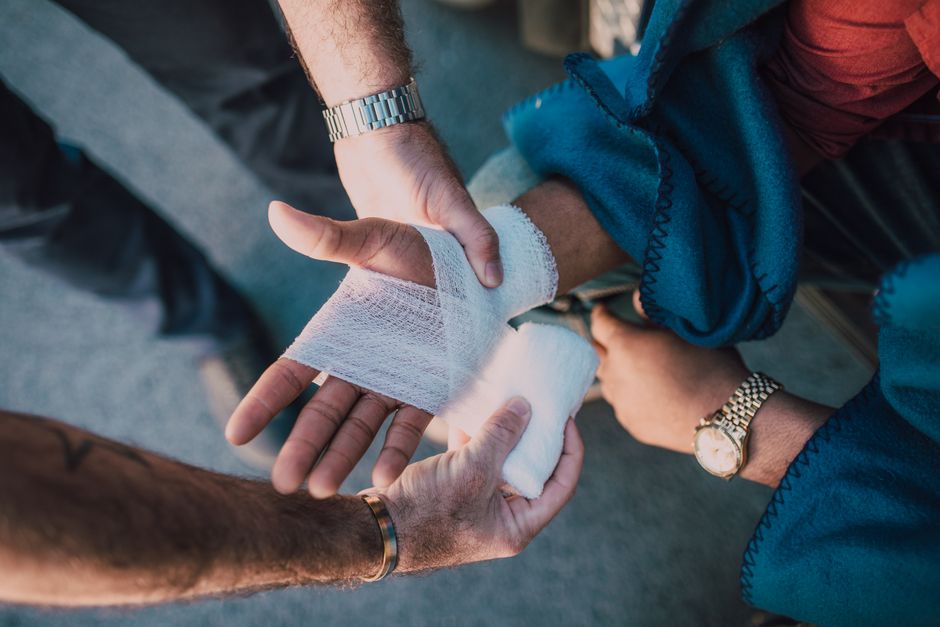
Wrapping a hand with a bandage the right way means applying firm, even pressure that supports the injured area without cutting off circulation. The goal is to stabilize the hand, reduce swelling, and allow for safe movement while healing. A properly wrapped hand follows a few key rules: start at the fingers, wrap toward the wrist, keep tension consistent, and check for signs of restricted blood flow.
What Is the Correct Way to Wrap a Hand With a Bandage?
The correct method depends on the type of injury. For general support or mild sprains, use an elastic bandage like an ACE wrap. Start with the rolled end at the base of the fingers. Wrap twice around the palm near the knuckles to anchor the bandage.
Work your way down toward the wrist, overlapping each layer by half the bandage width. Keep the tension snug but not tight. You should be able to slide one finger between the bandage and skin. Finish with two wraps around the wrist and secure the clip or tape.
For a hand injury that involves the thumb, use a figure-eight pattern. Wrap from the wrist across the back of the hand, around the thumb base, then back across the palm. This gives targeted support without restricting thumb movement.
How Do You Know If a Hand Bandage Is Too Tight?
A bandage that is too tight can cause serious problems. Numbness, tingling, or a pins-and-needles sensation in the fingers are early warning signs. So is skin that turns pale, blue, or cold to the touch.
Check capillary refill by pressing on a fingernail. The nail bed should turn white and then return to pink within two seconds. If it stays white longer, the bandage is too tight. Remove it and rewrap with less tension.
Pain that increases after wrapping is another red flag. A properly wrapped hand should feel supported, not compressed. If the bandage causes throbbing or sharp pain, take it off immediately.
Research published in the Journal of Hand Therapy notes that improper wrapping technique is a common cause of complications in hand injuries. The study found that nearly 15% of patients who wrapped their own hands made the bandage tight enough to reduce blood flow. Most did not realize it until symptoms appeared.
What Type of Bandage Works Best for Hand Injuries?
Elastic bandages are the most common choice for hand wrapping. They provide consistent compression and stretch slightly to accommodate movement. The American Academy of Orthopaedic Surgeons recommends elastic wraps for sprains, strains, and soft tissue injuries of the hand.
Cohesive bandages are another option. They stick to themselves but not to skin or hair. These are useful for active people who need the wrap to stay in place during movement. They work well for minor cuts, scrapes, or light support.
Gauze rolls are best for wounds that need a sterile covering. Use a non-stick pad over the wound first, then wrap with gauze. Gauze does not provide much compression, so it is not ideal for swelling or sprains.
Kinesiology tape has become popular for hand injuries, but strong evidence is limited. Some small studies suggest it may help with pain and range of motion in mild cases. The CDC does not list it as a standard treatment for acute hand injuries. For serious swelling or instability, stick with elastic bandages.





How To Wrap a Hand With a Bandage the Right Way for Different Injuries
For a sprained wrist or hand, use the standard spiral wrap. Start at the fingers, wrap upward, and end at the wrist. Keep the wrist slightly bent in a neutral position. This prevents stiffness and supports the ligaments as they heal.
For a broken finger, buddy tape it to the next finger before wrapping the hand. Use medical tape to secure the injured finger to an adjacent healthy one. Then wrap the hand with an elastic bandage for overall support. Do not wrap the tape too tight around the fingers themselves.
For a hand wound or cut, clean the area first with soap and water. Apply a sterile non-stick pad. Wrap with gauze or a cohesive bandage to hold the pad in place. Change the dressing daily or whenever it gets wet or dirty.
For post-surgical swelling, use a compression wrap as directed by your surgeon. Most protocols call for a snug wrap that is loosened every few hours. Never sleep with a tight compression wrap on unless a doctor specifically tells you to.
| Injury Type | Best Bandage Type | Key Technique |
|---|---|---|
| Sprain or strain | Elastic (ACE) | Spiral wrap from fingers to wrist |
| Fracture (suspected) | Elastic + splint | Buddy tape fingers, then wrap hand |
| Cut or abrasion | Gauze + sterile pad | Cover wound first, then wrap loosely |
| Post-surgery | Elastic compression | Snug but not tight; loosen every few hours |
| Thumb injury | Elastic | Figure-eight pattern around thumb base |
What Mistakes Do People Make When Wrapping a Hand?
The most common mistake is wrapping too tightly. People think tighter means more support. It does not. Too much pressure can damage nerves and blood vessels. The Journal of Emergency Medicine reports that compression injuries from bandages are a frequent reason for return visits to urgent care.
Another mistake is starting at the wrist instead of the fingers. This leaves the fingers unsupported and can cause the bandage to slip. Always start at the narrowest point, which is the fingers, and work toward the wider wrist.
Leaving gaps between layers is another problem. Gaps create uneven pressure and reduce the bandage’s effectiveness. Each wrap should overlap the previous one by about half the bandage width.
Some people wrap the hand in a fully straight position. This can lead to stiffness and makes it harder to use the hand later. Wrap with the hand in a slightly bent, functional position. This allows the muscles and tendons to heal in a natural alignment.
Using a bandage that is too wide for the hand is also common. A two-inch wide bandage works best for most adult hands. Three-inch bandages are too bulky and hard to shape around the fingers and palm.
How Long Should You Keep a Hand Bandaged?
For a mild sprain, two to three days of compression is usually enough. After that, swelling has typically peaked and started to go down. Switch to a lighter wrap or stop wrapping and focus on gentle movement.
For a moderate injury, you may need to wrap the hand for five to seven days. Remove the bandage at night unless your doctor advises otherwise. Sleeping with a bandage on increases the risk of it shifting and becoming too tight.
For wounds or surgical sites, follow the specific dressing change schedule given by your healthcare provider. Most wounds need a clean bandage every 24 hours. If the wound drains heavily, change it more often.
Watch for signs of infection: increased redness, warmth, swelling, or pus. If the skin under the bandage becomes itchy or develops a rash, you may have a contact allergy to the material. Switch to a hypoallergenic bandage if this happens.
Do not keep a hand wrapped for more than two weeks without a medical evaluation. Chronic wrapping can lead to muscle weakness, joint stiffness, and reduced blood flow. The body needs movement to heal properly.
Frequently Asked Questions
Can I wrap my own hand or do I need help?
You can wrap your own hand if the injury is mild and you can reach both hands freely. For serious injuries or if wrapping causes pain, ask someone else to do it.
How tight should a hand bandage feel?
It should feel snug like a firm handshake but not painful or squeezing. You should be able to slide one fingertip under the bandage.
Should I remove the bandage to sleep?
Yes unless your doctor says otherwise. Sleeping with a bandage can cause it to tighten and restrict blood flow overnight.
Can I shower with a hand bandage on?
Only if you cover it with a waterproof sleeve or plastic bag. Wet bandages lose their shape and can irritate the skin or slow healing.
