
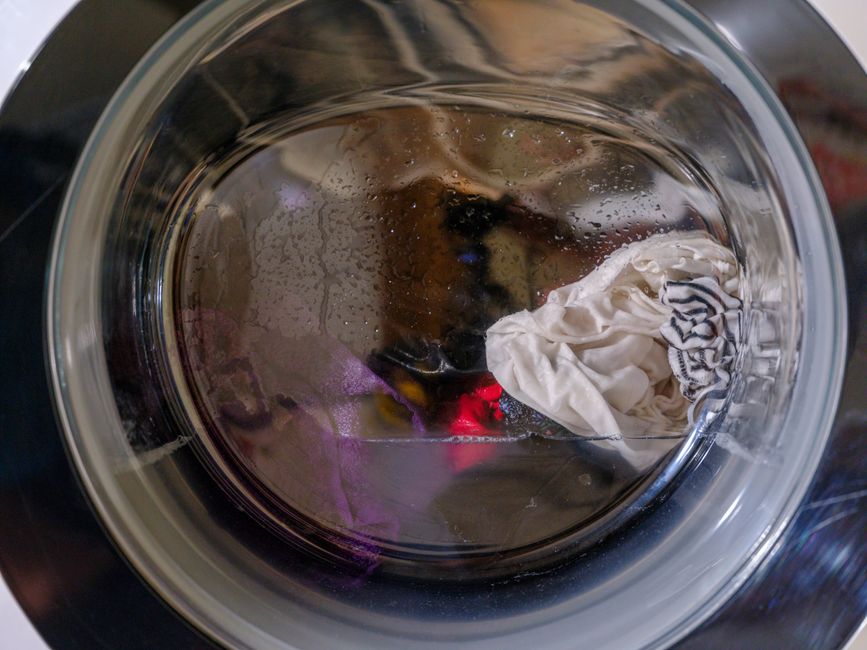
Your washing machine removes sweat, stains, and odors from your clothes. It does not remove every chemical that settles into fabric. The most effective way to reduce toxins on clothes is to wash new items before wearing them, use a fragrance-free detergent, rinse thoroughly, and dry in fresh air when possible. No single wash removes everything, but these steps measurably lower what stays behind.
How Do Toxins Get On Clothes In The First Place?
Clothing picks up chemicals at almost every stage of its life. Some arrive during manufacturing. Others accumulate during wear, storage, and everyday exposure to the environment around you.
New clothing often carries residues from dyes, finishing agents, and treatments that give fabric its color, wrinkle resistance, or water repellency. Formaldehyde-based finishes are one example. They are used in some wrinkle-free and easy-care fabrics, and they can trigger skin irritation in sensitive people. Residual chemicals from manufacturing are generally present at low levels, but they are not zero.
Once clothes are in your home, they collect more. Skin oils, sweat, dead skin cells, and environmental particles all build up in fabric. If you work around solvents, pesticides, or heavy metals, those can transfer to your clothing too. Laundry detergent residue itself can remain in fabric if the rinse cycle is too short or you use too much product.
This matters because skin is not a perfect barrier. Some chemicals can pass through it, especially in areas where skin is thin or damaged. The amount absorbed from clothing is usually small, but for people with skin conditions or chemical sensitivities, even small amounts can cause reactions.
Does Regular Laundry Actually Remove Toxins?
Regular laundry removes a lot, but not everything. Water, detergent, and agitation together lift and carry away many water-soluble residues and most particulate matter. What they leave behind tends to be chemicals that bind tightly to fabric or do not dissolve well in water.
Heat helps with some residues and hurts with others. Hot water can break down certain finishes and improve removal of oily substances. It can also set some stains and degrade elastic fibers over time. The right temperature depends on the fabric and what you are trying to remove.
Detergent choice matters more than most people realize. Standard detergents contain surfactants that lift oils and particles from fabric. Fragrance-free and dye-free options reduce the number of new chemicals you add during washing. If your goal is to lower chemical residue, adding fragrance to clean clothes works against that goal.
Rinsing is the step people skip mentally. A second rinse cycle can remove more detergent residue and any chemicals the first rinse loosened but did not fully carry away. It costs water and time, but it is one of the few steps that reliably reduces what stays in the fabric.
What Actually Works To Reduce Toxins In Clothes?
No method removes 100 percent of chemical residue. The practical goal is reduction. These steps, used together, lower what remains in fabric.
- Wash new clothes before wearing. One wash removes a meaningful share of surface manufacturing residues. This is the single most useful step for new items.
- Choose fragrance-free, dye-free detergent. You avoid adding new chemicals while removing old ones.
- Use the right amount of detergent. More is not better. Excess detergent leaves residue that traps particles.
- Add an extra rinse. This removes loosened residue that a single rinse leaves behind.
- Wash items separately by use. Work clothes exposed to chemicals should not share a load with everyday clothing.
- Dry in fresh air when possible. Outdoor drying allows volatile compounds to dissipate. Sunlight also has a mild sanitizing effect.
- Skip fabric softener and dryer sheets. These coat fabric with a new layer of chemicals, which is the opposite of what you want.
For people with contact dermatitis or known chemical sensitivities, these steps are not optional. They are the difference between manageable skin and recurring reactions. For everyone else, they reduce exposure at low cost.





How To Wash Toxins Out Of Clothes What Works For Different Fabrics
Fabric type changes what you can safely do. High heat and harsh detergents damage some fibers and do little for others. Matching method to material prevents ruining clothes while you try to clean them.
Cotton tolerates hot water and stronger detergents better than most fabrics. It is also more likely to hold onto water-soluble residues, so rinsing well matters. Synthetic fabrics like polyester and nylon tend to hold oily residues and can release chemical finishes more slowly. They often need a longer wash cycle rather than hotter water.
Wool and silk require gentle, cool washing with mild detergent. Heat and agitation damage these fibers, so you cannot rely on temperature to help. For these fabrics, extra rinsing and air drying do most of the work.
Waterproof and stain-resistant finishes deserve a note. These coatings are designed to stay on the fabric, which means they resist removal by washing. Some older formulations contained per- and polyfluoroalkyl substances, often called PFAS. Many manufacturers have moved away from these, but not all. If a garment is labeled stain-resistant or water-repellent, washing will not strip the finish, and that finish is the point of the garment.
What Does Not Work, Despite What You May Have Heard?
Some popular laundry habits do little for chemical removal and can make things worse.
Adding baking soda or vinegar to the wash is widely recommended. Both can help with odors and mild residue. Neither has strong evidence behind it for removing chemical contaminants from fabric. Vinegar can also damage rubber seals in washing machines over time if used regularly.
Washing in very hot water is often assumed to clean better. For chemical removal, heat helps with some residues and is unnecessary for others. It also shortens the life of elastic and synthetic fibers. Hot water is not a universal answer.
Specialty “detox” laundry products make claims that go beyond what current evidence supports. No clinical studies confirm that these products remove more chemicals than standard detergent and a thorough rinse. The basic steps do the work.
One more point that surprises people. Dry cleaning does not necessarily remove more chemicals than home washing. The solvents used in dry cleaning are themselves chemicals, and some residue can remain in fabric after the process. For chemical-sensitive individuals, this is worth knowing.
When Should You Be More Careful?
Some situations call for more attention than others. If you have a diagnosed skin condition like eczema or contact dermatitis, residue in fabric can trigger flares. Fragrance-free detergent and extra rinsing are commonly recommended in these cases, though individual triggers vary and what helps one person may not help another.
If you work with pesticides, solvents, or heavy metals, do not bring those clothes into your regular laundry. Wash them separately, and consider whether your workplace has specific decontamination guidance. Occupational exposure is a different category from everyday residue, and the stakes are higher.
For infants and young children, skin is thinner and more permeable. Washing new clothes before first use and using fragrance-free detergent is a reasonable precaution. That said, no clinical guidelines set a specific number of washes or a required detergent type for this group. The general direction is to reduce added chemicals and rinse well.
If you suspect a reaction to your clothing, the useful step is to change one variable at a time. Switch detergent first. Add a rinse cycle. Change drying method. Tracking what changes when you change one thing is more informative than changing everything at once.
Frequently Asked Questions
Does washing clothes remove all toxins?
No. Washing removes many water-soluble residues and most particles, but it does not remove everything, especially finishes designed to stay on fabric. The goal is reduction, not elimination.
How many times should I wash new clothes before wearing them?
One wash removes a meaningful share of surface manufacturing residue. There is no established guideline requiring more than that for general use.
Does hot water remove more chemicals from clothes?
Hot water helps with some residues and oily substances, but it does not remove everything and can damage elastic and synthetic fibers. The right temperature depends on the fabric and what you are trying to remove.
Is vinegar effective for removing toxins from laundry?
Vinegar can help with odors and mild residue, but there is no strong evidence it removes chemical contaminants from fabric. Regular use may also damage washing machine seals over time.
