
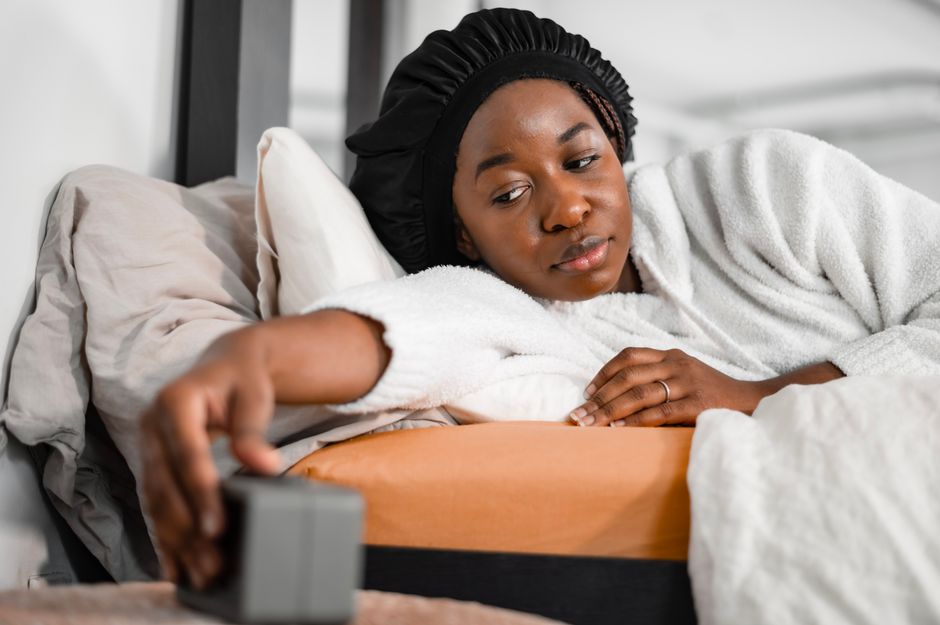
Waking up early without feeling tired comes down to two things: how much sleep you actually get, and where in your sleep cycle the alarm lands. Most grogginess after an early alarm is not a sign that early rising is bad for you. It is a sign that the wake-up happened during deep sleep, or that total sleep was too short. Fix those two problems and early mornings feel very different.
Adults generally need at least seven hours of sleep per night, according to long-standing guidance from sleep medicine organizations. If you are cutting below that to wake at 5 a.m., no trick will fully remove the tiredness. That is a math problem, not a willpower problem. The rest of this article explains what is actually happening in your body and what the evidence supports.
Why Do You Feel Groggy Even After a Full Night of Sleep?
The grogginess has a name: sleep inertia. It is the transitional state between sleep and full alertness, and it is a normal part of human physiology, not a disorder.
Sleep runs in cycles of roughly 90 minutes, moving through lighter stages and into deep slow-wave sleep, then into REM sleep. Waking from deep slow-wave sleep produces the heaviest inertia. Waking from lighter sleep produces much less. This is why two people can get the same seven hours and feel completely different at 6 a.m. — one alarm landed in light sleep, the other in deep sleep.
Sleep inertia typically fades within 15 to 30 minutes for most people, though it can last longer after severe sleep deprivation or when waking at a biologically unusual time. The intensity depends on which sleep stage you were in, how much sleep you got, and how far your internal clock is from your wake time.
One detail that gets overlooked: alcohol the night before makes inertia worse. Alcohol is metabolized in a way that fragments the second half of sleep and suppresses REM, so even if you spend eight hours in bed, the architecture of that sleep is poorer.
How To Wake Up Early And Not Feel Tired Or Groggy?
The single most effective step is going to bed early enough to complete your sleep need before the alarm. That sounds obvious, and it is the part most people skip. If your alarm is set for 5:30 a.m. and you need seven and a half hours, lights out needs to be around 9:45 p.m. to allow time to fall asleep.
The second step is consistency. Your internal clock, the circadian system, runs on timing cues. When your wake time shifts by two or three hours between weekdays and weekends, you create a mild, recurring jet lag. Research on “social jetlag” — the mismatch between biological and social schedules — has linked it to worse morning alertness and other metabolic measures, though the strength of those links varies across studies.
Keeping your wake time within about an hour, seven days a week, is one of the few interventions with solid physiological reasoning behind it. Your body learns when to raise cortisol and lower melatonin, and that shift makes mornings easier over a period of one to two weeks.
What does not reliably work: hitting snooze repeatedly. Fragmented sleep in the final minutes before getting up tends to return you to deep sleep, so the next alarm hits you in a worse stage than the first one did.
What Role Does Light Play in Waking Up Alert?
Light is the strongest signal your body uses to set its clock. Bright light in the morning, especially within the first hour after waking, helps suppress residual melatonin and shift your circadian rhythm earlier over time.
Outdoor light is far stronger than indoor light, even on a cloudy day. A few minutes outside or near a bright window is more effective than a dimly lit room. Light therapy lamps are sometimes used for this purpose, and some clinicians recommend them for people who cannot get outdoor light in the morning, but the evidence for their effect on general morning alertness in healthy adults is less consistent than for outdoor daylight.
Just as important is limiting bright light at night. Screens, overhead lighting, and bright rooms in the hour or two before bed can delay melatonin release and push your clock later, which makes an early alarm harder the next day.





Does Caffeine Help or Hurt an Early Wake-Up?
Caffeine blocks adenosine, a molecule that builds up during waking hours and creates sleep pressure. It does not remove tiredness — it hides the signal temporarily. When it wears off, the underlying sleepiness is still there, often plus interest.
Timing matters more than most people realize. Caffeine has a half-life of roughly five hours in a typical adult, meaning a significant portion is still in your system many hours later. Afternoon coffee can make it harder to fall asleep at the early bedtime you need, which then makes the early alarm harder. That loop is common and easy to miss.
There is no single caffeine cutoff that applies to everyone. Genetics, medications, pregnancy, and individual sensitivity all change how fast caffeine clears. The practical approach is to notice whether your sleep onset suffers when you drink caffeine after midday, and adjust from there. If you are pregnant or breastfeeding, follow guidance from your clinician rather than general rules.
Which Habits Actually Improve Morning Alertness?
Several habits have reasonable supporting evidence for improving how you feel in the morning. None of them replace adequate sleep. They work on top of it.
- Consistent wake time: The same time daily, including weekends, within about an hour.
- Morning light: Get outside or near bright light soon after waking.
- Movement: Even light activity raises alertness and body temperature, which helps shake off inertia.
- Hydration: You lose fluid overnight. Drinking water in the morning is reasonable, though claims that dehydration is the main cause of morning grogginess are overstated.
- Cooler, darker sleep environment: Supports deeper, less fragmented sleep.
- Limiting alcohol: Especially in the hours before bed.
One clarification worth making: cold showers, ice baths, and similar “wake-up hacks” do raise alertness briefly. The effect is real but short-lived, and no good evidence shows they improve overall sleep quality or solve the underlying cause of morning tiredness.
When Is Morning Tiredness a Medical Issue?
If you consistently sleep seven to nine hours, keep a steady schedule, and still wake exhausted, that pattern deserves a medical conversation. It is not normal.
Obstructive sleep apnea is one of the more common explanations. It causes repeated breathing pauses during sleep, which fragment sleep even when total hours look adequate. Loud snoring, gasping, or witnessed pauses in breathing are reasons to be evaluated. Sleep apnea is diagnosed through sleep studies, and the diagnosis is not something to self-assess.
Other possibilities include iron deficiency, thyroid disorders, depression, and certain medications. These require clinical testing, not lifestyle adjustments. No supplement or routine reliably corrects them.
Shift work, caring for an infant, and certain medical conditions make early rising genuinely harder, and in those cases the honest answer is that no technique fully compensates. The goal becomes managing sleep debt rather than eliminating it.
Frequently Asked Questions
How long does morning grogginess usually last?
For most people, sleep inertia fades within about 15 to 30 minutes of waking. It lasts longer after severe sleep deprivation or when waking at a time far from your natural rhythm.
Does hitting snooze make you more tired?
Yes, repeated snoozing tends to return you to deep sleep, so the next alarm often hits a worse stage than the first. Getting up on the first alarm usually produces less grogginess.
Can you train yourself to wake up early without an alarm?
With a consistent sleep and wake schedule, many people develop a fairly reliable internal wake time over several weeks. It is not exact, and it depends heavily on getting enough sleep and consistent light exposure.
Is it bad to wake up at 5 a.m. every day?
Waking at 5 a.m. is not inherently harmful if you still get enough total sleep by going to bed early. The problem is short sleep, not the clock time itself.
