
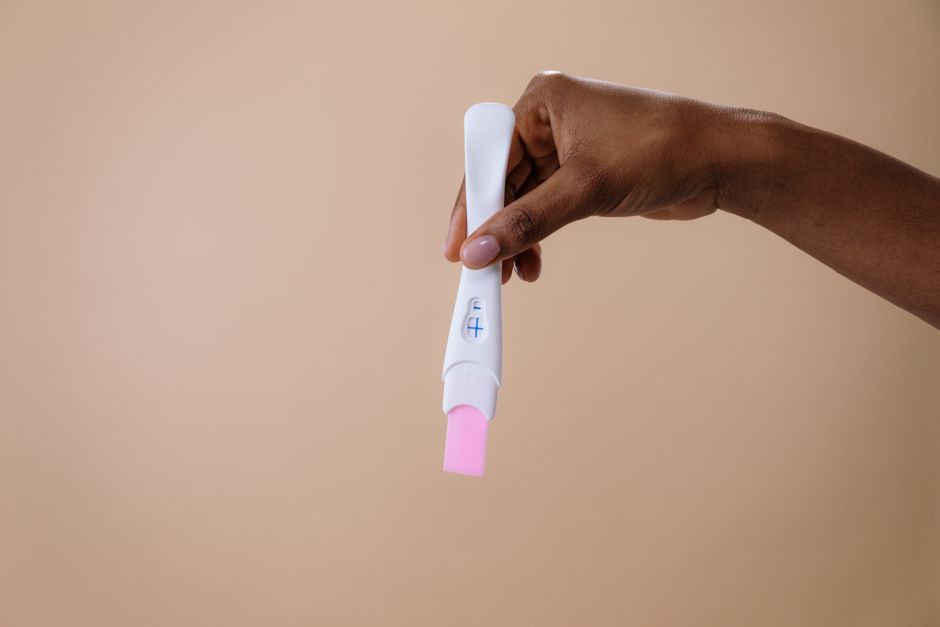
First Response pregnancy tests are designed to detect the pregnancy hormone hCG in your urine. The earliest a First Response test can detect pregnancy is up to 6 days before your missed period, which is about 5 days before your expected period. This timing depends on the specific test you use, with the Early Result test being the most sensitive option on the market.
How Does First Response Detect hCG So Early?
First Response Early Result tests work by detecting human chorionic gonadotropin, or hCG. This is a hormone your body only produces after a fertilized egg implants in your uterus. Implantation typically happens 6 to 10 days after ovulation.
Once implantation occurs, hCG levels rise quickly. They usually double every 48 to 72 hours in early pregnancy. The First Response Early Result test is sensitive to 25 mIU/mL of hCG. This low threshold is what allows it to detect pregnancy before a missed period.
Standard pregnancy tests, by comparison, often require higher hCG levels. Many detect pregnancy at 25 mIU/mL too, but the difference is in how the test is calibrated. First Response markets the Early Result test as able to detect pregnancy 6 days before your missed period. That claim is based on the sensitivity of the test, not on a guarantee for every woman.
How Early Can First Response Detect Pregnancy Before a Missed Period?
The specific answer depends on which First Response test you buy. The Early Result test is the most sensitive. The manufacturer states it can detect pregnancy 6 days before your missed period. That is 5 days before the day you expect your period to start.
Other First Response tests, such as the Rapid Result or Digital tests, are less sensitive. They typically detect pregnancy on the day of your missed period or a few days after. The packaging will state the specific timing for each product.
Testing 6 days before your missed period does not mean you will get a positive result. It means the test is capable of detecting the low hCG levels present at that time if you are pregnant. Many women will not have enough hCG in their urine that early.
Why Testing Too Early Can Give a False Negative
A false negative happens when you are pregnant but the test says you are not. This occurs most often when you test too early. Your body may not have produced enough hCG yet for the test to detect.
Even with a highly sensitive test, hCG levels vary from woman to woman. Some women have higher levels early on. Others have lower levels that take longer to rise. Testing before implantation has even occurred will always produce a negative result.
If you test early and get a negative result, it does not mean you are not pregnant. It may simply mean your hCG levels are not high enough yet. Waiting 48 to 72 hours and testing again is the most reliable way to confirm a result.




Best Time of Day to Take a First Response Test
For early testing, use your first morning urine. This urine is the most concentrated. It contains the highest levels of hCG because you have not been drinking fluids overnight that could dilute it.
If you test later in the day, your urine may be more diluted. This can make it harder for the test to detect low levels of hCG. This matters most when you are testing before your missed period.
Once your period is late, the time of day matters less. Your hCG levels are higher by then, and even diluted urine will usually produce an accurate result.
How Accurate Is a First Response Early Result Test?
First Response claims the Early Result test is over 99% accurate when used on the day of your missed period. This accuracy is based on laboratory studies and clinical testing. The claim is consistent with how these tests are evaluated.
Accuracy before your missed period is lower. No test can be 99% accurate 6 days before your period because not all pregnancies have detectable hCG at that point. The test is highly accurate at detecting hCG when it is present at 25 mIU/mL. The limitation is not the test itself. The limitation is that your body may not have reached that level yet.
If you follow the instructions exactly, including the timing and reading window, you give yourself the best chance of an accurate result. Reading the test after the recommended time can produce a false positive or an evaporation line that looks like a positive result.
What Do the Results Mean?
A positive result on any First Response test means hCG was detected in your urine. This almost always means you are pregnant. False positives are rare but can occur with certain medical conditions or medications that contain hCG.
A negative result means hCG was not detected at the level the test requires. This does not always mean you are not pregnant. It may mean you tested too early.
If you get a positive result, contact a healthcare provider to confirm the pregnancy with a blood test. If you get a negative result but your period does not arrive, wait a few days and test again.
How Early Can First Response Detect Pregnancy Compared to Other Tests?
First Response Early Result is one of the most sensitive home pregnancy tests available. Its 25 mIU/mL sensitivity matches many digital and standard tests. The difference is that First Response markets and validates its test for use earlier than most competitors.
Some generic or store-brand tests have a sensitivity of 50 mIU/mL or higher. These require more hCG to produce a positive result. This means they are less likely to detect pregnancy before a missed period.
If you want the earliest possible result, the First Response Early Result test is a reasonable choice. If you are testing after a missed period, most tests will work equally well.
When Should You Retest After a Negative Result?
If your period does not start within a few days of a negative test, retest. Waiting 48 to 72 hours gives your hCG levels time to rise if you are pregnant. Testing again too soon may just repeat the same negative result.
If you have irregular periods, it can be harder to know when to test. In this case, wait at least 21 days after unprotected sex before testing. This timeline accounts for late ovulation and implantation.
If you continue to get negative results and your period does not come, or if you have unusual symptoms, see a healthcare provider. They can perform a blood test, which is more sensitive than a urine test.
Can Medications or Medical Conditions Affect the Result?
Most medications do not affect pregnancy test results. Pain relievers, antibiotics, and birth control pills do not change hCG levels. Only medications that contain hCG, such as some fertility treatments, can cause a false positive.
Certain medical conditions, including some rare tumors, can produce hCG and cause a false positive. This is uncommon. If you get a positive result and later find you are not pregnant, discuss this with your doctor.
Alcohol and recreational drugs do not affect the test result. They do not change hCG levels in your urine.
Frequently Asked Questions
How many days before a missed period can First Response detect pregnancy?
The First Response Early Result test can detect pregnancy up to 6 days before your missed period. This is about 5 days before the day you expect your period to start.
Is First Response Early Result more accurate than other tests?
It is more sensitive than many standard tests, detecting hCG at 25 mIU/mL. This makes it more likely to show a positive result before a missed period, but accuracy still depends on your individual hCG levels.
Can a First Response test give a false negative?
Yes, a false negative can happen if you test too early. Your hCG levels may be too low to detect, even if you are pregnant.
What time of day should I take a First Response test?
Use your first morning urine for early testing. It is the most concentrated and contains the highest hCG levels.
