
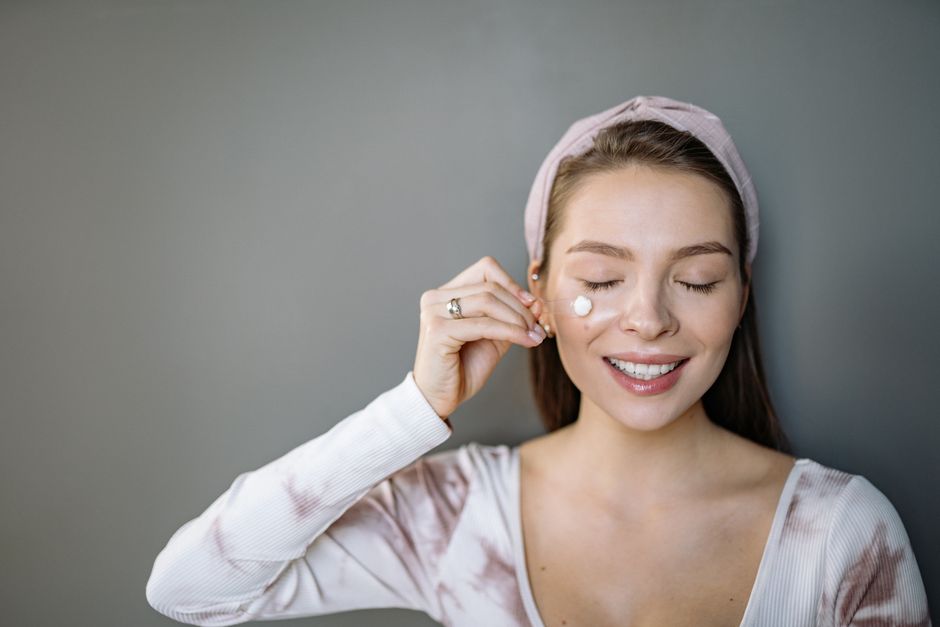
Tretinoin cream is one of the most effective topical treatments for dark spots, also known as hyperpigmentation. To use it correctly, apply a pea-sized amount to clean, dry skin at night, starting with two to three times per week before gradually increasing frequency. Consistent use over several months, combined with daily sunscreen, is what actually fades dark spots and prevents them from returning.
How Does Tretinoin Cream Fade Dark Spots?
Tretinoin is a form of vitamin A called a retinoid. It works by speeding up cell turnover. This means your skin sheds old, pigmented cells faster and replaces them with new, lighter cells.
It also blocks the enzyme that produces melanin, the pigment that gives skin its color. By slowing melanin production, tretinoin stops dark spots from getting darker. Research consistently shows that tretinoin is one of the most studied and effective treatments for hyperpigmentation, including melasma and post-inflammatory hyperpigmentation (PIH).
This is not an overnight fix. Visible improvement typically takes 8 to 12 weeks of consistent use. Full results can take up to six months.
How To Use Tretinoin Cream For Dark Spots: Step-by-Step
How you apply tretinoin matters as much as how often you apply it. The goal is to get results without destroying your skin barrier.
- Wash your face with a gentle cleanser. Wait 20 to 30 minutes until your skin is completely dry. Applying tretinoin to damp skin increases irritation significantly.
- Squeeze out a pea-sized amount only. This is enough for the entire face. Using more does not work better and only increases redness and peeling.
- Dot the cream on your forehead, cheeks, chin, and nose. Then spread it in a thin, even layer. Avoid the corners of your nose, the corners of your mouth, and the eye area.
- Wait 20 to 30 minutes before applying a moisturizer. This is called the sandwich method when done in reverse—moisturizer, then tretinoin, then moisturizer. Both approaches reduce irritation.
- Apply only at night. Tretinoin breaks down in sunlight and increases sun sensitivity.
Start with two nights per week for the first two weeks. If your skin tolerates it, move to every other night for two weeks. Then try nightly use if you have no significant peeling or burning. Many people never reach nightly use, and that is fine. Even three times per week produces results.
Why Sunscreen Is Non-Negotiable
Tretinoin makes your skin more sensitive to UV radiation. Without sunscreen, any dark spot treatment is wasted effort.
Sun exposure triggers melanin production. If you use tretinoin to fade a spot but skip sunscreen, your skin will produce new pigment faster than tretinoin can remove it. You will see no net improvement.
Use a broad-spectrum sunscreen with SPF 30 or higher every morning. Reapply every two hours if you are outdoors. Tretinoin is a treatment, but sunscreen is the prevention. Both are required.




What To Expect: Purging, Peeling, and Irritation
The first few weeks are the hardest. You will likely experience redness, dryness, flaking, and possibly a temporary worsening of acne. This is called retinization.
Your skin is adapting to a faster cell turnover rate. The peeling usually starts around day three to five and can last two to four weeks. This is normal and expected, not a sign that you are doing something wrong.
You can manage irritation with a simple routine. Use a gentle cleanser, a thick moisturizer without fragrance, and no other active ingredients like acids or benzoyl peroxide while your skin adjusts. If irritation is severe, reduce frequency to once per week until your skin calms down.
Some people experience a “purge” where existing clogged pores come to the surface as breakouts. This is not new acne. It is your skin clearing out faster than usual. It typically resolves within six weeks.
What Concentration Should You Use?
Tretinoin comes in several strengths: 0.025%, 0.05%, and 0.1% are the most common. It also comes in a microsphere formulation that releases the drug more slowly and causes less irritation.
Start with the lowest strength, 0.025%, especially if you have sensitive skin or are new to retinoids. Higher strengths do not necessarily work faster for dark spots. They just cause more irritation.
There is no evidence that jumping to 0.1% gives you quicker results. The limiting factor is always your skin’s tolerance. A lower strength used consistently beats a higher strength used sporadically because of irritation.
How Long Until Dark Spots Fade?
Do not judge results in the first month. Your skin is still adjusting, and the dark spots may even look darker at first because of inflammation.
Most people see noticeable lightening of dark spots between 8 and 12 weeks of consistent use. Melasma, which is hormonal hyperpigmentation, often takes longer and may require combination therapy. Post-inflammatory hyperpigmentation from acne or injury usually responds faster.
Complete clearance is not guaranteed. Some spots fade to a barely visible level but never fully disappear. Dark spots that have been present for years are more stubborn than fresh ones.
Can You Use Tretinoin With Other Dark Spot Treatments?
Yes, but only with care. Combining tretinoin with other proven ingredients can improve results, but it also increases irritation risk.
Hydroquinone 2% is a common addition. It directly blocks melanin production. Some dermatologists prescribe a combination of tretinoin and hydroquinone, sometimes with a mild corticosteroid. This is known as a triple combination cream and is highly effective for melasma.
Vitamin C (ascorbic acid) is another option. It is an antioxidant that interrupts the pigment-producing pathway. Use it in the morning and tretinoin at night. This separates them and reduces the chance of irritation.
Azelaic acid can also be combined with tretinoin. It treats both acne and pigmentation. Some research suggests it works well alongside retinoids, but it can be drying.
Do not combine tretinoin with other retinoids, such as adapalene or retinol. That is redundant and increases irritation without benefit.
Who Should Not Use Tretinoin?
Tretinoin is not safe during pregnancy. Oral retinoids are known to cause birth defects, and while topical absorption is low, the risk is not considered acceptable. The general clinical guidance is to stop tretinoin if you are planning a pregnancy or as soon as you know you are pregnant. No clinical guidelines currently support its use during pregnancy.
If you are breastfeeding, discuss it with your doctor. The evidence on topical tretinoin during breastfeeding is limited, and the conservative approach is to avoid it.
People with very sensitive skin conditions like active eczema or rosacea may not tolerate tretinoin. A dermatologist can help determine if a lower strength or an alternative like azelaic acid is better.
Frequently Asked Questions
Can I use tretinoin every night?
Many people can, but only after a gradual build-up over several weeks. If you experience significant peeling or burning, reduce to every other night or twice per week.
Can I apply moisturizer before tretinoin?
Yes, this is called the sandwich method and it reduces irritation. Apply moisturizer, wait 20 minutes, then apply tretinoin, then apply another layer of moisturizer.
Can I use tretinoin in the morning?
No, tretinoin is unstable in sunlight and increases sun sensitivity. Apply it only at night and use sunscreen every morning.
Why are my dark spots darker after starting tretinoin?
This is usually temporary irritation and inflammation. It typically resolves within a few weeks as your skin adjusts to the medication.
