
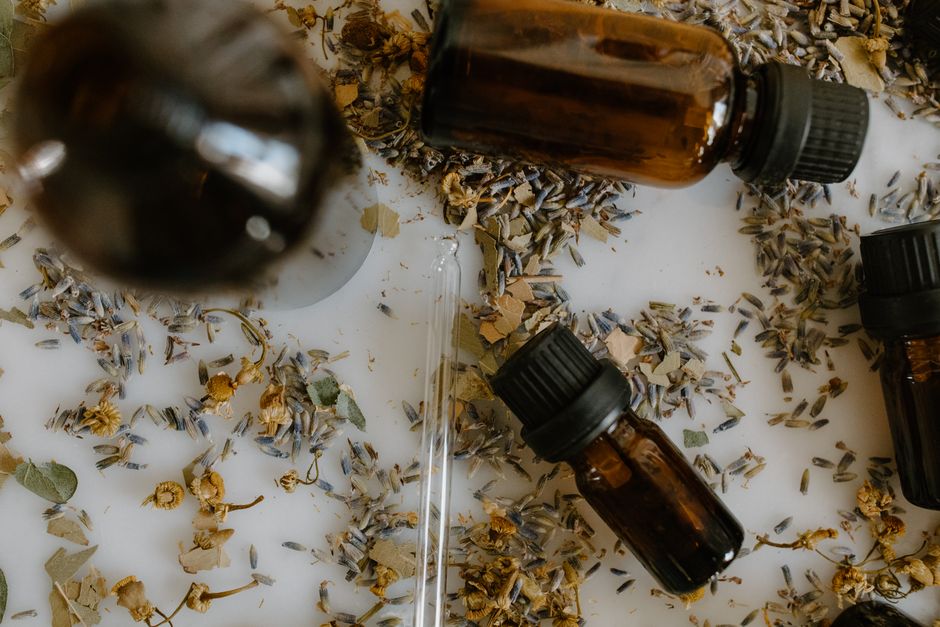
Eucalyptus oil is sometimes suggested as a home remedy for cold sores, but the evidence for using it this way is thin and the safety concerns are real. Cold sores are caused by the herpes simplex virus, usually type 1, and they do not clear because of an essential oil. If you want to try eucalyptus oil, the only defensible approach is dilution, patch testing, and keeping it away from broken skin, the eyes, and the mouth. It is not a treatment for the virus itself, and it should never replace antiviral medicine when that medicine is appropriate.
What Causes Cold Sores and Why That Matters for Treatment
Cold sores are caused by herpes simplex virus type 1, or HSV-1, in most cases. The virus infects the skin around the lips and mouth, then travels up nerve endings and settles into a cluster of nerve cells called a ganglion. It stays there for life.
Most of the time the virus is quiet. When it reactivates, it travels back down the nerve and produces the familiar tingling, then a cluster of small blisters, then a crust that heals over roughly one to two weeks. Triggers include fever, sun exposure, stress, fatigue, and illness. Some people get them often, others rarely.
This biology matters because it explains what any topical product can and cannot do. A substance applied to the skin cannot reach the virus hiding in nerve tissue. It might affect the skin surface, reduce irritation, or possibly influence the local environment, but it cannot eliminate the infection. Any claim that a topical oil “kills the virus” or “stops outbreaks” is describing something the product cannot do.
Does Eucalyptus Oil Actually Help Cold Sores?
No clinical evidence confirms that eucalyptus oil treats cold sores or shortens outbreaks. There is laboratory research on eucalyptus compounds showing antimicrobial and anti-inflammatory activity in test tubes, and some of that work includes antiviral effects against certain viruses. Test-tube results do not translate into proven human benefit.
What exists is mostly traditional use and anecdotal reports. People describe a cooling sensation and sometimes less discomfort. That is plausible for a substance containing eucalyptol, also called cineole, which activates cold-sensing receptors in the skin. A cooling feeling is not the same as an antiviral effect.
There is also a specific concern. Herpes simplex virus is enveloped, meaning it has an outer lipid membrane. Many plant oils can disrupt lipid membranes, which is one reason some show antiviral activity in the lab. But the same property means concentrated oil can damage your own skin cells. The margin between “might affect the virus” and “irritates or burns the skin” is narrow, and on already inflamed skin it is narrower still.
If you have frequent or severe outbreaks, antiviral medication prescribed by a clinician is the approach with actual evidence behind it. Topical and oral antivirals are well studied for reducing duration and frequency. Eucalyptus oil is not in that category.
How To Use Eucalyptus Oil For Cold Sores Safely
The single most important safety step is dilution. Undiluted eucalyptus oil is a known skin irritant and should not be applied directly to a cold sore or to intact skin. A common approach in aromatherapy is to dilute essential oil in a carrier oil, such as jojoba, almond, or olive oil, before any skin contact.
Standard aromatherapy guidance generally uses a low dilution for facial skin. If you choose to try it, use a very small amount of eucalyptus oil in a larger amount of carrier oil, and keep the total concentration low. No clinical guidelines exist for using eucalyptus oil on cold sores specifically, so there is no established dose, concentration, or schedule for this purpose.
Practical steps that reduce risk:
- Do a patch test first. Apply the diluted oil to a small area of your inner forearm and wait 24 hours. If redness, itching, or burning develops, do not use it on your face.
- Never apply undiluted essential oil to a cold sore.
- Do not apply it to broken, cracked, or weeping skin. The blister stage and the stage where the sore has opened are the worst times to introduce an irritant.
- Keep it away from your eyes, nostrils, and lips. Eucalyptus oil near the eyes can cause significant irritation.
- Wash your hands immediately after any contact with the oil.
- Apply with a clean cotton swab rather than your finger to avoid spreading virus to other skin and to avoid contaminating the bottle.
- Stop at the first sign of increased pain, redness, swelling, or blistering.
One non-obvious point: eucalyptus oil is toxic if swallowed, even in small amounts. Products marketed for cold sores are meant for skin only. Keep the bottle away from children and never take it internally.





Who Should Avoid Eucalyptus Oil
Some groups should not use eucalyptus oil at all. Infants and young children are the clearest case. Eucalyptus oil and its main component, eucalyptol, can cause serious harm if applied to the face of a young child, and ingestion can be dangerous. There are no clinical guidelines for using eucalyptus oil on cold sores in infants or children, and it should not be used in this population.
People with asthma or other respiratory conditions should be cautious. Eucalyptus vapor can trigger coughing or bronchospasm in some individuals, and reactions vary. If you have a respiratory condition, talk to a clinician before using eucalyptus products.
Anyone with sensitive skin, eczema, or a history of allergic contact dermatitis should be especially careful. Eucalyptus oil is a recognized cause of allergic skin reactions. If you have reacted to fragrances or essential oils before, your risk is higher.
Pregnant and breastfeeding women should avoid using eucalyptus oil on cold sores. No clinical guidelines establish a safe dose for this group, and the oil can be absorbed through skin. The conservative position is to skip it.
If you take prescription medication, mention any essential oil use to your pharmacist. Some oils can interact with drugs, and while eucalyptus is not among the most studied for interactions, it is not risk-free.
What Actually Helps a Cold Sore Heal
Cold sores heal on their own in most healthy people, typically over one to two weeks. What you do topically mainly affects comfort, not the underlying course.
Established approaches include antiviral creams applied at the first tingle, which some studies show can shorten healing time modestly when started early. Oral antivirals prescribed by a clinician are used for frequent, severe, or persistent outbreaks. For pain, over-the-counter options such as a topical anesthetic or a cool compress can help.
General care that supports healing:
- Keep the area clean and dry.
- Avoid picking at the blister or crust, which can spread virus to fingers and other skin.
- Do not share towels, lip balm, utensils, or cups during an outbreak.
- Use sun protection on the lips, since sun exposure is a common trigger.
- Wash hands often, especially after touching your face.
See a clinician if a cold sore lasts longer than about two weeks, if it is large or spreading, if you have a weakened immune system, or if you get outbreaks very often. In those situations, prescription treatment is the appropriate path.
Comparing Options: What the Evidence Shows
The table below summarizes the general evidence position for common cold sore approaches. It is not a treatment recommendation.
| Approach | Evidence Position | Notes |
|---|---|---|
| Prescription oral antivirals | Well studied for reducing duration and frequency | Requires a clinician |
| Topical antiviral creams | Some evidence for modest benefit when started early | Timing matters |
| Eucalyptus oil | No clinical evidence for cold sores | Irritation and toxicity risks |
| Cool compress, pain relief | Supports comfort, not healing | Low risk |
The gap between the first two rows and the third is the honest summary. Eucalyptus oil has a plausible cooling effect and a real irritation risk. It does not have the evidence base that antivirals do.
Frequently Asked Questions
Can eucalyptus oil cure a cold sore?
No. No clinical evidence confirms that eucalyptus oil cures cold sores or removes the virus, which stays dormant in nerve tissue for life. It may feel cooling on the skin, but that is not a cure.
Can I put undiluted eucalyptus oil on a cold sore?
No. Undiluted eucalyptus oil is a known skin irritant and can burn or damage already inflamed skin. If you use it at all, dilute it heavily in a carrier oil and patch test first.
Is eucalyptus oil safe for children with cold sores?
No. Eucalyptus oil should not be used on the face of infants or young children, and no clinical guidelines exist for using it on cold sores in this group. Antiviral options should be discussed with a clinician instead.
What should I use instead of eucalyptus oil for a cold sore?
Topical antiviral creams started at the first tingle have some evidence for modest benefit, and prescription oral antivirals are used for frequent or severe outbreaks. A cool compress can help with comfort.
