
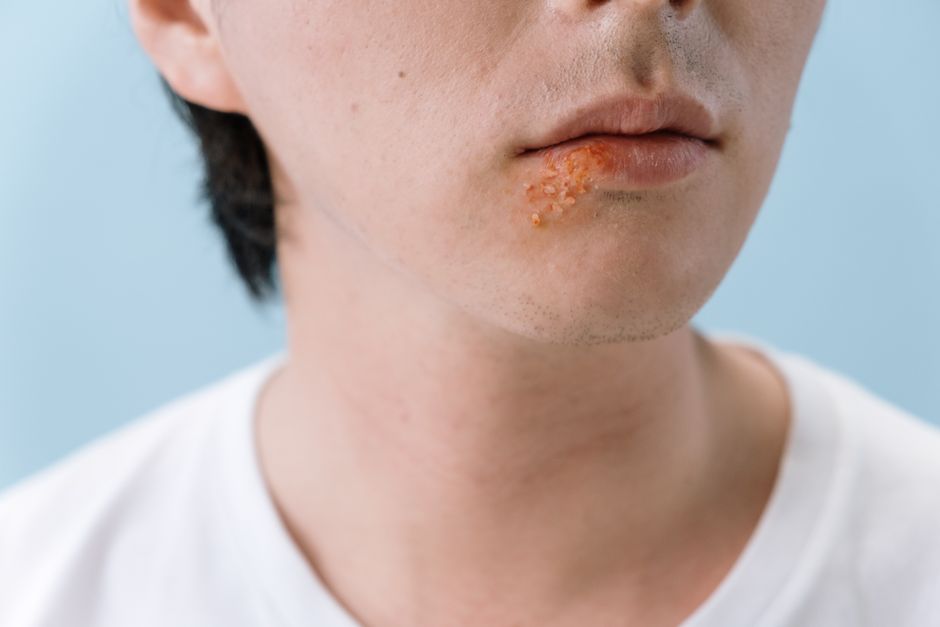
Cold sores inside the mouth are not the same as the ones on your lips. The blisters on your lips are caused by the herpes simplex virus, but the painful ulcers you get inside your cheeks, on your gums, or under your tongue are usually canker sores. These are not contagious and are not caused by the herpes virus. Removing them involves managing the pain, reducing inflammation, and letting your mouth’s natural healing process take over. Most canker sores heal on their own within one to two weeks without any specific treatment.
What Are Cold Sores Inside the Mouth Exactly?
People often use the term “cold sore” for any painful spot in the mouth. That creates confusion. True cold sores, also called fever blisters, are fluid-filled blisters caused by the herpes simplex virus type 1. They almost always appear on the outside of the mouth — on the lips, around the nose, or on the chin.
Sores that develop inside the mouth are medically known as aphthous ulcers, or canker sores. They are shallow, round, or oval lesions with a white, yellow, or gray center and a red border. Unlike cold sores, canker sores are not contagious and are not a sexually transmitted infection. They are not caused by a virus at all.
Occasionally, a true herpes outbreak can appear on the gums or the roof of the mouth, especially during a first infection. This is called herpetic gingivostomatitis and is more common in children. But for most adults, a recurring sore inside the mouth is a canker sore.
What Causes These Sores to Form?
The exact cause of canker sores is not fully understood. Researchers believe several factors contribute to their development rather than a single trigger.
Common triggers include minor injuries to the inside of the mouth. Biting your cheek, brushing too hard, or eating sharp or crunchy foods can damage the delicate lining and start an ulcer. Stress is another frequently reported trigger. Some people notice sores appear during periods of high emotional strain or fatigue.
Dietary factors may play a role. Some research suggests that deficiencies in vitamin B12, iron, or folate could make a person more prone to developing these sores. Certain foods like acidic fruits, tomatoes, chocolate, and coffee are often reported as triggers, though the evidence linking specific foods to outbreaks is not strong.
Hormonal changes may also be involved. Some women report more frequent canker sores during certain phases of their menstrual cycle. In some cases, canker sores run in families, which suggests a genetic component.
How To Remove Cold Sores Inside Mouth: Proven Methods
You cannot remove a canker sore instantly. No treatment makes it disappear overnight. What you can do is speed up healing, reduce pain, and prevent the sore from getting worse.
Over-the-counter topical products are the first line of treatment. Gels and pastes containing benzocaine or lidocaine numb the area and provide temporary pain relief. These are applied directly to the sore and can make eating and drinking more comfortable. Products that form a protective barrier over the ulcer, such as those containing carboxymethylcellulose, shield the sore from irritation while it heals.
Prescription options exist for more severe cases. Your doctor or dentist may prescribe an anti-inflammatory mouth rinse containing a steroid like dexamethasone. These reduce swelling and pain but require a prescription and should be used under professional supervision.
Some clinicians recommend a paste made by mixing a small amount of milk of magnesia with an allergy tablet like Benadryl. This mixture is applied directly to the sore. It is a common home remedy, but clinical evidence supporting its effectiveness is limited. Some patients find it soothing, others do not.




Home Remedies That Actually Work
Salt water rinses are a simple and effective home treatment. Dissolve half a teaspoon of salt in a glass of warm water and swish it around your mouth for about 30 seconds. This helps keep the area clean and may reduce inflammation. Do this two to three times a day. It stings at first, but the discomfort fades.
Baking soda rinses work in a similar way. Mix one teaspoon of baking soda in half a cup of warm water and rinse. This can help neutralize acids in the mouth that may irritate the sore.
Applying a small amount of honey to the sore is another option. Honey has natural antibacterial properties, and some research suggests it may help speed up wound healing. Apply a thin layer directly to the ulcer a few times a day. Be aware that the honey will dissolve quickly in saliva.
Ice can provide relief. Sucking on an ice cube or holding a small piece of ice against the sore numbs the area and reduces swelling. This is a temporary fix for pain rather than a healing treatment.
Avoid anything that makes the sore worse. Spicy foods, acidic foods, salty snacks, and rough or crunchy textures can all irritate the ulcer. Carbonated drinks and alcohol can also sting. Stick to soft, bland foods until the sore heals.
When Do You Need To See a Doctor?
Most canker sores heal without medical care. But some situations warrant a professional evaluation.
See a doctor or dentist if the sore lasts longer than two weeks. Sores that do not heal may be something other than a canker sore and need proper diagnosis. Seek medical attention if the sore grows unusually large, if you develop multiple sores at once, or if the pain is severe enough to interfere with drinking fluids.
Fever, swollen lymph nodes, or feeling generally unwell along with mouth sores may indicate a different condition that requires medical evaluation. Recurring sores that keep coming back can also be a sign of an underlying health issue worth investigating.
If you have a weakened immune system from a medical condition or medication, any mouth sore should be checked by a professional. What looks like a simple canker sore could be something more serious in this population.
Can You Prevent Future Sores?
Prevention is not guaranteed, but you can reduce your risk. The most effective strategy is identifying your personal triggers. If you notice sores appear after eating certain foods, avoid those foods. If stress seems to bring them on, stress management techniques like exercise, meditation, or adequate sleep may help.
Good oral hygiene matters, but be gentle. Brushing too aggressively can damage the mouth lining and trigger a sore. Use a soft-bristled toothbrush and avoid toothpaste containing sodium lauryl sulfate if you suspect it irritates your mouth. The evidence linking SLS to canker sores is mixed, but some people report fewer outbreaks when they switch.
If you have frequent recurrent canker sores, talk to your doctor about whether a vitamin deficiency could be contributing. A blood test can check your levels of vitamin B12, iron, and folate. If you are deficient, supplementation may reduce the frequency of outbreaks. Do not start supplements without a blood test confirming a deficiency.
What Does Not Work for Mouth Sores?
Antiviral medications do not help canker sores. These drugs, like acyclovir or valacyclovir, are designed to treat herpes virus infections. Since canker sores are not caused by a virus, antiviral treatment has no effect on them.
Many online sources recommend applying tea tree oil, hydrogen peroxide, or other antiseptic products directly to the sore. These can be harsh and may actually delay healing by damaging healthy tissue. Diluted hydrogen peroxide mouthwash is sometimes recommended by dentists, but applying it full strength to the sore is not advisable.
Lysine supplements are popular for cold sores on the lips. Some evidence suggests lysine may help prevent herpes outbreaks, but no strong evidence shows it helps canker sores heal faster or prevents them from forming.
Frequently Asked Questions
Can I pop a cold sore inside my mouth?
No. Canker sores are not fluid-filled blisters, so there is nothing to pop. Attempting to drain or scrape the sore will increase pain and delay healing.
How long does a cold sore inside the mouth last?
Canker sores typically heal within one to two weeks without treatment. Larger or more severe sores may take up to three weeks to fully resolve.
Are cold sores inside the mouth contagious?
Canker sores are not contagious and cannot be passed to another person. True cold sores on the lips caused by the herpes virus are contagious through direct contact.
What is the fastest way to get rid of a mouth ulcer?
Using an over-the-counter numbing gel provides immediate pain relief, and keeping the area clean with salt water rinses supports faster healing. No method makes the sore disappear instantly.
