
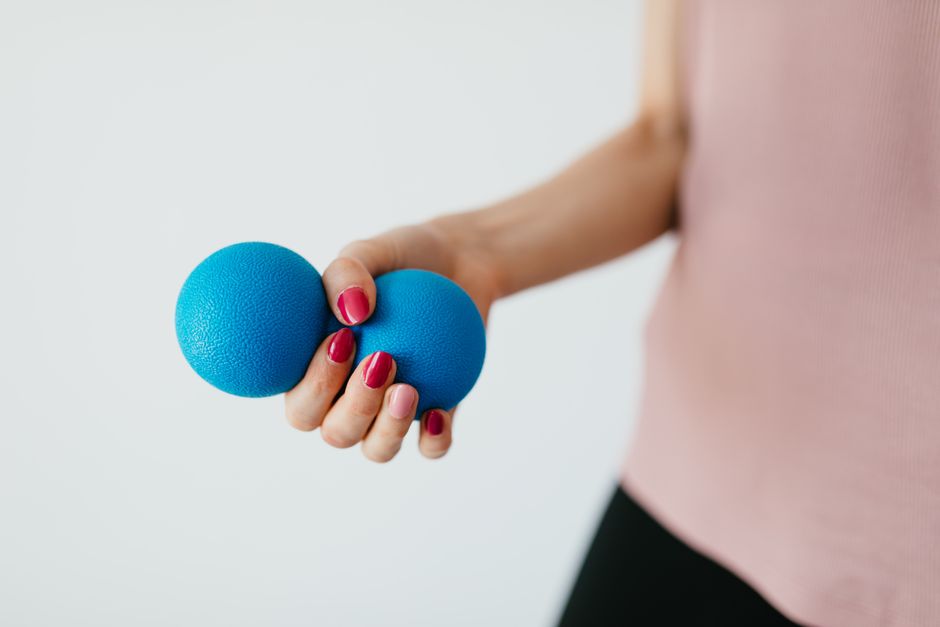
A peanut ball is a large, peanut-shaped exercise ball used during labor to help open the pelvis and encourage the baby to descend. You use it by placing it between your thighs while lying on your side, which keeps your hips flexed and widens the pelvic outlet. This position can help shorten the first stage of labor, reduce the need for epidural-related interventions, and improve comfort during contractions.
What Is a Peanut Ball and How Does It Work?
A peanut ball looks like two exercise balls fused together. It comes in different sizes, typically ranging from 40 cm to 60 cm, and is inflated to varying firmness levels.
The ball works through simple mechanics. When you lie on your side with the ball between your knees and ankles, your top leg stays elevated and your hips remain open. This position, called side-lying with hip flexion, increases the diameter of the pelvic inlet and outlet. A wider pelvis gives the baby more room to rotate and descend through the birth canal.
Research published in obstetrics journals has found that using a peanut ball during the first stage of labor can reduce the duration of labor by about 29 minutes on average. Some studies also report lower rates of cesarean delivery among women who used the ball, though results vary between studies.
How To Use A Peanut Ball During Labor Positions
The most common and effective position is side-lying. Place the ball between your thighs with your top leg resting over the middle of the ball. Your bottom leg can stay straight or bend slightly. The ball should sit between your knees and ankles, not at your feet or hips.
Adjust the ball so your hips are flexed at about a 90-degree angle. This opens the pelvis without putting strain on your lower back. Your nurse or birth partner can help you reposition the ball between contractions.
Other positions include:
- Side-lying with the ball between knees – the standard position, best for the first stage of labor.
- Semi-sitting with the ball between knees – useful if you need to stay more upright or if your baby needs monitoring.
- Kneeling with the ball under the chest – this position opens the pelvis while allowing you to rest your upper body.
- Hands-and-knees with the ball under the chest – helpful for rotating a baby in a posterior position.
Switch positions every 30 to 60 minutes unless your care team advises otherwise. Changing positions regularly helps the baby move into the optimal position and prevents your muscles from tiring in one spot.
When to Start Using a Peanut Ball
Most hospitals introduce the peanut ball when labor is established and the cervix is dilated to at least 3 to 4 centimeters. This is typically the active phase of the first stage of labor.
Using the ball earlier, during early labor, is less common because the baby is usually still high in the pelvis. The ball is most effective once the baby’s head has engaged in the pelvis and contractions are strong enough to push the baby down.
If you have an epidural, the peanut ball becomes especially useful. Epidurals limit your ability to move your legs and change positions independently. The ball lets you maintain an upright or side-lying position without needing to bear weight on your legs. Your nurse can position the ball for you and adjust it between contractions.





Who Should Avoid a Peanut Ball?
Peanut balls are generally safe for low-risk pregnancies. However, some situations require caution.
If you have a high-risk pregnancy, placenta previa, preeclampsia, or a condition that limits fetal movement, your care team may advise against using the ball. Women with severe hip or knee problems may also find the position uncomfortable or unsafe.
Always ask your doctor or midwife before using a peanut ball if you have any medical condition. The decision should be based on your individual circumstances, not a general rule.
Does a Peanut Ball Reduce Pain or the Need for Interventions?
The evidence on pain relief is mixed. Some women report less discomfort because the position relieves pressure on the lower back and hips. Others find the ball uncomfortable at first and need time to adjust.
Studies have more consistently found that peanut ball use is associated with shorter labor and a lower likelihood of cesarean delivery in certain groups. A review of several trials found a reduction in the rate of cesarean sections among women who used the peanut ball during the first stage of labor. The same review noted that the ball did not appear to reduce the need for forceps or vacuum-assisted delivery.
It is important to understand that the peanut ball is a positioning tool, not a medical intervention. It does not replace the need for pain medication or an epidural if you want them. It simply helps your body work more efficiently during labor.
Tips for Getting the Most Out of a Peanut Ball
Start with the ball partially deflated. A softer ball is more comfortable and conforms better to your body. Your nurse can add air if you need more support.
Use the ball during contractions and rest between them. The position matters more during a contraction because that is when the uterus is actively pushing the baby down.
Do not use the ball alone. Always have a nurse, midwife, or birth partner nearby. The ball can roll, and you need someone to help you reposition safely, especially if you have an epidural and cannot feel your legs.
If the position feels wrong or painful, say so. Your care team can adjust the ball or try a different position. Labor is not the time to push through discomfort that could be easily fixed.
Comparing Peanut Ball Positions
| Position | Best For | What It Does |
|---|---|---|
| Side-lying with ball between knees | First stage of labor, epidural | Widens pelvic outlet, allows rest |
| Semi-sitting with ball between knees | Needing to stay upright | Uses gravity, opens pelvis |
| Kneeling with ball under chest | Back labor, posterior baby | Relieves back pressure, encourages rotation |
| Hands-and-knees with ball under chest | Posterior baby position | Encourages baby to rotate anterior |
What the Evidence Does and Does Not Show
Research on peanut balls is still developing. The largest studies have been conducted in hospital settings with women who had epidurals. Less is known about how the ball works for women without epidurals or during home births.
Some research suggests that using a peanut ball can shorten the first stage of labor by roughly 30 minutes. This is a modest benefit, not a dramatic change. The clinical significance of this reduction is debated among obstetricians.
No study has shown that a peanut ball guarantees a vaginal delivery or prevents a cesarean. It is one tool among many that may help labor progress more smoothly. Your care team will make the final call on interventions based on the health of you and your baby.
Frequently Asked Questions
Can I use a peanut ball before I get an epidural?
Yes, you can use a peanut ball before an epidural if you are in active labor and your care team approves. It may help labor progress and reduce discomfort, though the strongest evidence applies to women with epidurals.
How long should I stay in each peanut ball position?
Most nurses recommend changing positions every 30 to 60 minutes. Staying too long in one position can tire your muscles and reduce the benefit of the ball.
Does a peanut ball help with back labor?
Some women find relief from back labor when using a peanut ball in a kneeling or hands-and-knees position. These positions reduce pressure on the lower back and may help a posterior baby rotate into a better position.
