
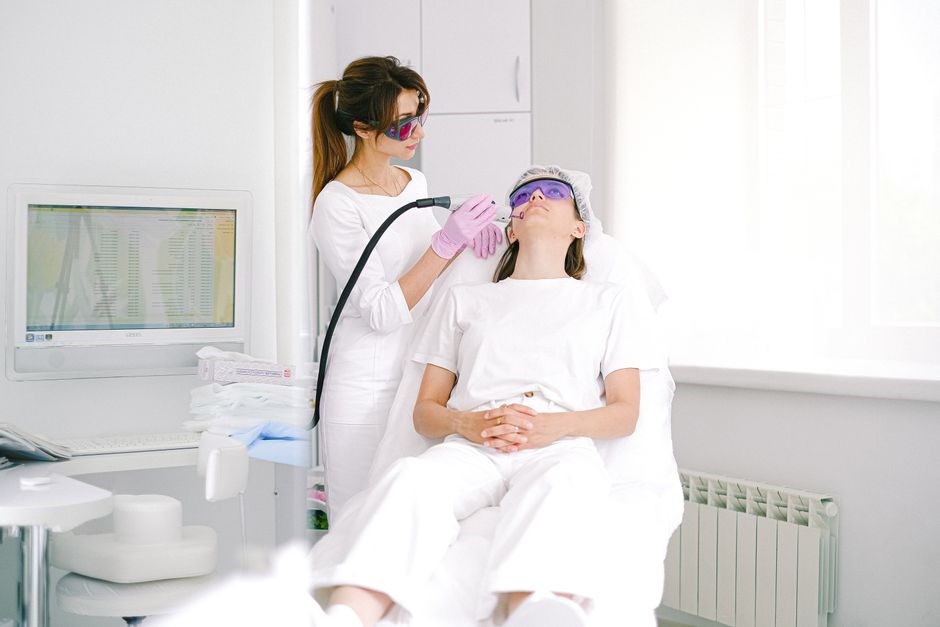
Many people considering laser therapy for pain relief, skin issues, or hair removal share one main worry: does it hurt? The short answer is that most people feel a mild snapping, tingling, or warming sensation rather than actual pain. Treatments are typically well-tolerated without numbing, though the sensation varies by laser type, body area, and your personal pain tolerance.
What Does Laser Therapy Actually Feel Like?
The sensation during laser therapy is often compared to a rubber band snapping against the skin. For most patients, this is more surprising than painful. Each pulse of the laser lasts only a fraction of a second, so any discomfort is brief.
Different laser types produce different sensations. Cold lasers used for tissue repair and inflammation usually feel like a gentle warmth or nothing at all. Hair removal lasers create that snapping feeling. Vascular lasers for spider veins or rosacea often produce a quick sting followed by a cooling sensation from the device.
The area being treated matters too. Thin skin on the upper lip or bikini line tends to be more sensitive. Areas with more fat or thicker skin, like the legs or back, typically feel less intense.
Does Laser Therapy Hurt What To Expect During Treatment for Different Conditions
What you are treating changes what you feel. For laser hair removal, the sensation is a quick snap with each pulse. Modern devices have built-in cooling technology that activates before and after each laser pulse, which significantly reduces discomfort. Most clinics apply a cooling gel or use a chilled handpiece.
For laser skin resurfacing, used for wrinkles or scars, a topical numbing cream is applied 30 to 60 minutes before treatment. With numbing, most patients report a feeling of heat or prickling but not sharp pain. Fractional lasers, which treat only tiny columns of skin, are less intense than fully ablative lasers.
Low-level laser therapy (LLLT) for joint pain, tendonitis, or muscle recovery produces no pain at all. You may feel a slight warmth or nothing. This type of therapy uses much lower energy levels and is considered completely painless by nearly all patients.
Research published in Lasers in Medical Science found that over 90 percent of patients rated their discomfort during LLLT as zero or minimal on a standard pain scale.
What Factors Affect How Much It Hurts
Pain during laser therapy is not random. Several factors determine your experience.
- Laser type and settings — Higher energy levels for stubborn hair or deep wrinkles create more sensation. Lower settings for maintenance sessions feel milder.
- Skin tone — Darker skin absorbs more laser energy, which can increase the heating sensation. Modern lasers with longer wavelengths are safer and more comfortable for darker skin types.
- Treatment area — Bony areas like the shin or ankle hurt more than fleshy areas. Areas near mucous membranes are also more sensitive.
- Your pain tolerance — This varies widely between people. What feels like a mild pinch to one person may feel sharper to another.
- Time in your menstrual cycle — Some women report higher sensitivity during certain phases, though evidence for this is mixed.
Most clinics offer a test patch before your first full treatment. This lets you feel the sensation on a small area and adjust settings if needed.




What the Research Says About Pain During Laser Therapy
Clinical studies consistently show that laser therapy is well-tolerated. A 2022 review in the Journal of the American Academy of Dermatology examined over 40 studies on laser hair removal pain. The researchers found that more than 85 percent of patients completed their full treatment course without needing any pain medication.
Another study in Photomedicine and Laser Surgery compared patient pain scores across different laser types for skin rejuvenation. On a 0 to 10 pain scale, the average score was 2.3 for fractional lasers and 1.1 for low-level lasers. Most patients described the sensation as “mild” or “barely noticeable.”
The American Society for Laser Medicine and Surgery reports that serious pain during treatment is rare and usually indicates the laser settings need adjustment. If you feel sharp or burning pain, tell your provider immediately. They can lower the energy or adjust the cooling.
How Clinics Reduce Discomfort During Treatment
Providers use several methods to keep you comfortable. Many are built into the laser itself. Contact cooling uses a chilled sapphire window on the laser handpiece that cools the skin before, during, and after each pulse. Cryogen spray releases a cold burst of refrigerant onto the skin just before the laser fires.
For more sensitive areas or aggressive treatments, topical numbing creams containing lidocaine or prilocaine are applied 30 to 60 minutes ahead of time. These reduce surface sensation without affecting deeper tissues. Some clinics also use vibrating devices near the treatment area. The vibration distracts your nerves and reduces the perception of pain — a technique called gate control theory.
After treatment, cooling packs or aloe vera gel are often applied. Most patients describe the post-treatment sensation as similar to a mild sunburn that fades within a few hours.
Laser Therapy Pain Compared to Other Common Treatments
A comparison can help you know what to expect if you have experienced other medical or cosmetic procedures.
| Treatment | Typical Pain Level (0-10) | Sensation Description |
|---|---|---|
| Low-level laser therapy | 0-1 | Warmth or nothing |
| Laser hair removal | 2-4 | Rubber band snap, brief |
| Laser skin resurfacing (with numbing) | 2-3 | Heat, prickling |
| Injections (Botox, fillers) | 3-5 | Pinch, burning |
| Tattoo removal laser | 4-6 | Sharp snap, hot grease spatter |
| Waxing | 3-6 | Tearing, pulling |
Laser therapy is generally less painful than waxing or injections for most people. Tattoo removal is the most intense laser treatment, but even that is brief and manageable for most patients.
What to Avoid Before Laser Therapy
You can make your session more comfortable by avoiding a few things beforehand. Do not apply any numbing creams or gels unless your provider gives them to you. Some over-the-counter numbing products can interfere with laser absorption or cause skin reactions.
Avoid sun exposure and tanning for at least two weeks before treatment. Sunburned or tanned skin absorbs laser energy unevenly, which increases pain and risk of burns. Stop using retinoid creams or exfoliating acids on the treatment area for three to five days before your session. These products thin the skin and make it more sensitive.
Do not wax, pluck, or use depilatory creams on the area for at least four weeks before laser hair removal. The laser targets the hair root, and these methods remove it. Shaving is fine and actually recommended the day before treatment.
Common Misconceptions About Laser Therapy Pain
A popular myth is that laser therapy burns the skin. This is not accurate for properly performed treatments. Lasers target specific chromophores — melanin in hair, hemoglobin in blood vessels, or water in skin cells. The surrounding tissue is largely unaffected. A burning sensation during treatment usually means the settings need adjustment, not that damage is occurring.
Another myth is that laser therapy becomes more painful with each session. The opposite is true for most people. As hair thins or skin improves, lower energy levels are needed, and the sensation decreases. Some patients actually fall asleep during their sessions.
The idea that numbing cream eliminates all pain is also overstated. Numbing cream reduces surface sensation but does not block the deeper heating effect of the laser. You will still feel something, but it will be much less intense.
Frequently Asked Questions
Does laser hair removal hurt more on certain body parts?
Yes, areas with thinner skin like the upper lip, bikini line, and underarms are typically more sensitive than legs or arms.
Can I take pain medication before laser therapy?
You can take acetaminophen if needed, but avoid ibuprofen or aspirin as they may increase bruising risk.
How long does the pain last after laser treatment?
Most discomfort fades within a few hours, with some mild warmth or redness lasting up to 24 hours.
Is laser therapy safe for sensitive skin?
Yes, but your provider should use lower energy settings and test a small patch first to see how your skin reacts.
