
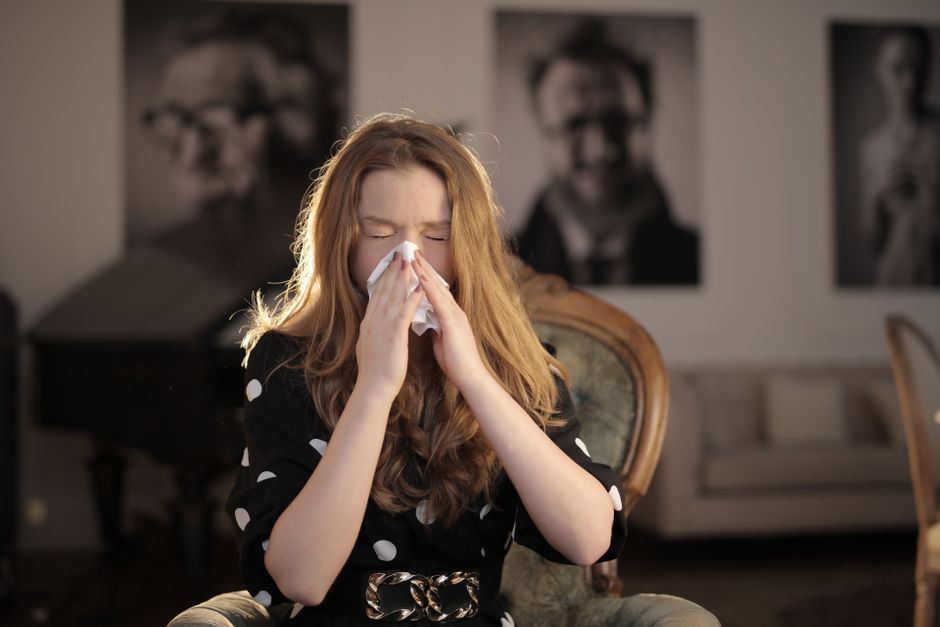
Sneezing is a reflex your body uses to clear irritants from the nasal passages, and it usually stops on its own without treatment. Most sneezing is caused by allergies, colds, or airborne irritants like dust and smoke. The most effective relief comes from removing the trigger when possible and using antihistamines or nasal corticosteroid sprays for allergy-related sneezing.
What Actually Causes Sneezing?
Sneezing starts when something irritates the lining of your nose. The trigeminal nerve detects the irritant and sends a signal to the brainstem. The brain responds by triggering a coordinated burst of muscle contractions. Your chest muscles tighten, your throat closes briefly, and air is forced out through your nose and mouth at high speed.
The purpose is to expel whatever is irritating the nasal lining. This is why sneezing is sometimes called a nasal clearance reflex.
Common triggers fall into a few broad groups:
- Allergens — pollen, dust mites, pet dander, mold spores
- Infections — viral colds and flu, which inflame nasal tissue
- Irritants — smoke, strong odors, pollution, household chemicals
- Physical factors — sudden bright light, cold air, spicy food
- Medications — some drugs list sneezing as a side effect
One non-obvious point: not everyone who sneezes has allergies. A condition called vasomotor rhinitis causes chronic sneezing and runny nose without any allergic trigger. It is driven by nerve sensitivity rather than an immune response. This distinction matters because allergy medications often do not work well for vasomotor rhinitis.
How To Treat Sneezing Causes Remedies And Relief?
Treatment depends entirely on what is causing the sneezing. There is no single remedy that works for every cause. The table below shows which approaches have the strongest evidence for each common trigger.
| Cause | First-Line Approach | Evidence Strength |
|---|---|---|
| Allergic rhinitis | Nasal corticosteroid spray; oral antihistamines | Strong — well-established in clinical guidelines |
| Viral cold | Rest, fluids, time; symptoms typically resolve in 7–10 days | Strong for viral course; remedies offer modest symptom relief |
| Non-allergic (vasomotor) rhinitis | Trigger avoidance; some prescription nasal sprays | Moderate — treatment response varies |
| Physical triggers (light, cold air) | Avoidance or adaptation; no medication needed | Strong for avoidance; no drug targets this reflex |
| Medication side effect | Discuss with prescribing clinician | Varies by drug |
For allergy-driven sneezing, nasal corticosteroid sprays are generally considered the most effective single treatment. They reduce inflammation in the nasal lining over days to weeks. Oral antihistamines work faster — often within an hour — but mainly target sneezing and itching rather than congestion.
For cold-related sneezing, no medication shortens the illness. Decongestants may reduce nasal swelling, and antihistamines may dry secretions, but these treat symptoms only. They do not speed recovery.
Do Home Remedies For Sneezing Actually Work?
Some home remedies have reasonable supporting evidence. Others do not.
Saline nasal rinses have the best support among home options. Rinsing with sterile saline solution can physically remove allergens and irritants from the nasal passages. Research indicates this can reduce sneezing and congestion, particularly for allergy and cold symptoms. Use distilled, sterile, or previously boiled water — never untreated tap water.
Steam and humidification may ease irritation by keeping nasal passages moist. The evidence is modest, but the approach is low-risk. Dry air can worsen nasal irritation, so a humidifier in dry climates or winter months may help some people.
Honey has some evidence for soothing cough, but not specifically for sneezing. It is not a proven sneeze remedy.
Vitamin C, echinacea, and zinc are widely marketed for cold and allergy relief. The evidence for sneezing specifically is weak or absent. Some studies show modest effects on cold duration with zinc, but results vary and side effects like nausea are common.
Acupuncture has been studied for allergic rhinitis. Some trials show benefit, but results are inconsistent and the effect size is generally small. It is not a replacement for standard treatment.





When Should Sneezing Concern You?
Most sneezing is harmless. It becomes worth investigating when it is persistent, one-sided, or accompanied by other symptoms.
See a clinician if you notice:
- Sneezing that continues for weeks without an obvious cause
- Sneezing from only one nostril
- Blood or unusual discharge from the nose
- Facial pain, pressure, or fever
- Sneezing that starts after a head injury
- Sudden onset with difficulty breathing
One-sided sneezing or nasal obstruction is uncommon and may point to a structural issue such as a polyp or foreign object. This is not something to self-treat.
Chronic sneezing that does not respond to allergy treatment may be non-allergic rhinitis. A clinician can help distinguish between the two.
Can You Stop A Sneeze Once It Starts?
Usually no. Once the reflex is triggered, the brainstem has already sent the signal. Trying to suppress it can be uncomfortable and, in rare cases, harmful.
Forcefully holding your nose and mouth closed during a sneeze can increase pressure in your airways and ears. There are case reports of ear injury and even throat injury from suppressed sneezes. The safer approach is to let it happen and cover your mouth and nose.
Prevention works better than suppression. If you know a trigger is coming — like walking into a dusty room — you may reduce the reflex by breathing through your mouth briefly or stepping away from the trigger.
How Can You Prevent Sneezing Before It Starts?
Prevention depends on identifying your triggers. This is the most important step, and it is often overlooked.
For indoor allergens:
- Use allergen-proof covers on bedding
- Wash bedding weekly in hot water
- Keep indoor humidity below 50% to limit mold and dust mites
- Use HEPA filters in vacuums and air purifiers
For outdoor allergens:
- Check pollen counts and limit outdoor time when counts are high
- Shower and change clothes after being outdoors
- Keep windows closed during peak pollen season
For irritant triggers, avoidance is the most reliable approach. If smoke, perfume, or cleaning chemicals trigger sneezing, reducing exposure is more effective than any medication.
For people with confirmed allergic rhinitis, starting nasal corticosteroid sprays before allergy season begins may reduce symptom severity. This is a common clinical strategy, though individual response varies.
What About Medication For Sneezing?
Several classes of medication target sneezing. Each works differently.
Oral antihistamines block histamine, a chemical released during allergic reactions. They reduce sneezing, itching, and runny nose. Second-generation antihistamines like loratadine, cetirizine, and fexofenadine cause less drowsiness than older options. Some people still experience fatigue.
Nasal corticosteroid sprays reduce inflammation directly in the nose. They are generally more effective than antihistamines for nasal symptoms, including sneezing. They take several days to reach full effect.
Combination sprays that contain both an antihistamine and a corticosteroid are available by prescription. Some evidence indicates they may work faster than corticosteroid sprays alone.
Decongestants reduce swelling but do not directly target sneezing. Oral decongestants can raise blood pressure and are not appropriate for everyone.
No medication is without potential side effects. If you take other medications or have conditions like high blood pressure or glaucoma, talk to a pharmacist or clinician before starting something new.
Frequently Asked Questions
What is the fastest way to stop sneezing?
There is no way to stop a sneeze once the reflex has started. For ongoing sneezing, an oral antihistamine may reduce symptoms within about an hour, while nasal corticosteroid sprays take several days to work fully.
Can sneezing be a sign of something serious?
Most sneezing is not serious and comes from allergies, colds, or irritants. Sneezing from only one nostril, or sneezing with blood, facial pain, or fever, should be evaluated by a clinician.
Do antihistamines work for all types of sneezing?
No. Antihistamines work well for allergic sneezing but are generally not effective for non-allergic rhinitis or sneezing caused by physical triggers like bright light or cold air.
Is holding in a sneeze dangerous?
Forcefully blocking a sneeze by pinching your nose and closing your mouth can increase pressure in your ears and airways. There are case reports of injury from this, so it is better to let the sneeze out.
