
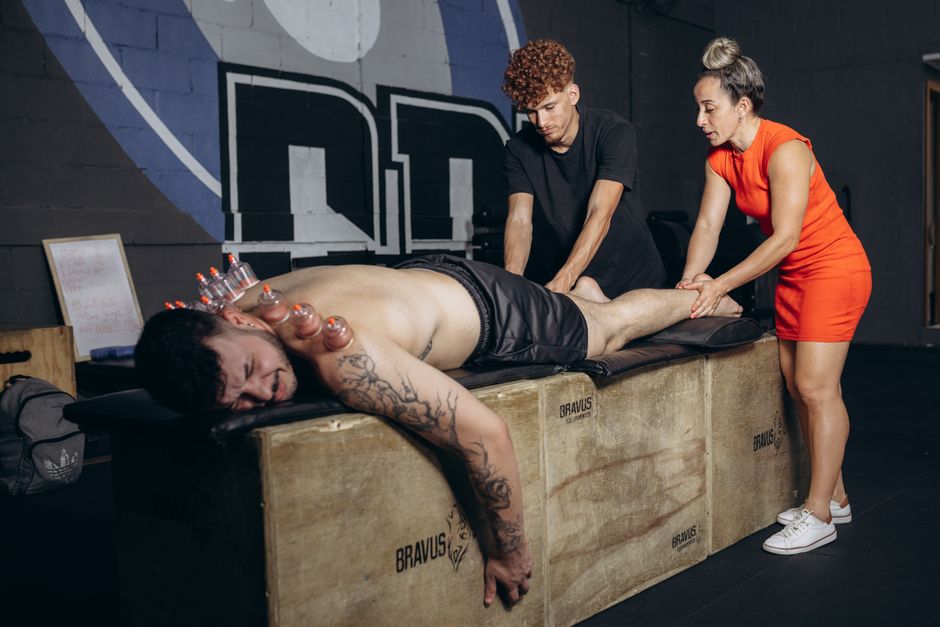
A muscle injury happens when fibers in the muscle are stretched too far or torn. Most everyday muscle strains are treated at home with rest, ice, compression, and elevation during the first 48 hours, followed by gentle movement as pain allows. Severe injuries — sudden pop, major swelling, inability to bear weight, or loss of strength — need medical evaluation rather than home care.
What Actually Happens Inside a Strained Muscle?
A strain is a tear in muscle fibers or in the tendon that attaches muscle to bone. The tear can be microscopic or, in serious cases, a complete rupture.
The injury usually happens when a muscle contracts hard while being stretched. Think of a sprinter pushing off, or someone lifting a heavy box with a twisted torso. The fibers cannot handle the combined load and give way.
Your body responds with inflammation. Blood vessels in the area widen and leak fluid into the tissue. Immune cells arrive to clear damaged material and start repair. This is normal healing, not a problem to eliminate. Swelling and pain are part of the process, though excessive swelling can slow recovery by limiting blood flow.
Muscle strains are graded by how much tissue is torn:
- Grade 1 — a few fibers stretched or slightly torn. Mild pain, no real strength loss.
- Grade 2 — a partial tear. Noticeable pain, some swelling, clear weakness.
- Grade 3 — a complete tear or rupture. Severe pain, significant swelling, inability to use the muscle.
Most people who pull a muscle have a grade 1 or grade 2 injury. Grade 3 tears are uncommon in daily life and typically require medical care.
How To Treat Muscle Injury in the First 48 Hours
The first two days matter because that is when bleeding and swelling peak. What you do during this window shapes how quickly the muscle can start repairing itself.
Rest. Stop using the injured muscle for activity that causes pain. This does not mean total bed rest. Gentle movement within a pain-free range helps circulation. Complete immobilization for days can actually stiffen the muscle and delay recovery.
Ice. Apply cold packs for about 15 to 20 minutes at a time, several times a day. Wrap the pack in a thin cloth — never put ice directly on skin. Ice reduces pain and limits blood flow to the area. Some sports medicine researchers have questioned whether ice slows healing by reducing the inflammation needed for repair. The evidence on this is mixed. What is clear: ice helps with pain, and pain relief lets you move sooner.
Compression. An elastic bandage wrapped snugly — not tightly — around the area can limit swelling. If fingers or toes below the wrap turn numb, tingle, or change color, loosen it immediately.
Elevation. Raise the injured limb above heart level when possible. This uses gravity to help fluid drain away from the injury.
Over-the-counter pain relievers can help. Acetaminophen works for pain without affecting inflammation. NSAIDs like ibuprofen reduce both pain and swelling. There is ongoing debate about whether NSAIDs might slightly slow muscle healing by blunting the inflammatory response. For short-term pain relief, most clinicians consider them reasonable. If you take blood thinners, have kidney disease, or have stomach ulcers, check with a doctor first.
Avoid heat, alcohol, and massage during the first 48 hours. All three can increase bleeding and swelling.
When Should You See a Doctor for a Muscle Injury?
Most muscle strains improve on their own. Certain signs mean you should not wait it out.
See a doctor if you experience:
- A sudden pop or snap at the moment of injury
- Severe pain that does not improve with rest and ice
- Significant swelling or bruising within hours
- Inability to put any weight on the affected limb
- Visible deformity or a gap in the muscle
- Numbness, tingling, or loss of feeling in the area
- No improvement after a week of home care
These signs suggest a possible grade 3 tear, nerve involvement, or a different injury entirely. A fracture, blood clot, or compartment syndrome can mimic a muscle strain. Compartment syndrome is rare but serious — it happens when pressure inside a muscle compartment cuts off blood flow. It causes pain that keeps getting worse, especially when the muscle is stretched, and it is a medical emergency.
Doctors diagnose muscle injuries mainly through physical exam. Imaging like ultrasound or MRI is sometimes used for grade 2 or 3 tears, or when the diagnosis is unclear.



What Does Recovery From a Muscle Strain Look Like?
Healing happens in overlapping phases. In the first few days, the body clears damaged tissue and forms a clot-like scaffold. Over the next couple of weeks, new muscle fibers and connective tissue begin to form. Full remodeling — where the tissue regains strength and organizes itself — can take several weeks to a few months depending on severity.
Timelines vary widely. A mild grade 1 strain may feel much better within a week. A grade 2 partial tear often takes several weeks before normal activity is comfortable. Grade 3 ruptures may need surgery and months of rehabilitation. These are general patterns, not guarantees. Age, overall health, blood flow to the area, and how soon you start appropriate movement all affect recovery speed.
One detail many people miss: scar tissue forms at the injury site and is less flexible than normal muscle. Gradually loading the muscle through its full range of motion helps the new tissue align properly. Skipping this step is a common reason for re-injury.
How Do You Return to Activity Safely?
Going back too soon is the most common mistake. The muscle may feel fine at rest but still be weak under load.
Use these general benchmarks before returning to full activity:
- No pain at rest and no pain with gentle movement
- Full range of motion equal to the uninjured side
- Strength close to the uninjured side — a physical therapist can measure this
- Ability to perform sport-specific movements without discomfort
Start with low-intensity activity and increase gradually. If pain returns, back off. A physical therapist can guide this progression, especially for grade 2 or 3 injuries or for athletes who need to return to high-demand sports.
Warming up before activity and maintaining strength and flexibility in the muscles you use most can lower the risk of re-injury. There is no proven way to guarantee a muscle strain will never happen, but cold muscles and fatigued muscles are more vulnerable.
Do Muscle Creams, Supplements, and Massage Help?
Topical creams containing menthol or capsaicin can create a cooling or warming sensation that distracts from pain. That is a real effect, but it does not speed healing. The evidence for most topical muscle recovery products is limited.
Massage feels good and may reduce soreness temporarily. Some studies suggest it can improve blood flow and reduce perceived pain, but whether it changes how fast a muscle actually heals is not established. Avoid deep massage right after an injury, as it can worsen bleeding.
Supplements marketed for muscle recovery — including branched-chain amino acids, creatine, and various herbal blends — have varying levels of evidence. Creatine has reasonably strong evidence for supporting muscle strength and mass with resistance training, but its role in healing an acute strain is not well studied. Most other recovery supplements lack large human trials confirming benefit. No supplement has been shown to replace proper rest, gradual loading, and time.
What Makes a Muscle Injury More Likely?
Several factors raise the risk of straining a muscle. None of these guarantees an injury, and avoiding all of them is not realistic. They are simply patterns seen in clinical and sports settings.
- Muscle fatigue — tired muscles cannot absorb force as well
- Cold muscles before sudden exertion
- Previous injury to the same muscle, especially if rehab was incomplete
- Muscle imbalance — when one muscle group is much stronger or tighter than its opposing group
- Poor conditioning relative to the activity attempted
- Certain medications, including some statins, which can affect muscle tissue
Age matters too. Muscle mass and elasticity tend to decline with age, which can make strains more likely and recovery slower. Staying active with strength and flexibility work helps offset this, though it does not eliminate the risk.
Frequently Asked Questions
How long does a pulled muscle take to heal?
A mild strain often improves within one to two weeks, while a partial tear can take several weeks to a few months. Complete tears may require surgery and a longer rehabilitation period.
Should I use heat or ice on a muscle injury?
Use ice during the first 48 hours to reduce pain and swelling. Heat is generally better after the initial phase, once swelling has settled, to relax tight muscles and increase blood flow.
Can I exercise with a muscle strain?
Gentle movement within a pain-free range is usually fine and can aid recovery. Avoid any activity that causes pain or requires the injured muscle to work hard until strength and range of motion return.
When should I see a doctor for a muscle injury?
See a doctor if you heard a pop, cannot bear weight, have severe swelling or bruising, feel numbness, or see no improvement after a week. These signs may point to a serious tear or another condition.
