
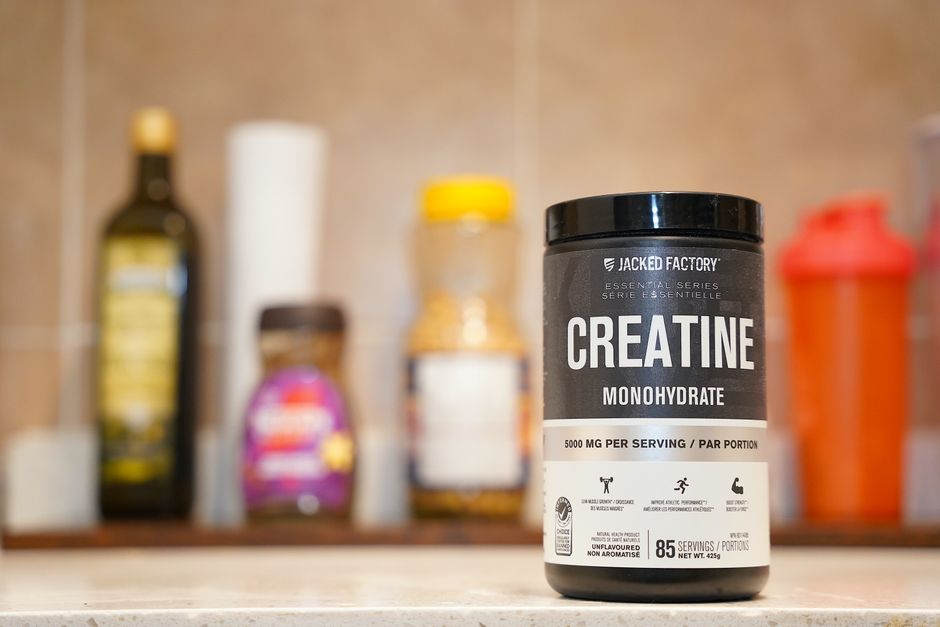
Yes, creatine helps build muscle. It is one of the most researched sports supplements in the world. Hundreds of studies show it increases muscle mass, strength, and exercise performance, especially during resistance training. It works by helping your muscles produce more energy during short, intense bursts of activity like lifting weights.
How Does Creatine Help Build Muscle?
Creatine is a natural compound stored in your muscles. Your body makes it from amino acids, and you also get small amounts from red meat and fish. When you take a creatine supplement, you increase the amount stored in your muscles.
This extra storage allows your muscles to regenerate ATP (adenosine triphosphate) faster. ATP is the primary fuel for short, explosive movements. With more ATP available, you can lift a little heavier or squeeze out one more rep. Over weeks and months, these small gains add up to noticeable muscle growth.
Research published in the Journal of the International Society of Sports Nutrition found that creatine supplementation combined with resistance training leads to significantly greater increases in muscle mass and strength compared to training alone. The effect is consistent across young and older adults, men and women.
There is also evidence that creatine helps with muscle protein synthesis. Some studies suggest it reduces muscle breakdown during exercise. This means your muscles have a better chance to repair and grow after a workout.
Does Creatine Help Build Muscle Without Exercise?
No. Creatine alone will not build muscle. The key is combining it with resistance training. Without the stimulus of lifting weights, the extra energy creatine provides has nowhere useful to go.
Think of creatine as fuel for the engine. If the engine is not running, the fuel does not make the car go anywhere. The same applies here. You need to be doing regular strength training to see muscle growth.
Some people report feeling slightly fuller or heavier after starting creatine. This is mostly from water being pulled into muscle cells, not new muscle tissue. Real muscle gain requires consistent training over time.
What Does the Research on Creatine and Muscle Gain Show?
The evidence is strong and consistent. A meta-analysis published in the Journal of Strength and Conditioning Research reviewed over 20 studies. It found that people taking creatine while doing resistance training gained an average of 2 to 4 more pounds of lean muscle mass compared to those taking a placebo.
Another large review in Sports Medicine concluded that creatine is effective for increasing muscle mass and strength in both trained athletes and recreational exercisers. The benefits appear in as little as four weeks.
Not everyone responds the same way. Some people are natural “low responders” because their muscles already have high creatine stores. But even for those people, the supplement still offers a modest advantage.
One non-obvious insight: creatine may help older adults preserve muscle mass. Research from the National Institute on Aging suggests that older adults who take creatine while doing resistance training maintain muscle better than those who do not. This is important because muscle loss accelerates after age 40.




How Should You Take Creatine for Muscle Building?
The standard dose is 3 to 5 grams per day. This is enough to saturate your muscles within a few weeks. Some people do a “loading phase” of 20 grams per day for 5 to 7 days. This speeds up saturation but is not necessary.
Timing matters less than consistency. Taking creatine every day is more important than when you take it. However, some research suggests taking it close to your workout — either right before or after — may slightly improve uptake.
Creatine monohydrate is the form with the most evidence. It is also the cheapest. Other forms like creatine ethyl ester or buffered creatine have not been shown to work better.
| Form of Creatine | Evidence Level | Cost | Recommendation |
|---|---|---|---|
| Creatine Monohydrate | Strong — hundreds of studies | Low | Best choice |
| Creatine Ethyl Ester | Weak — few studies, no advantage | Higher | Avoid |
| Buffered Creatine | Weak — no proven benefit | Higher | Avoid |
| Micronized Creatine | Same as monohydrate | Moderate | Good option if you want easier mixing |
What Are the Side Effects of Creatine?
Creatine is generally safe for healthy people. The most common side effect is mild stomach upset, especially during the loading phase. This usually goes away after a few days.
Water retention is another common effect. Your muscles hold more water, which can make you look fuller but also add a few pounds on the scale. This is not fat gain.
There is a persistent myth that creatine damages kidneys. This is not supported by evidence. Multiple studies in healthy adults show no negative effect on kidney function. The American College of Sports Medicine states that creatine is safe when taken at recommended doses.
People with pre-existing kidney disease should consult a doctor before taking creatine. For everyone else, the risk is very low.
Common Misconceptions About Creatine
One of the biggest myths is that creatine is a steroid. It is not. Creatine is a natural compound found in food and produced by the body. Steroids are synthetic hormones with completely different effects and risks.
Another myth is that creatine causes cramping or dehydration. Research does not support this. In fact, some studies suggest creatine may help with hydration during exercise. The International Society of Sports Nutrition reviewed this and found no link between creatine and muscle cramps.
Some people think creatine only works for young men. That is false. Women and older adults also benefit. The muscle-building effect is smaller in women due to lower testosterone levels, but it is still real and measurable.
What to Avoid When Taking Creatine
Avoid taking more than the recommended dose. More does not mean better results. Your muscles can only store so much creatine, and excess is excreted in urine.
Avoid mixing creatine with caffeine if you are sensitive to stimulants. Some studies suggest caffeine may blunt creatine’s effect, though the evidence is mixed. If you drink coffee, try to take creatine at a different time of day.
Avoid buying cheap, unlabeled creatine from unknown brands. Look for products that are third-party tested by organizations like NSF International or Informed Sport. This ensures purity and accurate dosing.
Avoid expecting results overnight. Creatine works slowly. You will not see noticeable muscle gain in the first week. Give it at least four to eight weeks of consistent use and training before judging the effect.
Frequently Asked Questions
Does creatine help build muscle without working out?
No. Creatine only helps build muscle when combined with resistance training. Without exercise, it provides no muscle-building benefit.
How long does creatine take to build muscle?
Most people see measurable muscle gains within 4 to 8 weeks of consistent use and training. Some notice changes sooner, but significant results take time.
Is creatine safe for women?
Yes. Creatine is safe for women and can help increase muscle mass and strength when combined with resistance training. It does not cause masculine-looking bulk.
Can you take creatine every day?
Yes. Taking 3 to 5 grams daily is safe and effective. There is no need to cycle on and off creatine.
