
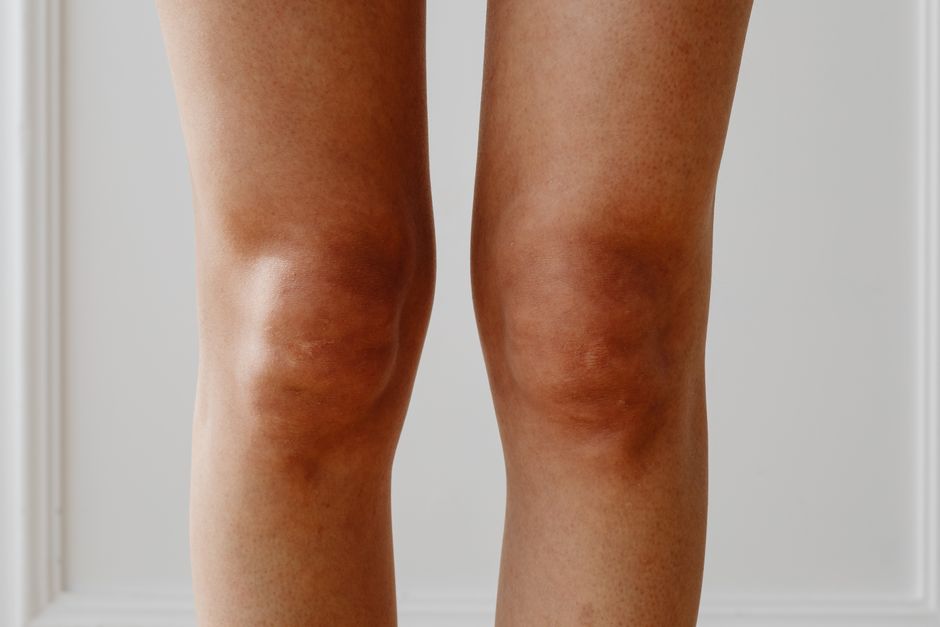
Burning knee pain is not normal, and you do not have to live with it. The first step is to figure out whether the burning sensation comes from the knee joint itself, the muscles around it, or a nerve issue like the sciatic nerve. Most cases improve with targeted strength work, anti-inflammatory strategies, and correcting movement patterns. If the pain is sharp, comes with swelling, or follows an injury, see a doctor first before trying any home treatments.
What Causes a Burning Sensation in the Knee?
Burning knee pain usually comes from one of three sources. The first is inflammation inside the joint. This happens with arthritis, tendinitis, or bursitis. The lining of the joint or the fluid-filled sacs become irritated, and the body sends inflammatory chemicals that register as heat or burning.
The second source is nerve irritation. The sciatic nerve runs from your lower back down your leg. When it gets compressed in your back or hip, you can feel burning, tingling, or numbness in your knee. This is called referred pain. The knee itself may be perfectly healthy, but the brain interprets the nerve signal as coming from the knee.
The third source is muscular. The iliotibial band is a thick piece of fascia that runs along the outside of your thigh. When it gets tight or inflamed, it rubs against the outside of the knee joint. Runners and cyclists often feel this as a burning sensation on the outer knee. The same can happen with the quadriceps tendon or the patellar tendon if they are overworked.
Less common causes include gout, infection, or a blood clot. If the burning is accompanied by redness, warmth, or fever, seek medical attention immediately.
Does Rest or Movement Help Burning Knee Pain?
Complete rest for more than a few days usually makes burning knee pain worse. Muscles weaken, joints stiffen, and the underlying problem stays the same. The evidence from sports medicine research is clear: controlled movement is better than bed rest for most knee conditions.
That said, you need to know what kind of movement helps. If the burning is from arthritis or tendinitis, gentle range-of-motion exercises like heel slides or seated leg extensions without weight can reduce stiffness. If the burning is from IT band syndrome, resting from running and doing side-lying leg lifts targets the glute muscles that stabilize the knee.
If the burning is nerve-related, walking on flat ground can actually help by keeping the nerve mobile. Avoid walking on hills or stairs until the burning subsides. The key is to move in a way that does not reproduce the burning sensation. If an activity triggers the pain within a few minutes, stop and try a different movement.
A study published in the Journal of Orthopaedic & Sports Physical Therapy found that people with patellofemoral pain who continued to move with modified activity recovered faster than those who stopped all activity. The modification matters more than the rest.
How To Treat Burning Knee Pain With Ice and Heat
Ice is best for acute burning pain that came on within the last 48 hours. It reduces blood flow to the area and numbs the nerve endings. Apply an ice pack wrapped in a thin towel for 15 minutes at a time. Do not put ice directly on the skin. Repeat every two to three hours as needed.
Heat is better for chronic burning pain that has been present for weeks or months. Heat increases blood flow, which helps flush out inflammatory byproducts and relaxes tight muscles. Use a warm towel or a heating pad on low for 15 to 20 minutes. Do not use heat if the knee is swollen or if there is any redness.
Some people benefit from contrast therapy, which alternates ice and heat. The theory is that the cold constricts blood vessels and the heat dilates them, creating a pumping effect that moves fluid out of the joint. The evidence for contrast therapy is mixed, but some people report relief. Try three minutes of ice followed by one minute of heat, repeated three times.
Neither ice nor heat fixes the underlying cause. They are tools for symptom management while you address the muscle weakness, nerve irritation, or movement problem driving the pain.





What Strengthening Exercises Actually Work for Burning Knee Pain
The gluteus medius is the most underrated muscle for knee health. This small muscle on the side of your hip stabilizes your leg every time you take a step. When it is weak, your thigh bone rotates inward and your kneecap tracks poorly. This creates friction and burning under the kneecap.
Side-lying leg lifts and clamshells target the glute medius directly. Do three sets of 15 repetitions on each side. Do not rush. The movement should be slow and controlled. If you feel the burning in your knee during the exercise, you are doing it wrong. The sensation should be in your hip.
Straight leg raises strengthen the quadriceps without bending the knee. Lie on your back with one leg straight and the other bent. Lift the straight leg six inches off the ground and hold for five seconds. Lower slowly. This exercise builds the vastus medialis, the teardrop-shaped muscle on the inner thigh that keeps the kneecap centered.
Wall sits are effective but easy to overdo. Start with your back against a wall and slide down until your knees are at a 45-degree angle, not 90. Hold for 20 seconds. Work up to 60 seconds over two weeks. If you feel burning in the knee during the hold, come up higher.
A 2023 systematic review in the British Journal of Sports Medicine found that hip-focused exercise programs reduced knee pain more effectively than knee-focused programs alone. Do not skip the hip work.
What to Avoid When You Have Burning Knee Pain
Avoid deep squats and lunges until the burning is gone. These movements put high compressive force on the kneecap and can worsen patellar tendinitis or chondromalacia. If you must squat, go only to a depth where the burning does not start.
Avoid sitting with your knee bent for long periods. This shortens the hamstrings and puts pressure on the back of the kneecap. Get up and walk every 20 to 30 minutes. If you sit at a desk, keep your knee at a comfortable angle and use a footrest if needed.
Avoid high-impact activities like running on pavement, jumping, or stair climbing until the burning subsides. The repetitive impact inflames the joint lining and irritates nerves. Switch to swimming, cycling with low resistance, or elliptical training. These activities keep you moving without pounding the knee.
Avoid relying on knee braces for daily use. A brace can provide temporary support, but it also lets the surrounding muscles weaken. Use a brace only during specific activities that trigger the pain, and wean off it as strength improves.
| Activity | Safe for Burning Knee? | Why or Why Not |
|---|---|---|
| Walking on flat ground | Yes | Low impact, maintains joint motion |
| Deep squats | No | High patellofemoral compression |
| Swimming | Yes | Zero impact, strengthens without pain |
| Running on pavement | No | Repetitive impact inflames joint lining |
| Cycling (low resistance) | Yes | Non-weight-bearing, controlled motion |
| Stair climbing | No | High load on kneecap and tendon |
How To Treat Burning Knee Pain With Anti-Inflammatory Strategies
Nonsteroidal anti-inflammatory drugs like ibuprofen or naproxen can reduce the burning sensation if inflammation is the cause. Take them exactly as directed and only for short periods. Long-term use can damage the stomach lining and kidneys. The American Academy of Orthopaedic Surgeons recommends using NSAIDs for no more than 10 days without consulting a doctor.
Topical anti-inflammatories like diclofenac gel (Voltaren) are a good alternative. They deliver the drug directly to the knee with minimal systemic absorption. A 2021 meta-analysis in the Journal of Pain Research found that topical diclofenac was as effective as oral NSAIDs for knee osteoarthritis pain with fewer side effects.
Dietary anti-inflammatories are worth trying but the evidence is modest. Omega-3 fatty acids from fish oil, turmeric, and ginger have anti-inflammatory properties. Some studies suggest they reduce joint pain, but the effect is small compared to medication. Do not expect a turmeric supplement to stop burning knee pain on its own.
Corticosteroid injections are reserved for severe cases. A doctor injects a steroid directly into the knee joint to rapidly reduce inflammation. The relief can last weeks to months. However, repeated injections can damage cartilage. Most guidelines recommend no more than three or four injections per year in the same joint.
When to See a Doctor for Burning Knee Pain
See a doctor if the burning pain came on after a fall or injury. You may have a torn meniscus, a ligament sprain, or a fracture. These require imaging and specific treatment, not home exercises.
See a doctor if the knee is swollen, red, or warm to the touch. These are signs of infection or gout. A swollen joint that is also painful and warm needs to be evaluated within 24 hours. Infection in a joint can destroy cartilage quickly.
See a doctor if the burning is accompanied by numbness, tingling, or weakness in your foot. This points to a nerve problem in your lower back, not the knee itself. You may need a spine evaluation and possibly imaging of your lumbar spine.
See a doctor if the pain has lasted more than six weeks despite rest, ice, and exercise. Chronic burning knee pain that does not respond to basic treatment may require physical therapy, imaging, or a referral to an orthopedic specialist.
Frequently Asked Questions
Can burning knee pain go away on its own?
Yes, if it is caused by temporary overuse or mild muscle strain. If it lasts more than two weeks or keeps coming back, you need to address the underlying weakness or movement problem.
Is walking good for burning knee pain?
Walking on flat ground is usually safe and helpful. Walking on hills or stairs often makes burning knee pain worse by increasing pressure on the kneecap.
What is the fastest way to stop burning knee pain?
Ice the knee for 15 minutes and stop the activity that triggered it. Then identify whether the cause is joint, muscle, or nerve so you can treat the right problem.
Should I wear a knee brace for burning pain?
Only during activities that trigger the pain. Wearing a brace all day weakens the muscles that stabilize the knee and can make the problem worse over time.
