
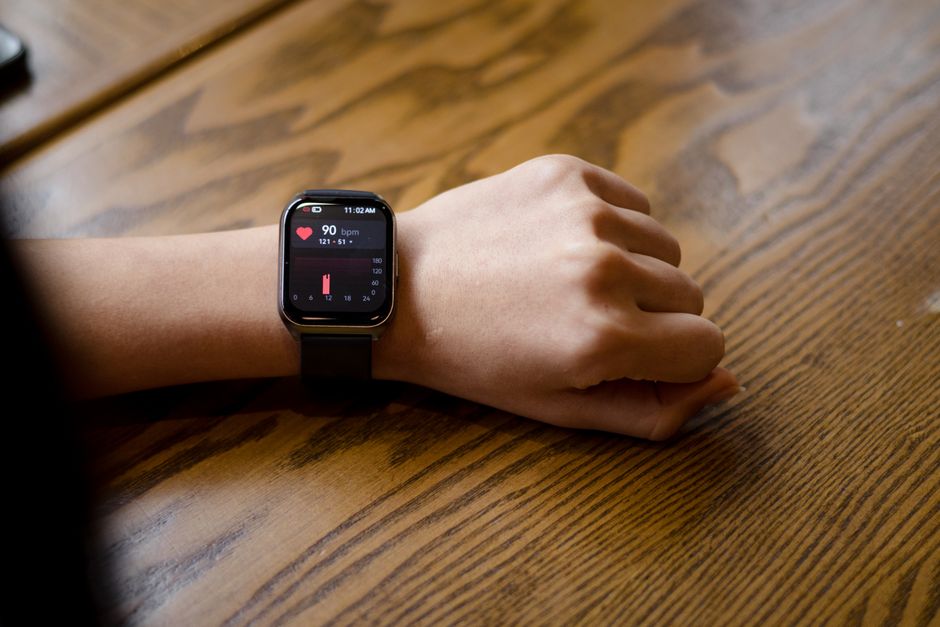
You have seen the charts on the treadmill. You have heard the claim that working out in the “fat burning zone” is the best way to lose weight. The idea seems simple: keep your heart rate in a specific range and your body will burn more fat for fuel. The real answer is more nuanced. Your fat burning zone is generally 60% to 70% of your maximum heart rate. But that number alone does not tell the whole story about weight loss, fitness, or health. The science behind this zone is real, but how it fits into your overall goals is often misunderstood.
What Heart Rate is Fat Burning Zone Exactly?
The fat burning zone is a range of exercise intensity where your body uses a higher percentage of fat for energy compared to carbohydrates. This range is typically calculated as 60% to 70% of your maximum heart rate. To find your estimated maximum heart rate, subtract your age from 220. A 40-year-old would have an estimated max of 180 beats per minute. Their fat burning zone would be between 108 and 126 beats per minute.
This calculation is a population average. Your actual numbers can vary based on genetics, fitness level, and medications like beta-blockers. The American Heart Association notes that these formulas provide a good starting point but are not exact for every individual. The key point is that this is a low to moderate intensity effort. You should be able to hold a conversation while exercising in this zone. If you are gasping for air, you have likely moved past it.
Research published in the Journal of Sports Sciences confirms that at lower exercise intensities, fat is the primary fuel source. As intensity increases, the body shifts to burning more carbohydrates because they can be converted to energy faster. This is why the fat burning zone exists as a concept. It is not a myth. It is a measurable physiological state.
Does the Fat Burning Zone Actually Help You Lose Weight?
This is where the marketing gets ahead of the science. Exercising in the fat burning zone does mean a higher percentage of the calories you burn come from fat. However, weight loss is about total calorie deficit, not where those calories come from. A 30-minute walk in the fat burning zone might burn 120 calories, with 80 of those coming from fat. A 30-minute run at a higher intensity might burn 300 calories, with 120 of those coming from fat. You burned more total fat in the harder workout, even though the percentage of fat was lower.
A study in Medicine & Science in Sports & Exercise compared groups doing low-intensity versus high-intensity exercise over several weeks. The high-intensity group lost more body fat overall, even though they spent less time in the fat burning zone. The reason is simple: higher intensity burns more total calories per minute. Some people also experience “afterburn,” where the body continues to burn extra calories for hours after intense exercise.
That does not mean the fat burning zone is useless. It is excellent for building aerobic endurance, improving heart health, and recovering from harder workouts. It is also more sustainable for beginners or people with joint issues. The mistake is thinking it is the only or best way to lose fat. It is one tool among many.
How Do You Calculate Your Personal Fat Burning Zone?
The standard formula gives you a starting point. To get more accurate, you can use the Karvonen formula, which accounts for your resting heart rate. First, find your resting heart rate by checking your pulse first thing in the morning. Then calculate your heart rate reserve by subtracting your resting rate from your max. Multiply that number by 0.6 and 0.7, then add your resting rate back. This gives a personalized zone that is more reliable than the age-only formula.
For example, a 40-year-old with a resting heart rate of 60 beats per minute would have a heart rate reserve of 120. Multiply by 0.6 gives 72. Add resting rate of 60 gives 132 beats per minute for the lower end. Multiply by 0.7 gives 84, plus 60 gives 144 for the upper end. This is a higher range than the simple formula, and it is more accurate for people who are already fit.
The most accurate method is a metabolic test done in a lab or sports medicine clinic. This measures the ratio of oxygen to carbon dioxide you exhale to determine exactly when your body shifts fuel sources. For most people, the simple formula or Karvonen method is close enough. A heart rate monitor or fitness tracker can help you stay in that zone during exercise.
| Method | Accuracy | Ease of Use | Best For |
|---|---|---|---|
| 220 minus age (60-70%) | Moderate | Very easy | General population starting out |
| Karvonen formula | High | Moderate | Frequent exercisers |
| Metabolic lab test | Highest | Difficult | Athletes and serious trainers |





What Happens If You Exercise Above the Fat Burning Zone?
When you push your heart rate above 70% of your maximum, you enter what is called the aerobic or endurance zone. Your body begins to rely more on stored carbohydrates for fuel. This shift happens because carbohydrates can be broken down faster than fat to meet the increased energy demand. Your breathing becomes heavier, and holding a conversation becomes difficult.
Many people worry that exercising in this higher zone means they are not burning fat. That is incorrect. You are burning fewer fat calories as a percentage, but you are burning more total calories. Your body also adapts by becoming more efficient at using fat during lower intensity recovery periods. A study from the Journal of Applied Physiology found that interval training improved the body’s ability to oxidize fat during rest and low-intensity exercise.
The real risk of always staying in the fat burning zone is that you may not challenge your cardiovascular system enough to improve your fitness. The CDC recommends at least 150 minutes of moderate-intensity or 75 minutes of vigorous-intensity aerobic activity per week. The fat burning zone counts as moderate intensity. But if you never push harder, your fitness plateaus. Variety is important for both fat loss and heart health.
Common Misconceptions About the Fat Burning Zone
The biggest myth is that you must stay in the fat burning zone to lose belly fat. Spot reduction is not real. Your body decides where it stores and burns fat based on genetics and hormones. Exercising at any intensity will reduce overall body fat over time, but you cannot target a specific area.
Another widespread claim is that low-intensity exercise is better for fat loss because it burns a higher percentage of fat. This ignores the total calorie equation. If you burn 200 calories at low intensity and 400 at high intensity, the high intensity workout produces more total fat loss, even if the percentage of fat burned is lower. Some people also believe that the fat burning zone is the only way to burn fat during exercise. Your body always uses a mix of fat and carbohydrates for fuel. The ratio shifts, but both sources are always active.
Some fitness trackers and gym equipment display a “fat burning zone” that is calculated from your age alone. These numbers can be off by 10 to 15 beats per minute for some people. Do not treat them as absolute. Use them as a general guide, and pay attention to how you feel. If you can talk but not sing, you are likely in the right range.
What Is the Best Strategy for Fat Loss?
The most effective approach combines different intensities. Include steady-state work in the fat burning zone for building aerobic base and recovery. Add higher intensity intervals once or twice a week to increase total calorie burn and improve metabolic flexibility. This combination gives you the benefits of both fuel systems.
Nutrition matters more than any heart rate zone. You cannot out-exercise a poor diet. A calorie deficit of 300 to 500 calories per day, combined with consistent exercise, produces reliable fat loss. The type of exercise matters less than the consistency. Walking in the fat burning zone every day will produce results over months. So will running three times a week. The best exercise is the one you will actually do.
Strength training also plays a role. Muscle tissue burns more calories at rest than fat tissue. Building muscle through resistance training increases your resting metabolic rate, which means you burn more calories even when you are not exercising. Combining strength training with both low and high intensity cardio gives you the most complete approach to body composition change.
Frequently Asked Questions
What heart rate is the fat burning zone for a 50-year-old?
Using the 220 minus age formula, your maximum heart rate is about 170 beats per minute. Your fat burning zone would be 60% to 70% of that, or 102 to 119 beats per minute.
Is the fat burning zone the same for everyone?
No. The standard formula gives a population estimate. Your actual zone depends on your fitness level, resting heart rate, and genetics. The Karvonen formula provides a more personalized number.
Should I stay in the fat burning zone to lose weight?
Not exclusively. Staying in the fat burning zone is good for building endurance and recovery. But higher intensity exercise burns more total calories and can lead to greater overall fat loss over time.
Can I burn fat without being in the fat burning zone?
Yes. Your body always burns a mix of fat and carbohydrates. Even at high intensity, you burn fat, just a lower percentage. Total fat loss depends on your overall calorie deficit, not the specific heart rate you maintain.
