
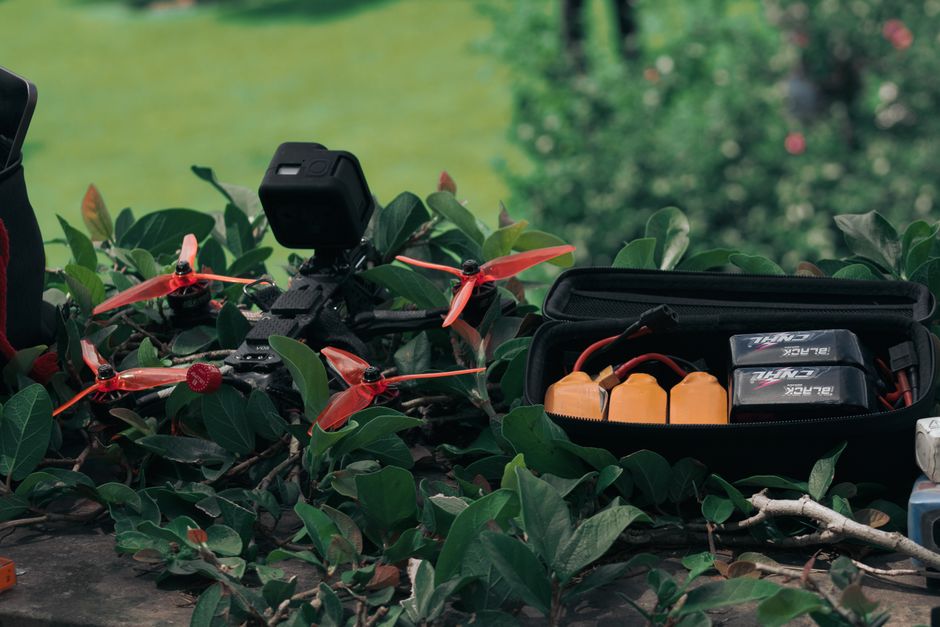
Flying with a drone means flying with its batteries, and those batteries have strict rules. The short answer is that most drone batteries must go in your carry-on bag, not your checked luggage. This rule comes from international aviation safety standards designed to prevent fires in the cargo hold. You also need to protect the battery terminals from short-circuiting and keep the total capacity within airline limits.
Why Do Drone Batteries Have Special Packing Rules?
Most consumer drones use lithium-ion or lithium-polymer batteries. These batteries store a lot of energy in a small space. If they short-circuit or get damaged, they can overheat and catch fire.
A fire in the passenger cabin can be spotted and put out quickly. A fire in the cargo hold cannot. That is why regulators require these batteries to travel with you in the cabin. The rule is not about convenience. It is about giving the crew a chance to respond if something goes wrong.
Damaged or swollen batteries are a different story. Airlines generally do not allow them on board at all. If a battery looks puffy, cracked, or has a torn outer wrapper, do not pack it. Leave it at home or dispose of it properly before your trip.
What Are the Airline Limits for Drone Batteries?
Most airlines follow the same international standards for lithium batteries. These standards are set by the International Civil Aviation Organization and the International Air Transport Association.
For batteries under 100 watt-hours, you can usually bring them in your carry-on without special approval. Most consumer drone batteries fall into this category. For example, a typical drone battery for a mid-size consumer drone is around 60 to 90 watt-hours.
Batteries between 100 and 160 watt-hours are allowed in carry-on bags but usually require airline approval. You should contact your airline before you travel if your batteries are in this range. Batteries over 160 watt-hours are generally not allowed on passenger aircraft at all.
There is also a limit on how many spare batteries you can carry. The common rule is no more than 20 spare batteries per person, but some airlines set lower limits. Check with your specific airline before packing.
How To Calculate the Watt-Hours of a Drone Battery
Watt-hours measure how much energy a battery can store. This number is usually printed directly on the battery label. Look for “Wh” followed by a number.
If the label is worn off, you can calculate it yourself. Multiply the voltage by the amp-hour rating. For example, a battery rated at 11.4 volts and 4.5 amp-hours gives you 51.3 watt-hours.
Some batteries list only milliampere-hours, or mAh. Divide that number by 1000 to get amp-hours first. A 4500 mAh battery is the same as 4.5 amp-hours.
Knowing your battery’s watt-hour rating is essential before you arrive at the airport. It determines whether you can board with the battery at all.





How To Pack Drone Batteries for Carry-On
Spare batteries must be protected from short-circuiting. This is not optional. The terminals need to be covered so they cannot touch metal objects, other batteries, or each other.
Several methods work well. You can leave the batteries in their original retail packaging. You can place each battery in its own plastic bag. You can also cover the terminals with tape — electrical tape or masking tape both work. Many drone pilots use dedicated battery pouches made of fire-resistant material.
Do not carry loose batteries in a pocket or at the bottom of a bag where keys or coins can touch the terminals. That is a fire risk.
Keep batteries in your carry-on bag. Do not put them in checked luggage. This is the single most important rule for flying with drone batteries.
Can You Put Drone Batteries in Checked Luggage?
No. Spare lithium batteries are prohibited in checked luggage on virtually all passenger airlines. This includes drone batteries of any size.
The only exception is batteries installed inside a device. If your drone has a battery installed, some airlines allow it in checked luggage. However, most airlines prefer you carry the drone with you as well. Many airlines require the drone itself to be in carry-on baggage too.
Even if a battery is installed in a drone, you must ensure the drone cannot power on accidentally during the flight. Disable the drone or remove the propellers. The safest approach is to carry everything in your carry-on and check with your airline about their specific policy for installed batteries.
What About Chargers and Power Banks?
Chargers are generally not restricted. You can pack them in either carry-on or checked luggage. However, charging cables and adapters are not the concern — the batteries inside power banks are.
Power banks follow the same rules as spare drone batteries. They must go in carry-on luggage. They must be under 100 watt-hours unless you have special approval. And they must be protected from short-circuiting.
Do not charge your drone batteries during the flight. Most airlines prohibit using seat power outlets to charge lithium batteries. The cabin environment is not designed for charging high-capacity batteries.
How To Travel With a Drone and Its Batteries Internationally
International flights follow the same general rules, but individual countries can add their own restrictions. Some countries have stricter limits on battery capacity or the number of batteries allowed.
Before traveling internationally, check the regulations of both your departure country and your destination country. Some countries require drone registration. Others restrict drone use entirely. Battery rules are separate from drone use rules, and both matter.
Customs officials may ask about your batteries. Keep them easily accessible in your carry-on so you can show them if asked. Having the watt-hour rating visible on the label helps.
If your trip involves a connecting flight on a different airline, check that airline’s rules too. Each airline can set limits stricter than the international standard. The airline you fly first may allow something the second airline does not.
What Happens If You Violate the Rules?
Security screeners are trained to spot lithium batteries in checked bags. If they find one, they may pull your bag off the plane. This can delay your flight or cause your bag to miss the connection.
In some cases, airlines can fine passengers for violating battery rules. The more serious risk is that a battery fire in the cabin or cargo hold could endanger everyone on board. These rules exist because of documented incidents involving lithium battery fires on aircraft.
If you are unsure whether a battery is allowed, ask your airline before you book. It is much easier to get an answer in advance than to deal with a problem at the gate.
Tips for a Smooth Security Experience
Keep your drone and batteries in a separate pouch or bag within your carry-on. This makes it easy to pull them out if a security officer asks to see them.
Have your battery watt-hour ratings written down. If you have batteries with different ratings, keep them grouped so you can explain each one quickly.
Arrive early if you are traveling with multiple batteries. Security screening may take a little longer. Being prepared with your batteries properly wrapped and labeled speeds up the process.
Remember that airport security rules can change. Check the official guidance from your airline and the aviation authority of the country you are flying from before every trip.
Frequently Asked Questions
Can I pack drone batteries in checked luggage?
No. Spare lithium batteries are prohibited in checked luggage on passenger flights. They must go in your carry-on bag.
How many drone batteries can I take on a plane?
Most airlines allow up to 20 spare batteries under 100 watt-hours per person. Batteries between 100 and 160 watt-hours require airline approval and are often limited to two spares.
Do I need to cover drone battery terminals when flying?
Yes. The terminals must be protected from short-circuiting. Use tape, plastic bags, or original packaging to cover the contacts.
Can I charge my drone batteries on the plane?
No. Most airlines prohibit charging lithium batteries during the flight using seat power outlets.
