
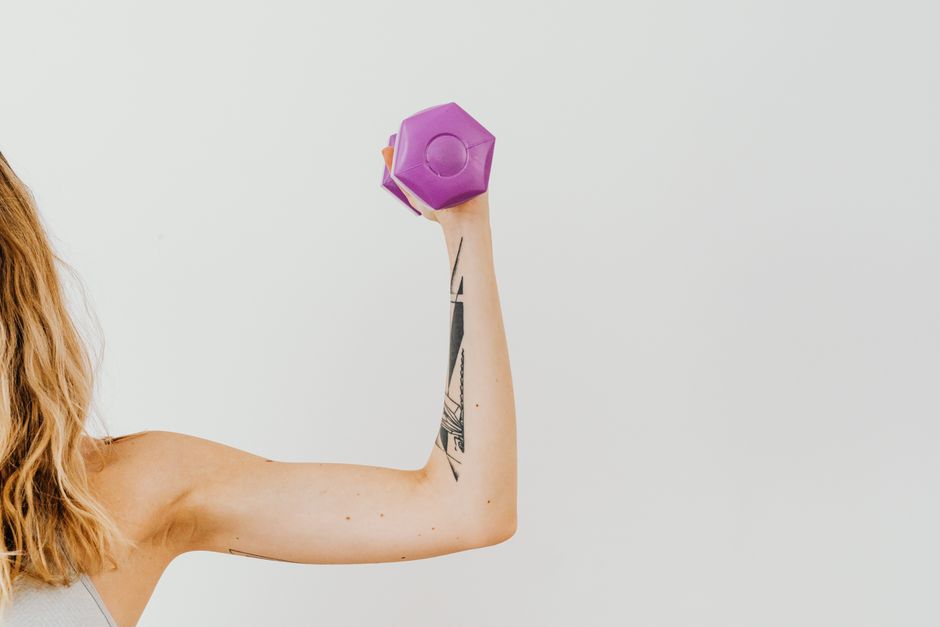
Toning your arms during pregnancy with weights is possible, but the goal changes. You are not trying to build maximum muscle or train to failure. You are trying to maintain the strength and muscle you already have while protecting your joints, your core, and your growing baby. Most healthy pregnant women who already exercise can continue lifting lighter weights with higher reps, as long as a clinician clears them first.
The short answer: use light weights, focus on controlled reps, avoid heavy overhead pressing late in pregnancy, and stop if anything feels wrong. Consistency matters more than intensity. Two or three short sessions a week is enough to maintain arm tone without adding strain.
Is It Safe To Lift Weights While Pregnant?
For most uncomplicated pregnancies, resistance training is considered safe and is generally encouraged. Major obstetric bodies, including the American College of Obstetricians and Gynecologists, have historically supported moderate exercise during pregnancy for women without contraindications. Resistance training is included in that guidance, though the specifics depend on your individual situation.
That said, “safe” is not the same as “safe for everyone.” Certain conditions make weight training a bad idea. These include placenta previa, cervical insufficiency, ruptured membranes, preeclampsia, and a history of preterm labor. If you have any of these, or if you are carrying twins or more, do not start an arm routine without explicit clearance from your doctor or midwife.
One clarification that matters: pregnancy is not the time to start a brand-new heavy lifting program. If you were already training your arms before pregnancy, continuing at a reduced load is usually fine. If you were not, starting light is reasonable, but only with your clinician’s approval.
How To Tone Arms During Pregnancy With Weights
The core method is simple. Use lighter weights than you used before pregnancy. Increase the number of repetitions instead. Keep every movement slow and controlled. Rest longer between sets than you normally would.
Here is what that looks like in practice:
- Weight range: Most pregnant women do well with 2 to 8 pound dumbbells for arm work, depending on prior training. If you can complete the set without strain and your form stays clean, the weight is appropriate.
- Reps: Aim for 12 to 15 controlled reps per set. Stop two or three reps before you feel like you cannot continue.
- Sets: Two to three sets per exercise is enough. More is not better here.
- Frequency: Two to three sessions per week. Your muscles need recovery time, and pregnancy already places demands on your body.
- Rest: 60 to 90 seconds between sets. Take more if you feel winded. Your breathing capacity changes as pregnancy progresses.
The reason for higher reps and lighter weight is not arbitrary. Joints become more lax during pregnancy because of the hormone relaxin. Ligaments that normally stabilize your elbows, shoulders, and wrists are looser. Heavy loads increase the risk of strain or injury in that environment. Lighter loads with more reps still challenge the muscle without stressing the joint.
Which Arm Exercises Are Safe During Pregnancy?
Exercises that keep your arms close to your body and your core stable tend to work best. Movements that require heavy overhead pressing or a lot of balance become harder and riskier as your belly grows and your center of gravity shifts.
Generally well-tolerated options include:
- Bicep curls: Seated with back support. Keep elbows pinned to your sides.
- Hammer curls: Same position, palms facing each other. Easier on the wrists.
- Tricep kickbacks: Light weight, hinged slightly forward with one hand on a chair for support.
- Lateral raises: Light weight only. Stop at shoulder height, do not go above.
- Bent-over rows: Use a bench or chair for support so your lower back is not doing the work.
- Resistance bands: A good substitute for dumbbells. Bands are gentler on joints and easy to adjust.
Skip or modify exercises that require you to lie flat on your back after the first trimester. Lying supine for extended periods can compress the vena cava, the large vein that returns blood to your heart, and reduce blood flow. This can make you dizzy or lightheaded. If you want to do floor work, prop yourself up on an incline or use a bench.




What Should You Avoid During Pregnancy Arm Training?
Avoid heavy overhead pressing. This includes military presses and any movement where you push significant weight directly above your head. The combination of looser shoulder joints, a shifting center of gravity, and reduced core stability makes this riskier than it is worth.
Also avoid:
- Holding your breath during a lift. This raises blood pressure and reduces oxygen flow. Breathe out on the effort.
- Training to failure. Leave reps in reserve.
- Exercises that require you to lie flat on your back after the first trimester.
- Any movement that causes pain, pressure, or a pulling sensation in your abdomen.
- Heavy lifting in extreme heat or humidity. Overheating is a genuine concern in pregnancy.
Stop immediately and call your doctor if you experience vaginal bleeding, fluid leaking, contractions, chest pain, severe shortness of breath, or dizziness that does not pass. These are not “push through it” symptoms.
How Does Pregnancy Change Your Arm Toning Results?
Your body is not in a building phase. It is in a maintenance and support phase. Blood volume increases substantially during pregnancy, your heart works harder, and your energy is being directed toward growing a baby. That means visible muscle changes may be slower or may not happen at all.
This is normal. The point of arm training during pregnancy is not to sculpt new definition. It is to keep the muscle you have, support your posture as your belly grows, and make daily tasks like lifting a car seat or carrying groceries easier.
Some women notice their arms look softer during pregnancy. This is usually fluid retention and increased fat storage, not muscle loss. Both are normal and typically resolve after delivery. Trying to fight this with heavier weights or more sessions is not productive and may increase injury risk.
When Can You Return To Normal Arm Training?
Most providers recommend waiting until your six-week postpartum check before returning to your pre-pregnancy routine. That timeline can be longer if you had a cesarean delivery, significant tearing, or complications. Your pelvic floor and abdominal muscles also need time to heal, and those affect how you stabilize during any upper body lift.
When you do return, start lighter than you think you need to. Muscle memory is real, but your connective tissue and core strength may not be where they were. Give yourself several weeks to rebuild before adding weight.
| Stage | General Approach |
|---|---|
| First trimester | Continue prior routine with lighter loads if cleared |
| Second trimester | Reduce overhead work, avoid flat-on-back positions |
| Third trimester | Light weights, seated or supported positions, shorter sessions |
| Postpartum (after clearance) | Start light, rebuild gradually over weeks |
Do You Need A Trainer Or Can You Do This At Home?
You can do this at home with a set of light dumbbells or resistance bands. You do not need a gym. But working with a trainer who has experience in prenatal fitness can help you modify exercises safely, especially if you are unsure about your form.
If you train at home, follow a few ground rules. Keep sessions short. Use a chair or wall for support during standing exercises. Stop if your form breaks down. And check in with your doctor at each trimester, because what was fine at 12 weeks may not be fine at 30 weeks.
No clinical guidelines currently exist for exact weight prescriptions during pregnancy. The recommendations above reflect general clinical direction, not a universal protocol. Your situation is individual, and your provider’s input should guide your specific plan.
Frequently Asked Questions
Can I tone my arms with weights while pregnant?
Yes, if your pregnancy is uncomplicated and your doctor clears you. Use light weights with higher repetitions to maintain muscle without stressing loosened joints.
What weight dumbbells should I use during pregnancy?
Most pregnant women do well with 2 to 8 pound dumbbells for arm exercises, depending on prior training. If you can complete 12 to 15 controlled reps without strain, the weight is appropriate.
Is it safe to lift weights above my head while pregnant?
Heavy overhead pressing is generally discouraged during pregnancy because of looser shoulder joints and reduced core stability. Light lateral raises to shoulder height are usually better tolerated.
How often should I train my arms while pregnant?
Two to three sessions per week is generally enough to maintain arm strength. Your muscles need recovery time, and pregnancy already places extra demands on your body.
