
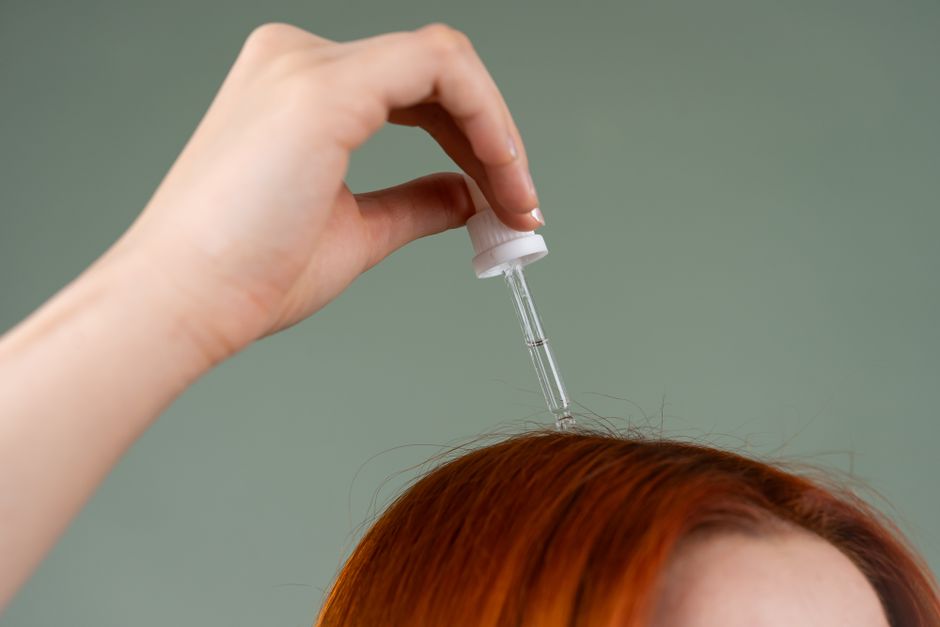
Hair porosity describes how well your hair absorbs and holds moisture. It is determined by the condition of the hair’s outer layer, called the cuticle. You can test porosity at home using simple water and observation methods. The most reliable at-home test is the float test, though no home test is perfectly accurate.
What Is Hair Porosity?
Hair porosity refers to the cuticle’s ability to let water and oils pass into the hair shaft. The cuticle is the outermost layer of each hair strand. It looks like overlapping scales.
When those scales lie flat and tight, water has a hard time getting in. When they are raised or damaged, water passes through more easily. This is the basic difference between low and high porosity.
Porosity is not the same as hair texture or density. Texture describes the shape of the strand, whether straight, wavy, curly, or coily. Density describes how many strands grow per square inch of scalp. Porosity describes how the cuticle behaves. A person can have fine, straight, low-porosity hair or thick, coily, high-porosity hair.
Porosity exists on a spectrum. Most people fall somewhere in the middle. Very low or very high porosity is less common.
How To Test Hair Porosity At Home
The float test is the most commonly used at-home method. It involves placing a clean strand of hair in a glass of water and watching whether it floats or sinks.
Here is how to do it:
- Wash your hair and let it air dry completely. Do not apply conditioner, oil, or styling products.
- Pluck or collect a few clean strands. Hair that sheds naturally during combing works well.
- Fill a clear glass with room-temperature water.
- Place one strand on the surface of the water.
- Watch for two to four minutes.
If the strand floats near the top and does not sink, that suggests low porosity. If it sinks slowly or sits in the middle of the glass, that suggests medium porosity. If it sinks quickly to the bottom, that suggests high porosity.
Do not push the strand under the water. Let it rest on the surface on its own.
How Accurate Is The Float Test?
The float test is not a scientifically validated measurement. No peer-reviewed studies have confirmed that it reliably distinguishes porosity levels. It is a rough estimate at best.
Several factors can throw off the results. Surface tension can keep a strand floating even if it is porous. Air trapped inside the hair shaft can do the same. Hair that has product residue may behave differently than clean hair.
Hair thickness also matters. A coarse strand may float longer than a fine strand regardless of porosity. This is because there is more surface area relative to weight.
Think of the float test as one data point, not a diagnosis. If you want a more reliable answer, a dermatologist or trichologist can examine your hair under a microscope. That is the most accurate method available.


What Other Signs Suggest Your Porosity Level?
Observing how your hair behaves day to day can be more useful than any single test. The way hair responds to water and products gives real clues about cuticle condition.
Signs of low porosity hair
- Water beads up and rolls off the surface instead of soaking in
- Hair takes a long time to get fully wet in the shower
- Products sit on top of the hair rather than absorbing
- Hair air-dries slowly
- Hair feels smooth and looks shiny
Signs of high porosity hair
- Hair gets wet almost instantly
- Hair dries very quickly
- Moisture escapes just as fast as it enters
- Hair feels rough or straw-like
- Hair looks dull and tangles easily
- Color treatments absorb unevenly or fade fast
Medium porosity hair usually shows a balance. It absorbs moisture without losing it too quickly. It is generally the easiest type to manage.
If you notice a sudden change in how your hair absorbs water, that is worth paying attention to. Porosity can change over time due to damage from heat, chemicals, or environmental exposure.
What Causes High Porosity Hair?
High porosity usually results from cuticle damage. When the protective scales are lifted or worn away, the inner layers of the hair shaft are exposed.
Common causes include:
- Chemical treatments such as bleach, permanent dye, or relaxers
- Frequent heat styling with high temperatures
- Mechanical damage from rough brushing or tight styling
- Sun exposure and chlorine from pools
- Repeated wetting and drying without protection
Some people also have naturally high porosity due to genetics. In that case, the cuticle is structurally more open from the start.
Damaged hair cannot be permanently repaired. Once the cuticle is gone, it does not grow back. Hair products can temporarily fill gaps and smooth the surface, but they do not restore the original structure. The only permanent fix is new hair growth.
Does Porosity Determine Which Products You Should Use?
Porosity does affect how hair interacts with products, but the relationship is often oversimplified in marketing. Many brands claim their products are formulated for specific porosity types. The evidence behind those claims is thin.
What matters more is understanding how your hair behaves and adjusting accordingly.
Low porosity hair tends to resist heavy oils and butters because they sit on the surface. Lightweight products and gentle heat during conditioning may help. Warm water can lift the cuticle slightly, allowing more moisture in.
High porosity hair loses moisture quickly. Heavier oils and leave-in conditioners can slow that loss. Protein treatments are sometimes recommended, but they can make hair stiff or brittle if overused. Some people with high porosity benefit from protein; others do not. There is no universal rule.
Medium porosity hair generally works with a wide range of products. Most standard moisturizing routines are fine.
The product industry has built a large market around porosity typing. Some of it is helpful. Much of it is not backed by research. A simple routine that keeps hair clean, conditioned, and protected from damage will serve most people well regardless of porosity label.
Can Porosity Change Over Time?
Yes. Porosity is not fixed. It can shift in either direction depending on how you treat your hair.
Damage from bleach, heat, or repeated chemical processing can push hair toward higher porosity. Protective habits, gentle handling, and avoiding harsh treatments can help maintain lower porosity. But once the cuticle is significantly damaged, it cannot return to its original state.
New growth reflects your current hair health, not past damage. If you stop damaging practices, the hair growing in may have different porosity than the older ends. This is why some people notice that their roots and ends behave differently.
Hormonal changes, certain medical conditions, and medications can also affect hair structure. If you notice a dramatic change in your hair’s behavior along with other symptoms, talk to a doctor. Hair changes can sometimes signal an underlying health issue.
Is Porosity Testing Worth Doing?
Testing porosity can help you understand your hair better. But it is not a precise science, especially with at-home methods.
The float test gives a rough idea. Observing how your hair responds to water and products over time gives more useful information. If you are dealing with significant hair damage or loss, a dermatologist can provide a proper evaluation.
Porosity is one piece of the puzzle. It does not define your entire hair care routine. Genetics, overall health, and daily habits all play a role in how your hair looks and feels.
Frequently Asked Questions
How do I test my hair porosity at home?
Place a clean, product-free strand of hair in a glass of room-temperature water and watch whether it floats or sinks over two to four minutes. Floating suggests low porosity, slow sinking suggests medium, and quick sinking suggests high porosity.
Is the float test accurate?
No, the float test is not scientifically validated and can be affected by surface tension, trapped air, and hair thickness. It gives a rough estimate only, and a microscope exam by a professional is more reliable.
Can high porosity hair be fixed?
Damaged cuticles cannot be permanently restored, so high porosity from damage is not fully reversible. Products can temporarily smooth and fill the hair surface, but the only lasting change comes from new hair growth.
Does hair porosity really matter for product choice?
Porosity affects how hair absorbs and retains moisture, so it can guide product selection to some degree. However, many porosity-specific product claims lack scientific support, and a simple gentle routine works well for most people.
