
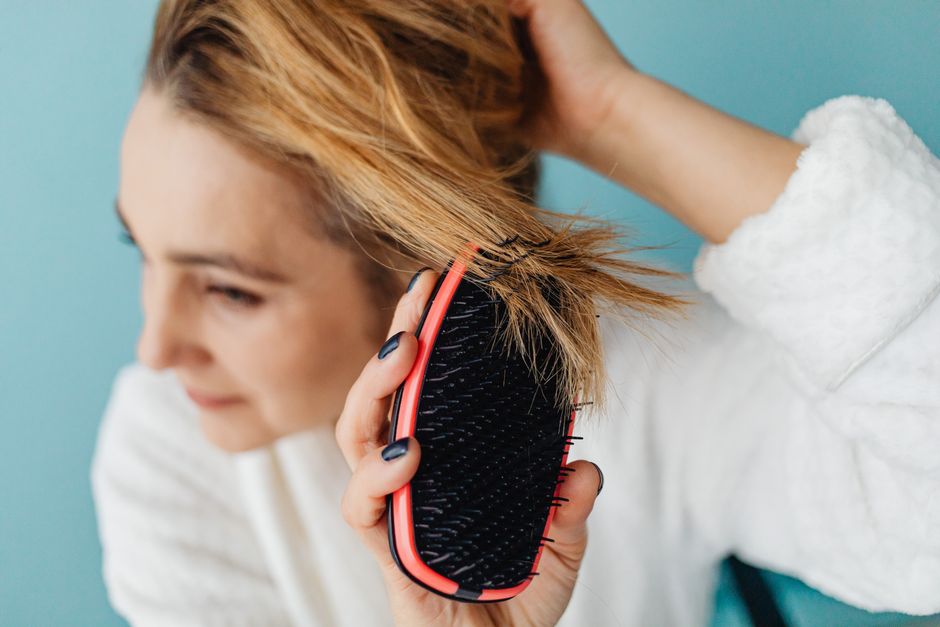
Frizz happens when moisture in the air enters the hair shaft and swells it, lifting the outer cuticle layer. This makes the hair strand rough, dull, and prone to tangling. The fix is a combination of reducing that moisture absorption, smoothing the cuticle, and choosing products and habits that match your hair type. You can make hair less frizzy by washing with sulfate-free shampoo, conditioning thoroughly, applying a leave-in product, and using a microfiber towel or cotton t-shirt to dry instead of a rough terry cloth towel.
What Actually Causes Frizzy Hair?
Frizz is a physical reaction, not a sign that your hair is unhealthy. Each hair strand has an outer layer called the cuticle, made of overlapping scales. When those scales lie flat, light reflects evenly and hair looks smooth. When they lift, moisture from humid air moves into the cortex, the inner layer of the hair. The cortex swells, and the strand bends and twists. That is frizz.
Some hair types are naturally more prone to this. Curly and coily hair has a cuticle that lifts more easily than straight hair. The natural oils from your scalp also travel down straight hair more easily. Curly hair has a harder time distributing those oils, which leaves it drier and more vulnerable to humidity.
Damage also plays a role. Chemical treatments like coloring, bleaching, or relaxing permanently alter the hair structure. Heat styling without protection can lift the cuticle. Even rough towel drying physically roughens the hair surface. All of this makes frizz worse.
How To Make Hair Not Frizzy: The Core Routine
Start with your shampoo. Many conventional shampoos contain sulfates, which are strong detergents. They strip away natural oils and leave the hair rough. A sulfate-free shampoo cleanses more gently and preserves more of the hair’s natural moisture. This matters for anyone with curly, coily, or chemically processed hair.
Conditioner is not optional. It smooths the cuticle and adds a protective layer. Focus the conditioner on the mid-lengths and ends, not the scalp. Rinse with cool or lukewarm water. Warm water opens the cuticle. Cool water helps it close and lie flat.
After conditioning, apply a leave-in conditioner or styling cream while the hair is still wet. This locks in moisture and creates a barrier against humidity. Work it through with your fingers or a wide-tooth comb. Do not brush dry curly hair. That breaks up curl clumps and creates puffiness.
Dry your hair with a microfiber towel or a soft cotton t-shirt. Standard towels have rough loops that catch and lift the cuticle. Instead of rubbing, gently squeeze or blot the hair. Let it air dry when possible. If you use a blow dryer, use a diffuser attachment on low heat and keep it moving.
Why Humidity Makes Frizz Worse
Humidity is the single biggest environmental trigger for frizz. The air is full of water vapor. Your hair contains proteins that attract water molecules. When the cuticle is lifted, water vapor can enter the cortex. The hair absorbs that moisture and swells. This is a chemical and physical process, not a myth.
Hair can absorb up to about 30 percent of its own weight in water. That swelling changes the shape of each strand. The result is the puffiness and uneven texture you see on damp days.
Anti-humidity products work by coating the hair with a film that blocks water absorption. Look for ingredients like silicones, oils, or polymers. These create a physical barrier. They do not permanently change your hair. They wash out with your next shampoo.
Some people find that a product with strong hold, like a gel or mousse, works better in high humidity than a cream. Gels form a harder cast around the hair, which seals the cuticle more effectively. Creams are softer but may not provide enough protection in extreme humidity.




What Actually Works: Product Ingredients That Matter
Not all anti-frizz products are equal. The ingredient list matters more than the marketing on the bottle. Here are the ingredients with real evidence behind them:
- Silicones like dimethicone and cyclopentasiloxane coat the hair and smooth the cuticle. They are effective but can build up over time. Use a clarifying shampoo occasionally to remove buildup.
- Oils like argan, jojoba, and coconut oil penetrate or coat the hair to reduce moisture loss. Coconut oil has been studied more than most. It can reduce protein loss from the hair shaft, but it is heavy and not ideal for fine hair.
- Glycerin and hyaluronic acid attract moisture. This is helpful in dry climates but can backfire in high humidity, drawing water into the hair and increasing frizz.
- Proteins like keratin can temporarily fill gaps in the cuticle. This can improve smoothness, but too much protein can make hair stiff and brittle.
There is no single ingredient that works for everyone. Fine hair may feel weighed down by heavy oils. Thick, coarse hair may need them. Experiment with one product at a time so you can tell what is helping and what is not.
Heat Styling and Frizz: What You Need To Know
Heat styling is a double-edged sword. A flat iron or blow dryer can temporarily smooth hair by forcing the cuticle flat. But heat damages the hair over time, and damaged hair is more prone to frizz in the future.
If you use heat, always apply a heat protectant first. These products contain ingredients that form a barrier and reduce moisture loss during styling. They do not prevent all damage, but they reduce it.
Set the tool to the lowest temperature that works for your hair type. Fine hair needs less heat than coarse hair. Do not pass over the same section repeatedly. One or two passes is enough.
Consider whether you need heat at all. Air drying with a leave-in product and a curl cream can produce smooth, defined results without any heat damage. Many people with wavy or curly hair find that cutting out heat styling reduces their frizz over time.
If you must blow dry, use a nozzle attachment to direct the airflow downward. This pushes the cuticle flat rather than lifting it. Keep the dryer moving and avoid holding it too close to the hair.
Sleeping and Frizz: What Happens Overnight
Frizz does not only happen during the day. Your pillowcase and sleep position affect your hair while you rest. Cotton pillowcases absorb moisture from your hair and create friction as you move. Both of these promote frizz.
Switch to a silk or satin pillowcase. These materials create less friction and do not absorb as much moisture. Your hair slides over the surface instead of catching and tangling. This is a simple change that makes a real difference for many people.
Another option is to protect your hair at night. A loose braid or a high ponytail with a soft scrunchie can keep hair from rubbing against the pillow. A satin bonnet or hair wrap works even better. It keeps your hair contained and reduces friction completely.
Sleeping on damp hair is a common mistake. Hair is most vulnerable when wet. When you go to bed with damp hair, you compress it against the pillow and create permanent kinks and frizz. Dry your hair fully before bed, or plan to wash it in the morning.
How To Fix Frizz That Is Already There
If your hair is already frizzy, you do not need to start the whole routine over. A few drops of hair oil or a smoothing serum applied to the mid-lengths and ends can flatten the cuticle quickly. Use a very small amount. Too much oil leaves hair greasy.
You can also dampen your hands and smooth them over the hair. This reactivates any leave-in product still on the hair and helps redefine curls. This works better than adding more product, which can build up.
If the frizz is severe, re-wetting the hair completely and applying a small amount of leave-in conditioner is the most reliable fix. Then let it air dry or use a diffuser. This resets the hair and gives you a clean start.
Do not brush frizzy hair. Brushing separates the strands and makes frizz worse. Use your fingers or a wide-tooth comb instead.
When To See a Professional
Sometimes frizz is a sign of significant damage. If your hair is breaking, feels mushy when wet, or has lost its curl pattern, a stylist may recommend cutting off the damaged sections. No product can repair hair that is already broken. Products can only smooth the surface and protect what is still healthy.
Professional treatments like keratin smoothing or Olaplex can help, but they are not a permanent fix. Keratin treatments coat the hair with a protein layer that lasts several months. They are not appropriate for everyone and can be expensive. Olaplex is a bond-building treatment that can strengthen damaged hair, but the evidence for its efficacy is mainly from the manufacturer’s own studies.
If you are considering a professional treatment, ask about the cost, the maintenance, and what happens when it grows out. Do not assume that a salon treatment will permanently solve your frizz problem. It will not. It is a temporary measure that requires upkeep.
Frequently Asked Questions
Does cold water actually reduce frizz?
Yes, cool or cold water helps flatten the cuticle and reduce frizz, but it does not permanently change your hair. The effect lasts only until the hair is exposed to humidity or heat again.
Can I fix frizzy hair without heat styling?
Yes. Air drying with a leave-in conditioner and a styling cream or gel can produce smooth, defined results without heat. This is often better for hair health because it avoids heat damage.
Is frizzy hair damaged hair?
Not always. Frizz is often just a natural feature of curly or wavy hair in humid conditions. However, chemical processing, heat damage, and rough handling can make frizz worse.
How often should I wash my hair to reduce frizz?
Most people with frizz-prone hair do better washing two to three times per week. Overwashing strips natural oils that help keep the cuticle smooth.
