
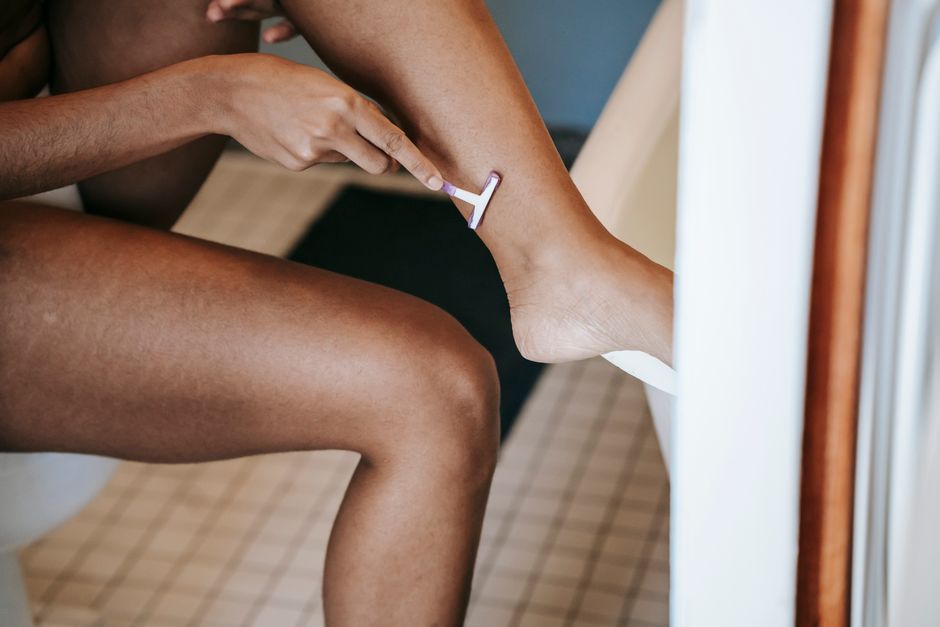
Shaving does not increase hair growth. It does not make hair grow back thicker, darker, or faster. This is one of the most persistent myths in grooming, and the science behind it is clear. When you shave, you cut the hair at the skin’s surface. The blunt tip of the regrowing hair can feel coarse and look darker against the skin, but the hair follicle itself is completely unaffected by the blade.
Why Does Shaved Hair Look Thicker?
The reason shaved hair appears thicker is an optical illusion. Uncut hair tapers to a fine point at the end. Over time, this tip becomes softer and lighter in color due to sun exposure and washing. When you shave, you cut off that tapered end. The hair that emerges from the follicle now has a blunt, flat edge.
This blunt edge reflects light differently. It catches the light and appears darker and more noticeable against the skin. The sensation is also different. A blunt tip feels stubbly and rough to the touch, while an unshaved tapered tip feels soft. Your brain interprets this rough texture as thicker hair, but the diameter of the hair shaft has not changed.
What the Research Says About Shaving and Hair Growth
Studies have examined this question directly. Research published in the 1920s and repeated in later decades compared shaved areas of skin to unshaved areas. The results were consistent. Shaving had no effect on the rate of hair growth or the thickness of individual hairs.
A well-known study from 1970 examined this in adult men. Researchers shaved one leg of each participant regularly for several months while leaving the other leg untouched. At the end of the study, they measured hair weight, thickness, and growth rate on both legs. They found no significant difference between the shaved and unshaved legs. The hair grew back at the same rate and with the same diameter.
More recent research has confirmed these findings. Hair growth is determined by genetics, hormones, and the hair growth cycle — not by what happens above the skin’s surface. A razor blade cannot reach the hair follicle, which sits deep within the dermis layer of the skin. The blade only removes the dead keratin protein that extends above the skin.
How Hair Growth Actually Works
Hair growth happens in three distinct phases. The anagen phase is the active growth period, when the hair follicle produces new cells and the hair shaft lengthens. This phase can last anywhere from two to seven years for scalp hair, which is why head hair can grow so long. For body hair, the anagen phase is much shorter, often lasting only a few weeks or months.
The catagen phase is a short transitional period. The hair stops growing and separates from the blood supply at the base of the follicle. This phase lasts about two to three weeks. The telogen phase is the resting period. The hair sits in the follicle, fully formed but no longer growing. Eventually, the hair falls out, and the follicle begins the cycle again with a new anagen phase.
At any given time, roughly 85 to 90 percent of the hairs on your scalp are in the anagen phase. The remaining hairs are in catagen or telogen. This cycle is controlled by hormones, genetics, and local signaling molecules. A razor blade has no influence on any of these factors.




Does Shaving Change Hair Color or Texture?
Shaving cannot change the color of regrowing hair. Hair color is determined by melanin production in the hair follicle. Melanocytes at the base of the follicle produce pigment and transfer it to the growing hair cells. This process is genetically programmed and hormonally influenced. Cutting the hair shaft does not alter melanin production.
Texture is a similar story. The curl pattern, diameter, and feel of your hair are determined by the shape of the hair follicle and the structure of the hair shaft itself. A round follicle produces straight hair. An oval follicle produces wavy hair. A flat, ribbon-like follicle produces curly hair. Shaving does not change the shape of the follicle.
What changes is the tip. A newly shaved hair has a blunt, square end. As it grows over several days, the end naturally wears down and becomes more rounded. This is why stubble feels sharp and prickly for the first few days after shaving, then gradually softens.
Why the Myth Persists
The belief that shaving increases hair growth has been around for centuries. It persists for a few simple reasons. First, the visual contrast is real. Regrowing stubble genuinely looks darker and more prominent against the skin than the fine, tapered hairs it replaced. People see this and conclude the hair is growing back thicker.
Second, hair grows at a predictable rate. Facial hair grows at about half an inch per month. When you shave in the morning, you can feel stubble by the evening. This rapid visible regrowth reinforces the idea that shaving has somehow stimulated the hair. But the same growth would have happened whether you shaved or not. You are simply more aware of it because the blunt tips are more noticeable.
Third, the myth is reinforced by cultural beliefs and old wives’ tales passed down through generations. It is a simple, intuitive explanation for a phenomenon that has a more subtle explanation. The truth requires understanding hair follicle biology, which is less satisfying than a simple cause-and-effect story.
Does Shaving Affect Hair on Different Body Parts?
The answer is the same everywhere on the body. Shaving your legs, underarms, face, or any other area does not change the rate or thickness of hair regrowth. The hair follicle response is identical regardless of location.
What does differ is the perception. Areas with coarse, dark hair show more obvious stubble after shaving. Areas with fine, light hair show less noticeable regrowth. A person with naturally thick, dark leg hair will see prominent stubble within a day. A person with fine, light leg hair may not notice regrowth for several days. Both are experiencing the same rate of growth, but the visual result differs due to the natural characteristics of the hair.
Hormones play a major role in where and how fast hair grows. Androgens, particularly testosterone and its metabolite DHT, stimulate hair growth in certain areas of the body and can influence hair thickness. This is why men typically have coarser facial and body hair than women. But shaving does not alter hormone levels or the sensitivity of hair follicles to those hormones.
What Actually Affects Hair Growth Rate and Thickness
Several factors genuinely influence hair growth, and none of them involve razors. Genetics is the primary determinant. Your genes set the baseline for how fast your hair grows, how thick it is, and how long it can grow before falling out. This is why hair characteristics run in families.
Hormones significantly influence hair growth. Thyroid hormones, sex hormones, and stress hormones all play roles. Pregnancy can change hair growth patterns due to hormonal shifts. Menopause can lead to thinning scalp hair and increased facial hair in some women. These changes happen at the level of the follicle, not the hair shaft.
Age affects hair growth. Hair grows fastest in the teenage years and early twenties. Growth rate gradually slows with age. Hair follicles also shrink over time, producing thinner, finer hairs. This is a natural aging process unrelated to shaving habits.
Nutrition plays a supporting role. Severe protein deficiency or significant iron deficiency can impair hair growth. The body prioritizes essential functions, and hair growth is not at the top of the list when resources are limited. But for a healthy person eating a balanced diet, no supplement or food will dramatically accelerate hair growth beyond its genetic baseline.
Frequently Asked Questions
Does shaving make hair grow back darker?
No. Shaving does not change the pigment production in the hair follicle. Regrowing hair appears darker because the blunt cut end reflects light differently than a naturally tapered tip.
How long does it take for shaved hair to grow back?
Hair grows at an average rate of about half an inch per month, though this varies by body area and individual genetics. Facial hair typically shows visible stubble within 24 hours, while leg hair may take a few days to become noticeable.
Is it true that shaving makes hair grow faster?
No. Studies have consistently shown that shaving has no effect on the rate of hair growth. The hair grows at the same speed it would have grown if you had not shaved.
Does waxing or plucking permanently reduce hair growth?
Repeated waxing or plucking can damage hair follicles over time, which may lead to finer or sparser regrowth. However, this is not guaranteed, and hair typically regrows after waxing or plucking.
