
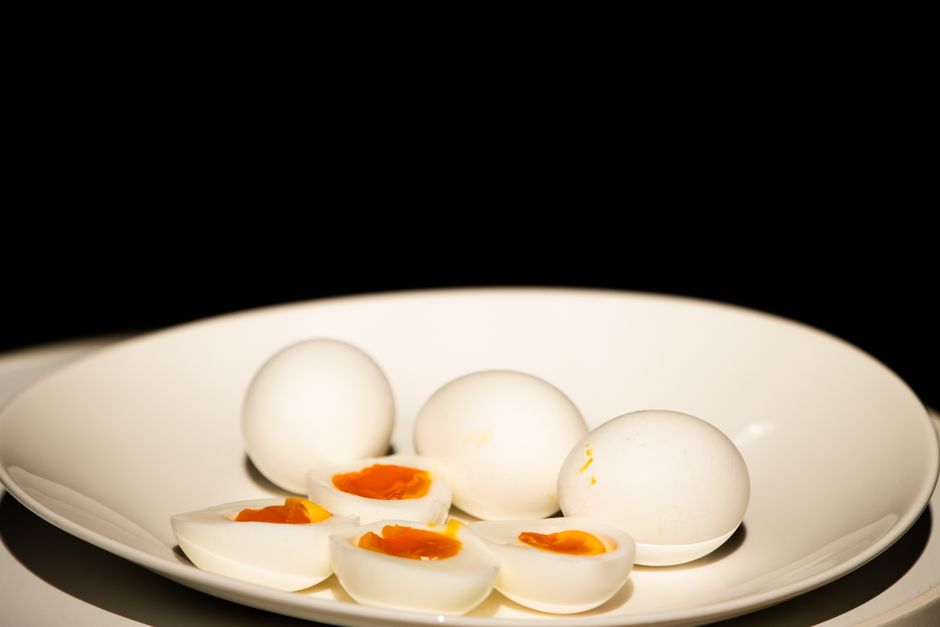
A hard boiled egg is bad when it smells strongly of sulfur or rot, has a slimy or sticky texture instead of firm and rubbery, or shows mold, pink, green, or iridescent discoloration on the white or yolk. The single most reliable test is smell — if the egg has a foul or rotten odor, throw it out without tasting it. A harmless gray-green ring around the yolk is not spoilage and is safe to eat.
How To Tell If A Hard Boiled Egg Is Bad
Your nose is the best tool you have. A spoiled hard boiled egg produces hydrogen sulfide and other compounds as bacteria break down proteins. The result is a smell that is hard to mistake — sharp, rotten, and unmistakably off. A fresh hard boiled egg has almost no odor, or just a faint egg smell.
Texture is the second signal. A good hard boiled egg white is firm and slightly rubbery. A bad one feels slimy, tacky, or leaves a sticky film on your fingers. If the white has gone soft or mushy, that is a sign of bacterial breakdown.
Look at the surface too. Any fuzzy growth, dark spots, or a pink or greenish sheen on the white points to spoilage or bacterial contamination. Mold on a hard boiled egg means discard it — you cannot cut away the affected part and safely eat the rest.
One thing that is not a sign of spoilage: a gray-green ring around the yolk. That discoloration comes from a natural reaction between iron in the yolk and sulfur in the white during cooking, especially when eggs are boiled too long. It looks unappealing but is completely safe.
How Long Are Hard Boiled Eggs Good For?
Hard boiled eggs keep in the refrigerator for about one week. That guidance comes from U.S. food safety authorities and applies to eggs that were boiled, cooled promptly, and stored in the fridge.
The clock matters more than most people realize. Hard boiled eggs spoil faster than raw eggs in the shell because boiling damages the protective bloom — the natural coating on the shell that helps block bacteria. Once that barrier is compromised, bacteria can move through the shell more easily.
Refrigeration is not optional here. A hard boiled egg left at room temperature for more than two hours should be thrown away. In hot conditions — above 90°F — that window shrinks to one hour. This is standard food safety guidance, not a conservative guess.
If you are not sure how long an egg has been in the fridge, treat it as suspect. There is no reliable way to date a hard boiled egg after the fact.
Does The Float Test Work For Hard Boiled Eggs?
No. The float test does not work for hard boiled eggs, and this is one of the most common mistakes people make.
The float test is designed for raw eggs. A raw egg floats when the air cell inside the shell has grown large enough — which happens as the egg ages and moisture evaporates through the shell. But boiling changes the physics. A hard boiled egg may float because of an air pocket that formed during cooking, not because it has gone bad. And a spoiled hard boiled egg can still sink.
So if you drop a hard boiled egg in water and it floats, that tells you almost nothing about whether it is safe to eat. Use smell and texture instead.
There is one more problem with the float test for boiled eggs: if the egg has a crack in the shell, water can get inside during boiling, which also affects whether it floats. The test was never meant for cooked eggs.





Can You Eat A Hard Boiled Egg That Smells A Little?
A faint egg smell is normal. A sulfur-like or rotten smell is not. The line between the two can be hard to judge, so here is a practical rule: if the smell makes you hesitate, throw it out.
Foodborne illness from spoiled eggs is not a minor inconvenience. Salmonella and other bacteria can cause vomiting, diarrhea, fever, and abdominal cramps that last for days. For young children, older adults, pregnant women, and people with weakened immune systems, the risk of serious complications is higher.
You cannot smell or taste Salmonella itself. An egg contaminated with it can look and smell completely normal. That is why proper cooking and storage matter more than any home test. Hard boiling kills Salmonella when the egg reaches a safe internal temperature, but contamination can also happen after cooking — through handling, cracked shells, or sitting out too long.
When in doubt, the cost of throwing away one egg is far lower than the cost of a foodborne illness.
How Should You Store Hard Boiled Eggs Safely?
Store hard boiled eggs in the refrigerator in a covered container. Keep them in the main body of the fridge, not in the door, where temperature fluctuates each time the door opens.
Leave the shells on if you plan to keep them for several days. Peeled eggs dry out faster and are more exposed to bacteria. If you do peel them, eat them within a day or two.
Cool eggs quickly after boiling. Leaving them in hot water or at room temperature for a long stretch gives bacteria time to multiply. A quick cool-down in cold water or an ice bath speeds this up.
Here is a storage summary:
- Unpeeled hard boiled eggs: about one week in the refrigerator
- Peeled hard boiled eggs: eat within a day or two
- Room temperature: discard after two hours (one hour if above 90°F)
- Left out overnight: discard
A small but useful habit: label the container with the date you boiled them. It removes the guesswork later.
What About The Gray-Green Ring And Other Discolorations?
The gray-green ring around the yolk is safe. It forms when eggs are cooked too long or in water that is too alkaline. The iron in the yolk reacts with hydrogen sulfide from the white, creating ferrous sulfide on the yolk surface. It is a cosmetic issue, not a safety one.
You can reduce it by using fresh eggs, not overcooking, and cooling eggs quickly in cold water after boiling. A splash of vinegar or a pinch of salt in the boiling water can also help.
Other discolorations are a different story. A pinkish, greenish, or iridescent sheen on the egg white — sometimes caused by certain bacteria — is a spoilage sign. So is any black, green, or blue-green fuzzy patch, which indicates mold. These eggs should be discarded.
A greenish tint on the shell itself is usually harmless and comes from the cooking process. The color of the shell does not indicate whether the egg is good or bad.
Why Do Hard Boiled Eggs Spoil Faster Than Raw Ones?
Boiling strips away the egg’s natural defenses. A raw egg in its shell has a thin outer coating called the bloom, plus inner membranes, that help keep bacteria out. Heat damages the bloom and weakens those barriers.
At the same time, cooking changes the egg’s internal chemistry. The proteins coagulate, and moisture content shifts. This creates an environment where bacteria that do get in can multiply more easily than they would in a raw egg.
Cracked shells make it worse. A crack during boiling lets water and bacteria move in and out freely. If an egg cracks while cooking, eat it within a day or two rather than storing it for a week.
This is why hard boiled eggs need refrigeration and why they do not last as long as raw eggs. It is not that boiling makes eggs dangerous — it is that boiling removes some of the protection that kept them safe in the first place.
Frequently Asked Questions
How can you tell if a hard boiled egg has gone bad?
Smell it first — a rotten or sulfur-like odor means it is spoiled. Then check texture: a slimy or sticky white is a sign of bacterial breakdown and the egg should be discarded.
How long do hard boiled eggs last in the fridge?
About one week when stored in a covered container in the refrigerator. Peeled eggs should be eaten within a day or two.
Is a gray-green ring around the yolk a sign the egg is bad?
No. The gray-green ring is caused by a natural reaction between iron and sulfur during cooking and is completely safe to eat.
Can you eat a hard boiled egg that was left out overnight?
No. Any hard boiled egg left at room temperature for more than two hours should be thrown away because bacteria can multiply quickly.
