
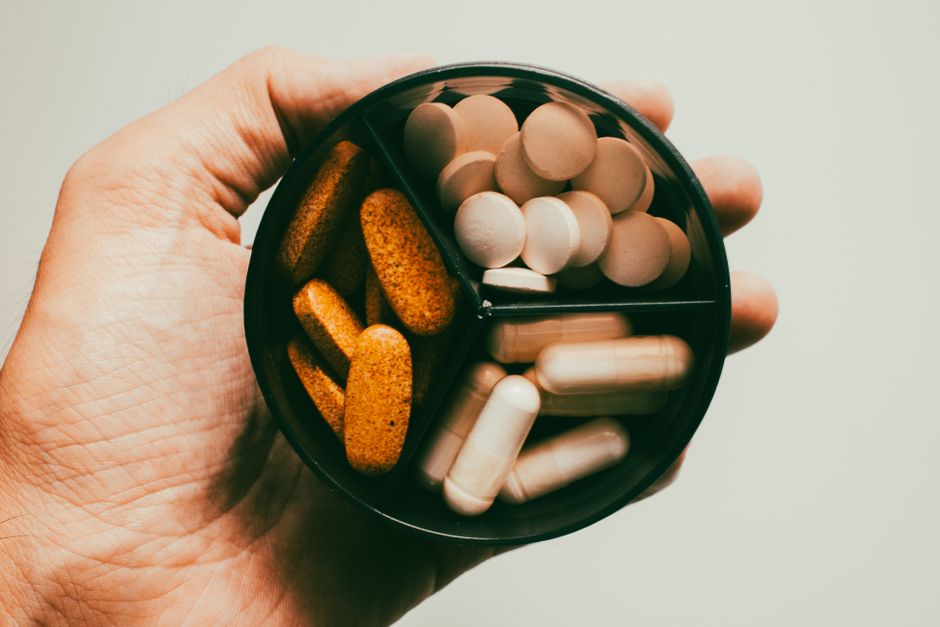
Glutathione is a molecule your body makes on its own, in every cell, and it does real work there. It helps neutralize unstable molecules called free radicals, supports certain detoxification reactions in the liver, and helps recycle other antioxidants like vitamin C and vitamin E. What it does not have is a clear, proven set of instructions for taking it as a supplement. There is no official recommended daily allowance, no standard dose, and no agreed-upon best time of day. Oral glutathione is poorly absorbed in its intact form, which is the central problem with most products on the market. Some forms, including liposomal and acetylated versions, may survive digestion better, but the human evidence comparing them head-to-head is thin. If you are considering glutathione, the honest starting point is understanding what the research supports and what it does not.
What Is Glutathione And What Does It Do In The Body?
Glutathione is a small protein-like molecule made from three amino acids: cysteine, glycine, and glutamate. Your cells build it themselves. It is present in nearly every tissue, with the highest concentrations found in the liver, where it participates in processing and eliminating certain compounds.
Its main job is acting as an antioxidant. It donates an electron to unstable molecules that would otherwise damage cell membranes, proteins, and DNA. In doing so, glutathione becomes oxidized, and the body recycles it back to its active form using an enzyme called glutathione reductase. This recycling is why glutathione is often called the body’s master antioxidant — a phrase that gets repeated far more often than it gets examined.
There is a meaningful distinction between glutathione levels inside cells and glutathione circulating in the blood. Most of the research on disease and aging looks at intracellular levels. Most supplement marketing talks about blood levels. These are not the same thing, and raising one does not automatically raise the other.
Why Is Oral Glutathione Poorly Absorbed?
When you swallow glutathione, it enters the stomach and small intestine, where digestive enzymes break proteins and peptides into their component amino acids. Glutathione is a tripeptide, and it is subject to this breakdown. A large fraction of it is split into cysteine, glycine, and glutamate before it can cross into the bloodstream intact.
This is not a flaw in any particular brand. It is basic digestive physiology. The question researchers have tried to answer is whether any meaningful amount survives, and whether that amount is enough to change glutathione levels in tissues.
Some studies suggest that oral glutathione can raise markers of glutathione status in the blood, at least modestly, in certain populations. Other studies show little or no change. The results are inconsistent, and the studies tend to be small. This is why the evidence for oral glutathione remains genuinely mixed rather than settled.
What Is The Best Form Of Glutathione To Take?
There is no form of glutathione that has been established as clearly superior in well-designed human trials. That is the honest answer. Several forms are marketed with absorption claims, and the reasoning behind some of those claims is plausible — but plausible is not the same as proven.
Here is what is known about the main options:
- Oral (reduced) glutathione: The most common and cheapest form. Subject to digestive breakdown. Human evidence for meaningful tissue-level effects is limited and inconsistent.
- Liposomal glutathione: Glutathione wrapped in tiny fat spheres (liposomes) intended to protect it through digestion. The theory is reasonable. Well-controlled human trials comparing it directly to plain oral glutathione are scarce.
- Acetylated glutathione (such as S-acetyl glutathione): A modified form designed to be more stable and better absorbed. Some early research exists, but it is not enough to call this form established.
- Sublingual and inhaled forms: Marketed for bypassing the gut. Evidence in humans is very limited.
- Intravenous glutathione: Used in some clinical settings and in cosmetic clinics. This bypasses digestion entirely, but it is a medical procedure, not a supplement you take at home, and it carries its own risks and costs.
- N-acetylcysteine (NAC): Not glutathione itself, but a precursor the body uses to make it. NAC is a well-established medication with a long history of clinical use, including as an antidote for acetaminophen poisoning. Its role in raising glutathione in healthy people is a different question, and the evidence there is less clear.
One clarification worth making: a product being “liposomal” or “acetylated” on a label does not guarantee better absorption. Those terms describe how the ingredient is prepared, not what it does in your body. Without head-to-head human trials, the comparison remains theoretical.





Is There A Recommended Dose Of Glutathione?
No official recommended dose of glutathione exists. There is no RDA, no established upper limit, and no standard clinical guideline for healthy adults taking it as a supplement.
Doses used in research studies have varied widely, and the studies themselves differ in form, duration, and what they measured. Because of this, there is no reliable dose to point to and call “correct.”
For NAC, the situation is different. NAC is an established pharmaceutical with documented dosing for specific medical uses, including acetaminophen overdose and certain lung conditions. Those doses are set by clinical protocols and should only be used under medical supervision for those indications. Using NAC as a general wellness supplement is a separate matter, and no standard dose for that purpose is established.
If a product label suggests a specific dose, that number comes from the manufacturer, not from a regulatory body or a clinical guideline. Treat it accordingly.
When Should You Take Glutathione?
There is no established best time of day to take glutathione. No clinical guideline specifies morning, evening, with food, or on an empty stomach for this supplement.
Some manufacturers suggest taking it on an empty stomach, reasoning that food may compete with absorption. That reasoning is not unreasonable, but it has not been confirmed in controlled human studies for glutathione specifically. If you choose to take it, the most practical approach is consistency — same time each day — because that is what makes it easier to track any effects or lack of them. That is a practical suggestion, not a clinical recommendation.
Taking it with food may reduce stomach upset for some people. Again, this is general tolerability advice, not a finding specific to glutathione.
Can You Get Glutathione From Food?
Yes, and this is one of the more reliable routes. Glutathione is found naturally in many foods. The highest concentrations tend to be in fresh fruits and vegetables, with asparagus, avocado, spinach, and broccoli among the better sources. It is also present in some meats.
Cooking and processing reduce glutathione content in food. Fresh, minimally processed sources retain more. This is one reason a diet rich in fruits and vegetables supports glutathione status — not because any single food is a “glutathione booster,” but because the overall pattern provides the building blocks and the cofactors your body needs to make its own.
Your body also needs the amino acid cysteine to make glutathione, and cysteine availability is often the limiting factor. Foods high in cysteine include poultry, eggs, dairy, and certain vegetables. Vitamin C and selenium are also involved in glutathione recycling, so a diet that covers those nutrients supports the system as a whole.
What Does The Evidence Actually Show?
The research on glutathione supplements is a mixed picture, and it is worth being precise about what that means.
Some studies have found that oral glutathione raises blood levels of glutathione in healthy adults. Others have found no significant change. The studies tend to be small, short in duration, and varied in the form and dose used. This makes it hard to draw firm conclusions.
For specific health conditions, the evidence is even less clear. Some research has looked at glutathione in the context of liver disease, neurodegenerative conditions, and skin health. Results have been inconsistent, and no large, well-controlled trial has established glutathione supplements as an effective treatment for any of these.
This does not mean glutathione supplements do nothing. It means the evidence is not strong enough to say they reliably do something specific. Those are different statements, and the distinction matters.
Are There Risks Or Downsides?
Oral glutathione is generally well tolerated in the doses studied, with few reported side effects. That said, “generally well tolerated in small studies” is not the same as “known to be safe for everyone.”
People who are pregnant or breastfeeding should be cautious. No clinical guidelines currently exist for glutathione supplementation in these populations, and it is not known whether it is safe. The same caution applies to children. No established dosing or safety data exists for glutathione supplements in children.
Inhaled glutathione has been associated with reports of breathing difficulty in some people, particularly those with asthma. This route is not something to try without medical supervision.
Glutathione can interact with certain medications, particularly drugs processed by the liver. If you take prescription medications, especially ones that affect the liver, talk to your doctor before adding glutathione.
One more point: because glutathione supplements are classified as dietary supplements in the United States, they are not held to the same pre-market safety and effectiveness standards as prescription drugs. What is on the label is not independently verified for content or purity in most cases.
What About NAC And Other Precursors?
N-acetylcysteine (NAC) is the most studied glutathione precursor. It provides cysteine, which is often the rate-limiting amino acid for glutathione production. NAC has a long history as a prescription medication for specific uses, including acetaminophen overdose and as a mucolytic in certain lung conditions.
Whether NAC reliably raises glutathione in healthy people who are not deficient is a separate question, and the evidence is less clear than its use as a medication. Some studies suggest it can support glutathione status; others show limited effects in people who are already well-nourished.
Other precursors and cofactors sometimes mentioned include alpha-lipoic acid, selenium, and vitamin C. Each plays a role in glutathione metabolism, but taking them as supplements does not necessarily increase glutathione levels beyond what a normal diet provides.
What Is The Bottom Line?
There is no established best form, dose, or timing for glutathione supplements. Oral glutathione is poorly absorbed, and while some forms may be better than others in theory, human trials have not confirmed clear superiority for any of them.
The most reliable way to support your glutathione system is through diet — plenty of fresh fruits and vegetables, adequate protein for cysteine, and enough vitamin C and selenium. Your body makes glutathione continuously, and it does this best when it has the raw materials.
If you are considering glutathione supplements for a specific health concern, the evidence does not currently support strong claims for any condition. Talk to your doctor, especially if you take medications or have a liver condition. Be skeptical of products that promise dramatic results. And remember that “may support” on a label often means “we have not proven this.”
Frequently Asked Questions
What is the best form of glutathione to take?
No form has been proven superior in well-designed human trials. Liposomal and acetylated forms are marketed as better absorbed, but head-to-head studies are lacking.
How much glutathione should I take daily?
There is no official recommended dose for glutathione supplements. Doses in research have varied widely, and no standard has been established.
When should I take glutathione — morning or night?
No clinical guideline specifies a best time of day. Some manufacturers suggest taking it on an empty stomach, but this has not been confirmed in controlled studies.
Can I get glutathione from food instead of supplements?
Yes. Glutathione is found in fresh fruits and vegetables, with asparagus, avocado, spinach, and broccoli among the better sources. Cooking reduces its content.
