
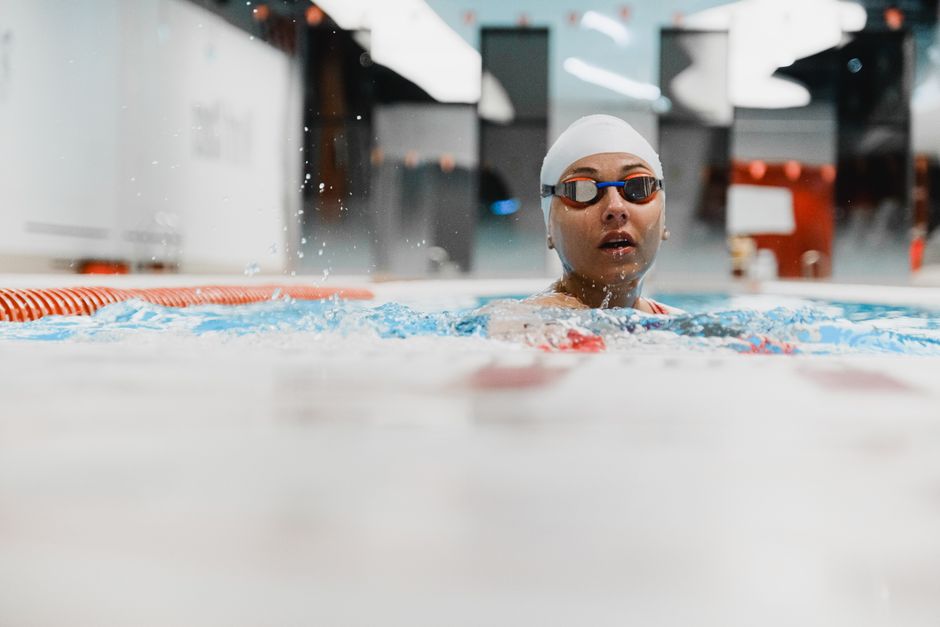
Swimming is one of the most effective full-body cardio workouts you can do, and it is gentler on your joints than running or jumping. To build a swim workout plan, start by mastering a consistent freestyle stroke, then structure your sessions with a warm-up, a main set of intervals, and a cool-down. You should aim for two to three swim sessions per week, gradually increasing your distance or intensity to improve your cardiovascular fitness safely.
Why Swimming Is Excellent Cardio
Swimming raises your heart rate while putting almost zero impact on your joints. The water supports about 90% of your body weight, which makes it a safe option for people with arthritis, back pain, or those recovering from injury. Because you are using your arms, legs, and core simultaneously, swimming engages more muscle mass than cycling or running on flat ground.
The cardiovascular benefits are well documented. Your heart and lungs work harder to deliver oxygen to working muscles, and the horizontal position of swimming actually helps blood return to the heart more efficiently. Some research suggests that regular swimming can improve blood pressure control and insulin sensitivity, though the evidence base is smaller than for running or cycling.
One thing to understand is that swimming is not automatically easier than land cardio. If you swim slowly with poor technique, your heart rate may stay low. The key to building a fitness effect is maintaining a steady effort and using proper form so your body works efficiently against the water’s resistance.
What You Need Before You Start
You do not need expensive equipment to begin. A well-fitting pair of goggles is the most important purchase because you cannot swim comfortably with water in your eyes. A swim cap is optional but helps reduce drag and keeps hair out of your face. Choose a swimsuit that stays in place when you push off the wall — this is not the time for a loose beach suit.
If you are not a confident swimmer, take a few lessons first. Poor freestyle technique makes swimming exhausting and discouraging. Many community pools offer adult beginner classes that teach basic breathing and body position. Mastering the basics for a few weeks will make your workouts far more enjoyable and effective.
For tracking your progress, a simple lap counter or a waterproof fitness watch works well. You do not need one, but it helps to know how many laps you have completed so you can increase your distance over time. Most standard pools are 25 yards or 25 meters long, so check the pool length at your facility.
How To Structure Your Swim Workout Plan
A good swim workout follows the same basic structure as a running or cycling session. You need a warm-up, a main set, and a cool-down. The difference is that swimming requires more attention to breathing and stroke technique, especially when you are tired.
Your warm-up should be about 200 to 400 yards of easy swimming. This gets blood flowing to your muscles and lets you practice your stroke before you push the pace. Include some kicking with a kickboard if you have one — this warms up your legs without taxing your shoulders.
The main set is where the fitness gains happen. For beginners, this might be 10 to 15 lengths of the pool with 30 to 60 seconds of rest between each length. As you get fitter, you can reduce the rest time or increase the number of lengths. The goal is to keep your effort at a level where you can speak a few words but not hold a full conversation — this corresponds to moderate-intensity cardio.
Your cool-down should be 100 to 200 yards of very easy swimming. This helps your heart rate return to normal gradually and gives your muscles a chance to flush out metabolic waste. Finish with a few gentle stretches for your shoulders and hips.




How To Swim For Cardio Build Your Workout Plan
To build a plan that actually improves your fitness, you need to be specific about frequency, duration, and progression. Start with two sessions per week if you are new to swimming. Each session should last 20 to 30 minutes including warm-up and cool-down. After two to three weeks, add a third session.
Progression is the key principle. Each week, try to swim slightly more distance or take slightly less rest between intervals. A simple approach is to add 100 to 200 yards per week to your total distance. If you swim 800 yards in week one, aim for 900 to 1000 yards in week two. This gradual overload forces your heart and muscles to adapt without causing injury.
Do not swim every day when you start. Your shoulders and back need time to recover from the unfamiliar demands of swimming. Two to three sessions per week is enough to see meaningful cardiovascular improvement within six to eight weeks. If you want to cross-train, add walking or cycling on your non-swim days.
Here is a sample beginner week:
- Session 1: 200-yard warm-up, 8 x 25 yards with 30 seconds rest, 100-yard cool-down
- Session 2: 200-yard warm-up, 4 x 50 yards with 45 seconds rest, 100-yard cool-down
- Session 3 (optional): 200-yard warm-up, 6 x 25 yards with 20 seconds rest, 200-yard cool-down
Technique Tips To Make Swimming Easier
The biggest mistake new swimmers make is holding their breath underwater. This creates carbon dioxide buildup and makes you feel panicked and out of breath. Exhale continuously through your nose or mouth while your face is in the water. Only inhale when you turn your head to breathe. This single change makes swimming dramatically easier.
Keep your body long and streamlined. Your head should be in a neutral position looking at the bottom of the pool, not forward. Kicking should come from your hips, not your knees. A gentle flutter kick is enough — you do not need to kick hard to move forward.
Breathe every two or three strokes, alternating sides if you can. This prevents one-sided muscle imbalances and gives you a more balanced stroke. If you get tired, slow down rather than stopping to catch your breath. Slowing down keeps you in the rhythm of the stroke and is better cardio training than starting and stopping constantly.
How Fast Should You Swim?
Pacing yourself is harder in the water than on land because you cannot see your pace as easily. A practical method is the talk test. If you can speak in short sentences while swimming, you are at a moderate effort. If you can only gasp single words, you are working too hard for an endurance session. If you can sing, you need to pick up the pace.
For interval training, alternate faster and slower lengths. Swim one length at a hard effort, then swim the next length easy to recover. This is called a ladder or pyramid set and it builds both aerobic fitness and speed. A simple example is 4 x 50 yards alternating hard and easy with 30 seconds rest between each.
Do not worry about your lap time in the first few weeks. Focus on completing the distance with good form. Speed will come naturally as your stroke efficiency improves. Many swimmers find that they get faster without trying harder simply because their technique gets better.
Common Mistakes To Avoid
Skipping the warm-up is a common error. Cold muscles in the water are more prone to cramping, especially in the calves and feet. Always spend at least five minutes swimming easy before you start any hard intervals.
Another mistake is comparing yourself to other swimmers in your lane. People who have swum for years will make it look effortless. Your only comparison should be your own previous workouts. Track your distance and rest times, and aim to improve on your own numbers.
Ignoring shoulder pain is a serious error. Swimmer’s shoulder, which is an inflammation of the tendons in the shoulder joint, is one of the most common swimming injuries. If you feel sharp pain in your shoulder during or after swimming, stop and rest for a few days. If the pain persists, see a healthcare provider. Mild muscle soreness is normal; sharp joint pain is not.
How To Stay Motivated
Swimming can feel repetitive if you do the same workout every time. Vary your sessions by changing the interval lengths, adding a kickboard set, or trying a different stroke. Breaststroke and backstroke are excellent complements to freestyle and use different muscle groups.
Finding a regular swim time helps build the habit. Many people prefer early morning because the pool is less crowded and the workout energizes them for the day. Others prefer evening swimming to decompress after work. Choose a time you can stick to consistently.
Set small measurable goals. For example, “swim 1000 yards without stopping in eight weeks” or “complete 20 laps in 30 minutes.” Write your goal down and track your progress each week. Achieving a goal gives you a sense of accomplishment that keeps you coming back to the pool.
Frequently Asked Questions
How many times a week should I swim for cardio?
Two to three sessions per week is enough to improve cardiovascular fitness for most people. This frequency allows adequate recovery for your shoulders and back while providing consistent training stimulus.
How long should a swim workout be?
A beginner swim workout should last 20 to 30 minutes including warm-up and cool-down. As your fitness improves, you can extend sessions to 45 to 60 minutes.
Is swimming better cardio than running?
Both provide excellent cardiovascular benefits, but swimming is lower impact and safer for joints. Running burns more calories per minute for most people, while swimming engages more total muscle mass.
Do I need to know all four strokes to swim for fitness?
No, freestyle is sufficient for a cardio workout. Adding breaststroke or backstroke occasionally can reduce boredom and balance muscle use, but it is not required.
