
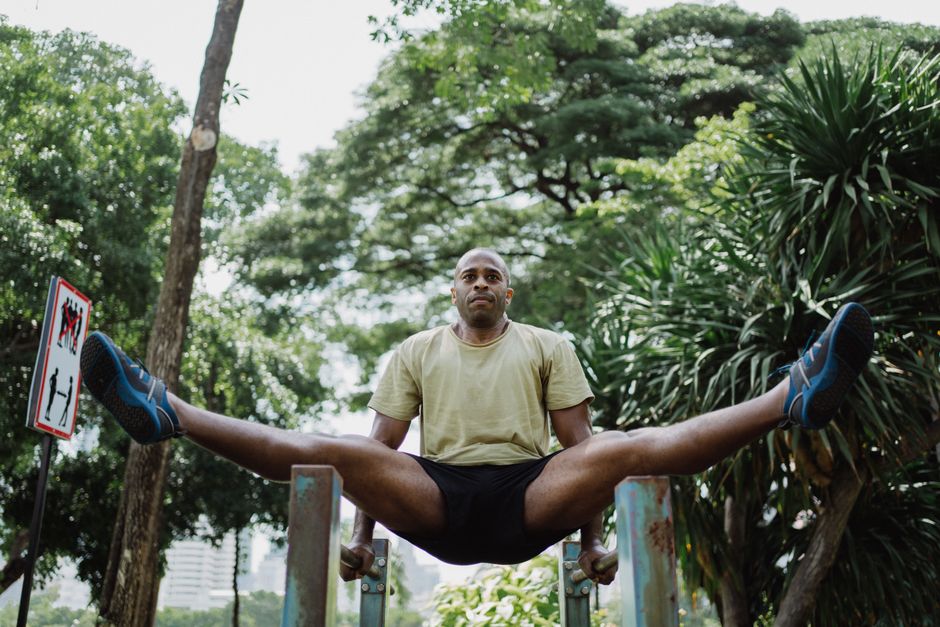
Calisthenics uses your own body weight for resistance training. It builds muscle and burns calories. To lose weight with a calisthenics workout plan, you need to create a calorie deficit — burn more energy than you take in — while your workouts build lean muscle that raises your resting metabolism. A well-structured plan combines compound exercises, progressive overload, consistent frequency, and proper nutrition. This article explains exactly how to design that plan and what the research shows about its effectiveness.
How does calisthenics help with weight loss?
Weight loss happens when your body burns more calories than it consumes. Calisthenics contributes in two ways. First, during the workout, you burn calories directly. A person weighing 155 pounds burns roughly 280–350 calories in 30 minutes of moderate calisthenics, and more with high-intensity movements like burpees or jumping squats. Second, building muscle through resistance training increases your resting metabolic rate — muscle tissue burns more calories at rest than fat tissue does.
Calisthenics also creates an “afterburn” effect. After intense exercise, your body continues to consume extra oxygen to repair muscle tissue and restore energy stores. This effect, called excess post-exercise oxygen consumption (EPOC), can elevate calorie burn for several hours. However, the afterburn effect is modest — typically 50–150 extra calories — so it should not be the main focus of your weight loss strategy.
What is the best calisthenics workout plan for weight loss?
The most effective plan uses compound movements, progressive overload, and consistent frequency. Compound exercises work multiple muscle groups at once — push-ups, squats, lunges, pull-ups, dips, and planks. They burn more calories per minute than isolation exercises because they demand more energy.
Aim for three to five full-body workouts per week. Each session should include one to two exercises for the upper body, one to two for the lower body, and one core exercise. Perform each exercise for three to four sets of 8–15 repetitions. Rest 30–60 seconds between sets to keep your heart rate elevated.
Progressive overload is critical. As you get stronger, you must make exercises harder to continue building muscle and burning calories. Options include increasing repetitions, reducing rest time, adding slower tempos, or moving to harder variations — for example, from regular push-ups to decline push-ups or from bodyweight squats to pistol squats.
A sample weekly plan might look like this:
- Monday: Full-body circuit — 3 rounds: 10 push-ups, 15 squats, 10 rows (using a table or rings), 30-second plank, 10 lunges each leg.
- Wednesday: Same circuit but increase reps or reduce rest.
- Friday: Same structure but swap exercises — dips, step-ups, inverted rows, side planks.
- Optional: Add a Saturday session with high-intensity intervals — 30 seconds burpees, 30 seconds rest, repeated for 10 minutes.
Rest days are essential for recovery. On rest days, light walking or stretching is fine.
How many calories can you burn with calisthenics?
Calorie burn depends on your body weight, exercise intensity, and duration. A 155-pound person typically burns these approximate calories in 30 minutes:
- Moderate calisthenics (push-ups, squats, lunges at a steady pace): 200–300 calories.
- Vigorous calisthenics (burpees, jumping jacks, mountain climbers, high-intensity circuits): 300–400 calories.
- Heavy calisthenics (pull-ups, dips, advanced movements at slow tempo): 250–350 calories.
These numbers are estimates. To lose one pound of body fat, you need a total deficit of about 3,500 calories. Combining calisthenics with a modest calorie reduction — 250–500 fewer calories per day from food — creates a sustainable deficit of one to two pounds per week.



How to combine calisthenics with nutrition for weight loss
Exercise alone rarely produces significant weight loss without dietary changes. Studies consistently show that combining resistance training with a moderate calorie deficit leads to better fat loss and greater muscle preservation than dieting alone.
Focus on protein. Eating enough protein — roughly 0.7–1.0 grams per pound of body weight per day — helps preserve muscle while you lose fat. Good sources: lean meat, poultry, fish, eggs, dairy, beans, lentils, tofu. Distribute protein evenly across meals.
Eat plenty of vegetables, fruits, and whole grains for fiber and nutrients. Fiber increases fullness and helps control appetite. Aim for at least 25–30 grams of fiber daily.
Stay hydrated. Water supports metabolism and helps manage hunger. A good rule: drink when thirsty and with meals.
Do not drastically cut calories. Very low-calorie diets can lead to muscle loss, fatigue, and reduced workout performance, which undermines weight loss progress. A deficit of 300–500 calories per day is typically safe and sustainable for most adults.
How to track progress without a scale
The number on the scale does not tell the full story. Calisthenics builds muscle, and muscle is denser than fat. You may lose inches and body fat while the scale changes little or even goes up slightly.
Better markers of progress: how your clothes fit, measurements around your waist and hips, strength gains (more reps or harder variations), and how you feel during daily activities. Take progress photos every two to four weeks under the same lighting and clothing. These are more motivating than daily weigh-ins.
If you weigh yourself, do it once per week at the same time of day — ideally in the morning after using the bathroom — and focus on the trend over weeks, not the day-to-day number.
Is calisthenics better than gym workouts for weight loss?
Neither is inherently better. Both can produce weight loss if they create a calorie deficit and build muscle. The best choice is the one you enjoy and will stick with consistently.
Calisthenics has some advantages: no equipment needed, can be done anywhere, and allows for high-intensity intervals that spike calorie burn. Gym workouts offer easily adjustable resistance (dumbbells, barbells, machines) that may make progressive overload simpler for some exercises, especially for the lower body. Research comparing bodyweight training to weighted training shows similar improvements in body composition when intensity and volume are matched.
The evidence does not support the idea that one is “better” for fat loss. Both work. Choose based on your preferences, access, and consistency.
Common mistakes that slow weight loss with calisthenics
Not progressively overloading. Doing the same number of push-ups and squats week after week stops building muscle. Muscle adaptation requires increasing demand. Add reps, reduce rest, or move to harder variations every few weeks.
Relying only on cardio. Calisthenics circuits performed as steady-state cardio (low intensity, long duration) burn fewer calories than high-intensity circuits and do not build significant muscle. Keep intensity moderate to high.
Neglecting nutrition. You cannot out-exercise a poor diet. Even the best calisthenics plan will not lead to weight loss if you eat too many calories. Track food for a week to see where extra calories come from.
Overtraining without recovery. Muscles grow during rest, not during the workout. Too many sessions without rest can lead to fatigue, poor form, and stalled progress. Plan at least one or two rest days per week.
Expecting spot reduction. No exercise can target fat loss from a specific area like the belly or thighs. Fat loss happens from the whole body. Calisthenics strengthens muscles underneath, but fat loss follows your genetics and overall calorie deficit.
How long does it take to see weight loss results with calisthenics?
Visible changes typically appear within four to eight weeks when you combine consistent workouts with a modest calorie deficit. Some people notice looser clothing or improved stamina sooner — often within two to three weeks.
Rate of weight loss depends on your starting point, workout intensity, diet, and adherence. A safe and sustainable pace is 0.5 to 2 pounds per week. Faster loss often includes water weight or muscle loss and is harder to maintain.
Strength improvements usually come before visible changes. You may be able to do more push-ups or hold a plank longer within two to three weeks. These are real signs of progress that keep you motivated while waiting for fat loss to show.
Frequently Asked Questions
How often should I do calisthenics to lose weight?
Aim for three to five full-body workouts per week. Rest at least one day between sessions to allow muscle recovery.
Can I lose belly fat with calisthenics?
No exercise targets belly fat specifically. Calisthenics strengthens the core, but fat loss happens evenly across the body through a calorie deficit.
Do I need to count calories with a calisthenics plan?
Not necessarily, but tracking food for a week helps identify hidden calories. A consistent calorie deficit is essential for weight loss regardless of exercise.
Is calisthenics enough for muscle gain while losing fat?
Yes, when combined with sufficient protein and a moderate calorie deficit. Progressive overload is key to preserving and building muscle during weight loss.
