
Shin pain is a common complaint, especially for runners, walkers, and anyone who spends a lot of time on their feet. Stretching your shins involves targeting the tibialis anterior muscle, which runs along the front of your lower leg. The most effective way to do this is a kneeling stretch, where you sit back on your heels with your toes tucked under, holding the position for 30 seconds. This article explains why shin stretches matter, how to perform them correctly, and when they are actually helpful versus when they might not be enough.
Why Do Your Shins Feel Tight?
To understand how to stretch your shins, you first need to know what is happening in your lower leg. The main muscle on the front of your shin is the tibialis anterior. Its job is to pull your foot upward toward your knee, a motion called dorsiflexion. It also helps control the foot as it slaps down to the ground when you walk or run.
When this muscle works harder than it is used to, it can become fatigued and sore. This often happens when you increase your running mileage too quickly, start running on hills, or switch to a new pair of shoes. The muscle is also heavily used during activities that involve a lot of stopping and starting, like tennis or basketball.
Tightness in this area can also come from everyday habits. Sitting in a chair with your feet pulled back under you for long periods keeps the muscle in a shortened position. Over time, this can make the muscle feel stiff and less flexible.
The Most Effective Shin Stretch
The gold standard for stretching the front of the lower leg is the kneeling shin stretch. This position directly lengthens the tibialis anterior muscle. Here is how to do it correctly.
Start by kneeling on a mat or a soft surface. Your knees should be hip-width apart. Tuck your toes under so the tops of your feet are flat on the floor and your toes are pointing backward. Slowly sit back toward your heels. You should feel a stretch along the front of your lower legs. Hold this position for 30 seconds. Relax and repeat two to three times.
If this position is too intense, you can modify it. Place a rolled-up towel under your ankles for extra padding. Or, instead of sitting all the way back, you can lift one knee off the ground at a time to control the intensity of the stretch. A gentler version involves standing and placing the top of your foot on a low chair or step behind you, then bending the knee to feel the stretch.
You should feel a pulling sensation, but you should never feel sharp pain. If you feel pain in the knee or the ankle joint, stop and adjust your position.
Stretches You Can Do Standing or Sitting
Kneeling is not always practical, especially at work or in a gym. There are effective alternatives that do not require getting on the floor.
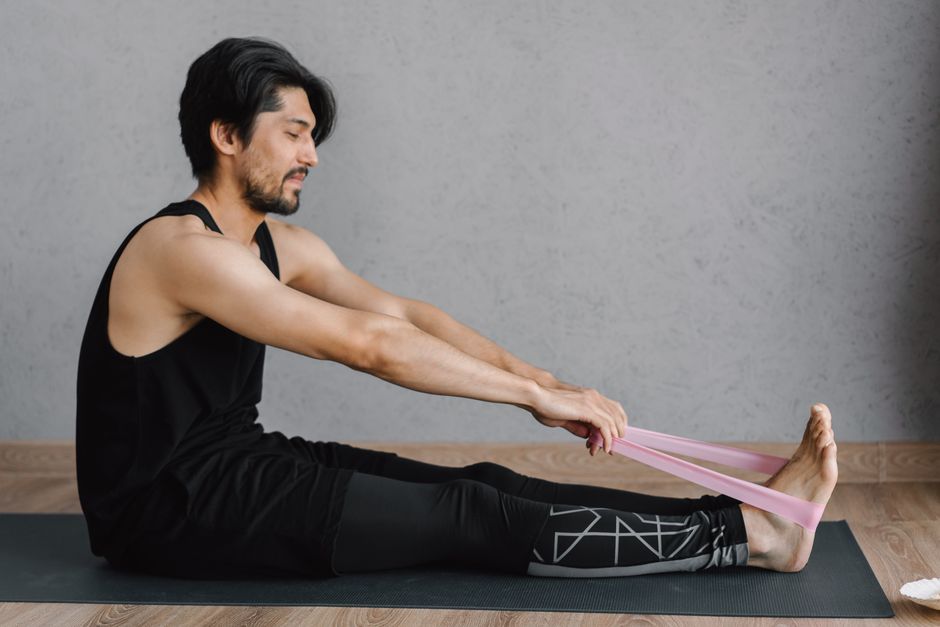
One option is the seated toe pull. Sit on a chair with your legs extended in front of you. Loop a towel or a resistance band around the ball of your foot. Gently pull the towel toward you, bringing your toes toward your shin. You will feel this stretch in the front of your lower leg and possibly in the calf. Hold for 30 seconds and switch sides.
Another option is the standing shin stretch. Stand facing a wall with your hand on it for balance. Place the top of one foot against the wall behind you, with your toes pointing down. Slide the foot slightly up the wall until you feel a stretch in the front of the shin. Keep your knee bent as you do this. Hold for 30 seconds on each leg.
These variations are useful because they allow you to stretch without putting pressure on your knees. For people with knee arthritis or other knee conditions, the kneeling stretch may be uncomfortable. In that case, the seated or standing versions are better choices.




Should You Stretch Before or After Exercise?
The timing of your shin stretches matters. Static stretching, where you hold a position for 30 seconds or more, is generally not recommended before intense exercise. Research has shown that holding a static stretch before a workout can temporarily reduce muscle strength and power. This is not what you want before a run or a sprint session.
A better approach is to do a light warm-up first. Walk briskly or jog slowly for five minutes to increase blood flow to the muscles. After your activity, when your muscles are warm, is the ideal time to perform the static shin stretches described above. This is when the muscle tissue is more pliable and the stretch is more effective.
If you feel tightness in your shins during the day, stretching at any time is fine. The key is to avoid forcing a cold muscle into a deep stretch. A few minutes of walking first will always make the stretch safer and more comfortable.
Are Shin Stretches the Answer to Shin Splints?
This is where you need to be careful. The term “shin splints” is often used loosely to describe any pain in the lower leg. However, medically, shin splints refers specifically to medial tibial stress syndrome. This is an overuse injury causing pain along the inner edge of the shinbone, known as the tibia.
Shin splints are not primarily a muscle tightness problem. They involve inflammation of the periosteum, the connective tissue covering the bone, and the muscles attaching to it. Stretching the shin muscles will not cure this condition. It may provide temporary relief from muscle tension, but it does not address the underlying stress on the bone.
More importantly, pain in the front of the lower leg can also be a stress fracture. A stress fracture is a small crack in the bone. Stretching a stress fracture will make the pain worse, not better. If your pain is sharp, localized to a specific spot on the bone, or gets worse with impact, you should not stretch it. You should stop the activity and see a healthcare professional for an accurate diagnosis.
The evidence for stretching as a treatment for shin splints is limited. Some studies suggest it offers little benefit over rest and activity modification. The most effective treatment for shin splints is relative rest, meaning you reduce the intensity and duration of the aggravating activity. Cross-training with swimming or cycling can help maintain fitness while the bone heals.
What Else Can Help With Shin Pain?
If your shins are sore from muscle fatigue rather than a bone injury, stretching is just one part of the picture. Strengthening the muscles around the shin is often more beneficial than stretching alone.
The tibialis anterior muscle works opposite to the calf muscles. Strengthening your calves can help balance the forces across the lower leg. Calf raises are a simple way to do this. Stand on the edge of a step with your heels hanging off, then lower your heels down and push back up onto your toes.
Another useful exercise is the towel scrunch. Place a towel flat on the floor and use your toes to scrunch it up toward you. This strengthens the small muscles in the foot and lower leg. It is a low-impact exercise that can be done daily while sitting at a desk.
Footwear also plays a role. Shoes that are worn out lose their cushioning and support. Replacing running shoes regularly is a standard recommendation for preventing lower leg pain. The general guidance is to replace running shoes every 300 to 500 miles, though this varies based on body weight and running style.
When to See a Doctor
You should not ignore persistent shin pain. If the pain lasts for more than two weeks despite rest and stretching, you should have it evaluated. You should also see a doctor if you have swelling in the lower leg, pain that is present even when you are not bearing weight, or pain that wakes you up at night.
These symptoms can indicate a more serious condition such as a stress fracture, compartment syndrome, or in rare cases, a blood clot. Compartment syndrome is a condition where pressure builds up within the muscles of the leg, causing severe pain and sometimes numbness. It requires medical evaluation.
A healthcare professional can perform imaging tests such as an X-ray or MRI to determine the exact cause of your pain. Getting an accurate diagnosis is essential because the treatment for muscle tightness, shin splints, and stress fractures are very different.
Frequently Asked Questions
How long should I hold a shin stretch?
Hold a static shin stretch for about 30 seconds. Repeat it two to three times on each leg for the best results.
Can I stretch my shins every day?
Yes, daily stretching is safe for muscle tightness as long as you do not feel sharp pain. If the stretch causes pain, stop and consult a healthcare provider.
Why do my shins hurt when I walk?
Shin pain when walking is often due to overuse of the tibialis anterior muscle or medial tibial stress syndrome. If the pain is sharp and persistent, it could indicate a stress fracture and requires medical evaluation.
