
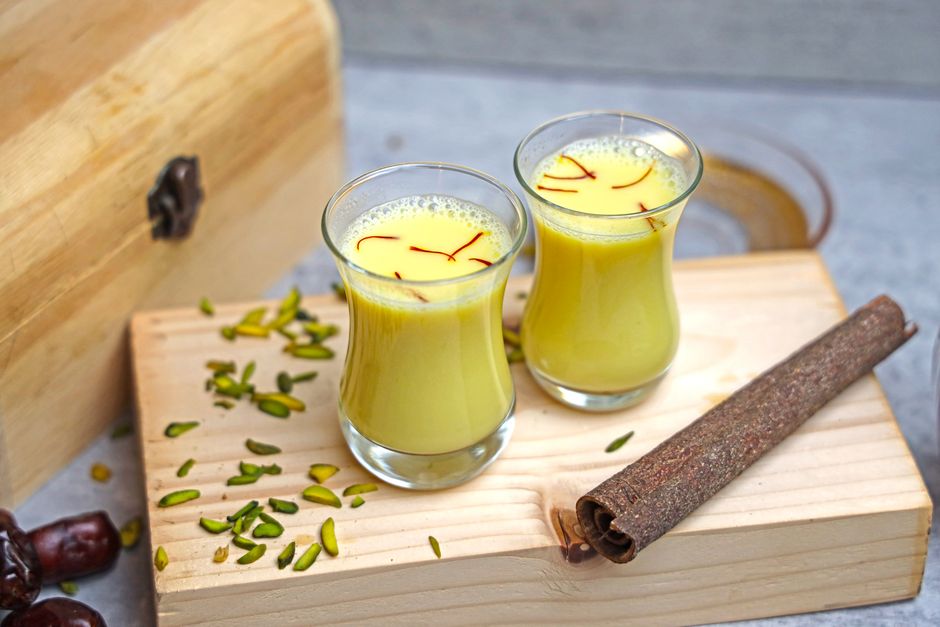
Yes, you can take saffron and turmeric together. There is no known dangerous interaction between them, and both are commonly consumed in food and as supplements. The more important question is not whether they are safe together, but whether the amounts you are taking are safe on their own.
That distinction matters. Saffron and turmeric are not risk-free just because they are natural. Each has a dose range where it is well tolerated and a higher range where real problems can appear. Taking them at the same time does not multiply those risks, but it does mean you need to know what each one can do on its own.
Can You Take Saffron And Turmeric Together Safely?
Combining them is safe for most healthy adults when both are used at typical food amounts or standard supplement doses. No published research identifies a harmful interaction between saffron and turmeric when taken together.
The two spices act through different pathways. Turmeric contains curcumin, a compound studied for its effects on inflammation. Saffron contains crocin and safranal, compounds studied for mood and antioxidant activity. They do not appear to block or amplify each other’s effects in any documented way.
What gets less attention is that both have upper limits. Saffron is the one to watch more closely. Taken in large amounts, it can cause symptoms that range from nausea and dizziness to more serious effects. Turmeric is generally better tolerated, but high-dose curcumin supplements can cause digestive upset and carry other concerns discussed below.
A practical point: the safety picture for the spice in your food is different from the safety picture for a concentrated extract in a capsule. A pinch of saffron in rice is not the same as a 30 mg saffron extract pill. Keep that difference in mind as you read the rest of this article.
How Much Saffron Is Safe to Take Daily?
Food amounts of saffron are considered safe. The concern begins with concentrated supplements and large doses.
Saffron has a long history as both a spice and a traditional medicine. Modern research has studied it for mood, premenstrual symptoms, and eye health, among other uses. Doses in those studies have generally ranged from about 15 mg to 30 mg per day of saffron extract, and those doses were typically studied for limited periods.
Doses above that range are where caution becomes important. Saffron taken in very large amounts — several grams or more — has been associated with toxicity. Documented effects at high doses include nausea, vomiting, dizziness, and in severe cases more serious symptoms. These cases are uncommon and generally involve very large intakes, not culinary use.
There is no established safe upper limit for saffron supplements the way there is for some vitamins and minerals. That absence is worth noting. It does not mean saffron is dangerous. It means the research has not defined a clear ceiling, so staying within amounts studied in human trials is the more careful approach.
If you are pregnant, the calculation changes. Saffron in large amounts has traditionally been used to affect pregnancy, and high doses are not considered safe during pregnancy. Food amounts are generally regarded as fine, but concentrated saffron supplements are a different matter. Talk to your doctor before using them.
How Much Turmeric Is Safe to Take Daily?
Turmeric used as a spice in cooking is safe and has no meaningful dose concern for most people. The questions arise with concentrated curcumin supplements.
Plain turmeric powder contains only about 2 to 5 percent curcumin by weight. That is why supplement makers extract and concentrate it. A typical curcumin supplement may contain hundreds of milligrams of curcumin, far more than you would get from food.
At these higher doses, digestive side effects are the most common complaint. Some people experience nausea, diarrhea, or stomach discomfort. These effects are usually mild and go away when the dose is reduced or stopped.
A more serious concern involves a specific interaction. Curcumin can affect blood clotting, and there are case reports of bleeding in people taking high-dose curcumin alongside blood-thinning medications. This is not a reason to panic, but it is a reason for caution if you take warfarin, aspirin, clopidogrel, or similar drugs.
Curcumin can also interfere with how the body processes some medications by affecting liver enzymes. This matters for certain drugs, including some chemotherapy agents and immunosuppressants. If you take prescription medication, check with your pharmacist before adding a high-dose curcumin supplement.
Another point that gets lost: curcumin is poorly absorbed on its own. Supplement makers add black pepper extract, fats, or other compounds to improve absorption. Better absorption can also mean more of the compound reaching your bloodstream, which is worth knowing when you consider dose.





Are There Interactions Between Saffron And Turmeric?
No documented interaction between saffron and turmeric has been identified in the medical literature. They do not appear to compete for absorption or interfere with each other’s metabolism in any known way.
That said, both can affect blood clotting to some degree. Saffron has been studied for antiplatelet effects, and curcumin has similar properties. Taking both at high doses alongside a blood-thinning medication could theoretically add to that effect. This is not confirmed by research, but it is a reasonable precaution to mention to your doctor if you are on anticoagulants.
Both can also lower blood sugar to some extent in some people. If you take diabetes medication, monitor your blood sugar more closely when starting either supplement. This is not a known interaction between the two spices, but a consideration for each one individually.
One non-obvious point: the absence of documented interactions is not the same as proof of safety. It often means the combination simply has not been studied directly. Saffron and turmeric are usually taken together in food without issue, and that history offers some reassurance. But if you are stacking high-dose extracts, you are outside the range of what has been formally studied.
Who Should Be Cautious About Taking These Together?
Most healthy adults have little to worry about when using saffron and turmeric at normal amounts. Certain groups should be more careful.
- Pregnant women: Avoid high-dose saffron supplements. Food amounts are generally considered fine, but concentrated doses are not.
- People on blood thinners: Both spices may affect clotting. Talk to your doctor before using high-dose supplements.
- People with diabetes on medication: Both can lower blood sugar. Watch for signs of low blood sugar and monitor accordingly.
- People scheduled for surgery: Stop high-dose supplements of both at least two weeks before surgery if your surgeon advises it, due to bleeding concerns.
- People with gallstones or bile duct problems: Turmeric can stimulate bile production, which may worsen these conditions.
- People with iron-deficiency anemia: Turmeric may reduce iron absorption. This matters more with high intake.
- People taking prescription medications: Curcumin can affect how some drugs are processed. Check with a pharmacist.
This list is not exhaustive. If you take any regular medication or have a chronic condition, the safest move is a quick conversation with your doctor or pharmacist before starting either supplement.
What Does the Research Actually Show?
Research on saffron and turmeric is active but uneven. Some areas have reasonable evidence. Others rely mostly on small studies or laboratory work.
For saffron, several small to moderate-sized human trials have looked at mood and premenstrual symptoms. Some of these found benefits compared with placebo. The studies vary in quality and size, and results are not uniform across all of them. Saffron is not an established treatment for depression or any other condition.
For turmeric, the gap between laboratory findings and human outcomes is larger than many people realize. Curcumin shows anti-inflammatory activity in lab studies. Human trials have produced mixed results, partly because curcumin is poorly absorbed and study designs vary widely. Some research suggests benefits for certain joint conditions. Other studies show little or no effect.
What the research does not show is any danger from combining the two. It also does not show that combining them produces benefits beyond taking either one alone. Claims that the two work together in some special way are not supported by current evidence.
Be skeptical of products marketed as combining saffron and turmeric for enhanced effects. No study has confirmed that combination offers advantages over either spice on its own.
Practical Guidance for Taking Them Together
If you decide to use both, a few simple principles reduce risk.
Start with food amounts if you are new to either one. Cooking with both spices is a safe way to get familiar with them and unlikely to cause problems.
If you use supplements, take one at a time at first. This makes it easier to tell which one causes any side effect that appears. Give each a few weeks before adding the other.
Stay within doses used in human studies. For saffron, that generally means around 15 to 30 mg per day of extract. For curcumin, doses in studies vary widely, and absorption differs by formulation, so follow the product label or your doctor’s guidance rather than guessing.
Tell your doctor what you are taking. This is especially important if you take prescription medication, have a chronic condition, or are pregnant or breastfeeding. Supplements are not required to prove effectiveness before they are sold, and they can interact with drugs in ways that matter.
No clinical guidelines currently exist for taking saffron and turmeric together as a specific combination. The guidance above is based on what is known about each one individually.
Frequently Asked Questions
Can you take saffron and turmeric together every day?
Yes, most healthy adults can take both daily at typical food amounts or standard supplement doses. Stay within amounts studied in human trials and check with your doctor if you take medication.
Is there any interaction between saffron and turmeric?
No documented interaction between the two has been identified in medical research. Both may affect blood clotting and blood sugar on their own, so caution applies if you take related medications.
How much saffron is too much?
Doses above roughly 30 mg per day of saffron extract move beyond what has been well studied, and very large amounts of several grams or more have been linked to toxicity. Food amounts are considered safe.
Can you take saffron and turmeric while pregnant?
Food amounts of both spices are generally considered fine during pregnancy, but high-dose saffron supplements should be avoided. Talk to your doctor before using either supplement while pregnant or breastfeeding.
