
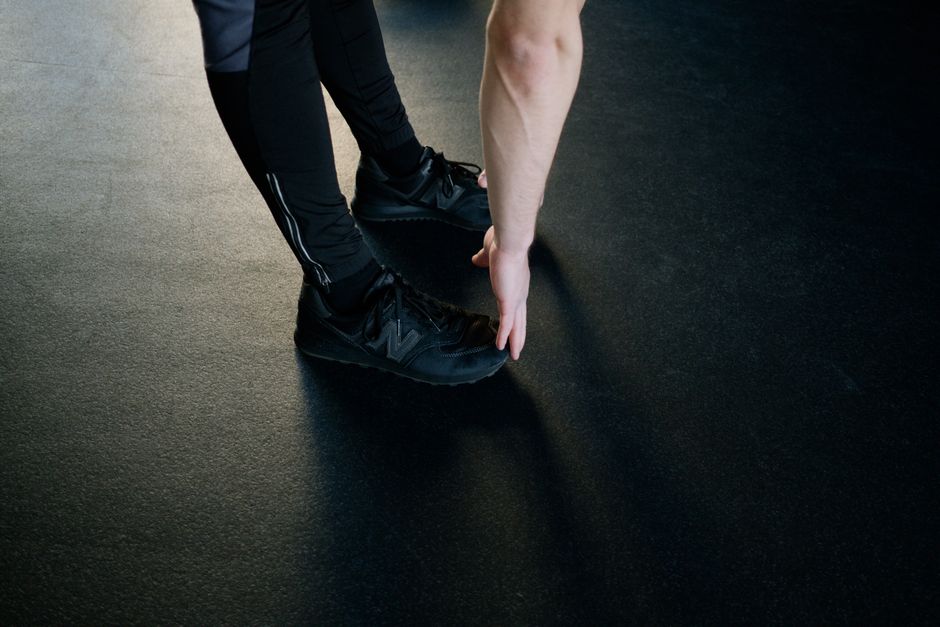
Stretching your calf muscles seems simple, but most people do it wrong. They bounce, they rush, or they stretch a muscle that is already cold. The right way to stretch your calves involves a slow, controlled movement that targets both major muscles in the back of your lower leg. You hold the stretch without pain, breathe normally, and repeat it consistently for the best results.
Why Calf Stretching Matters More Than You Think
Your calf is not one single muscle. It is made of two main muscles: the gastrocnemius and the soleus. The gastrocnemius is the large, visible muscle that gives your leg its shape. The soleus sits underneath it and is flatter.
Both muscles come together to form the Achilles tendon, which attaches to your heel bone. These muscles work together every time you walk, run, jump, or stand on your toes. When they are tight, they can pull on your heel and contribute to problems like plantar fasciitis, Achilles tendinitis, and general foot pain.
Tight calves also affect your knees and hips. The body works as a linked chain. If your ankle cannot move freely because of tight calves, your knee and hip may compensate. Over time, that compensation can lead to discomfort in places that seem unrelated to your lower leg.
How To Stretch Your Calf Muscles The Right Way
The most reliable way to stretch your calf is with a wall or a sturdy surface. Stand facing the wall with your hands placed flat against it at shoulder height. Step one foot back so your heel is firmly on the floor. Keep your back leg straight and your front knee bent.
Slowly lean your body weight toward the wall. You should feel a stretch in the back of your straight leg, specifically in the upper calf. Keep your heel down the entire time. Hold this position for 20 to 30 seconds.
Breathe normally while you hold the stretch. Do not hold your breath. Do not bounce. Bouncing triggers the stretch reflex, which causes the muscle to tighten instead of relax. A slow, steady hold is what actually lengthens the muscle fibers.
Repeat this stretch two to three times on each leg. Rest for about 30 seconds between repetitions. Stretching both legs is important, even if only one feels tight.
The Difference Between the Two Calf Muscles
Most people stretch only the gastrocnemius without realizing the soleus needs a different position. The gastrocnemius crosses both the knee and the ankle. The soleus crosses only the ankle. Because of this difference, you need two separate stretches to address both muscles.
To stretch the gastrocnemius, keep your back leg straight. This position maximizes the stretch on the larger muscle. You should feel it in the upper part of your calf, just below the back of your knee.
To stretch the soleus, bend the knee of your back leg slightly while keeping your heel on the floor. Lean into the wall the same way. You will feel this stretch lower in the calf, closer to the Achilles tendon. Both stretches are necessary for full calf flexibility.
Many people skip the soleus stretch entirely. That is a mistake because the soleus is heavily involved in running and walking. A tight soleus can cause just as many problems as a tight gastrocnemius.





Common Mistakes That Ruin Your Stretch
One of the most common mistakes is stretching a cold muscle. Stretching is not a warm-up. It is better to do a few minutes of light activity first, like walking or marching in place, to increase blood flow to the muscles. Stretching a cold muscle increases the risk of strain.
Another mistake is pushing into pain. A stretch should feel like mild tension, not sharp pain. If you feel pain, you have gone too far. Back off slightly until the sensation is comfortable. Stretching through pain can cause micro-tears in the muscle tissue.
Rushing the stretch is also a problem. Holding for only five or ten seconds does not give the muscle time to relax and lengthen. The 20 to 30 second hold is supported by research as an effective duration for improving flexibility.
Finally, many people forget to stretch both legs equally. If you always stretch your right calf first and more thoroughly, you may end up with uneven flexibility. Spend equal time on each side.
When To Stretch and When Not To Stretch
Stretching after exercise is generally recommended. Your muscles are warm, blood flow is increased, and the tissue is more pliable. This is an ideal time to work on flexibility.
Stretching before exercise is more debated. Some research suggests that static stretching before intense activity may temporarily reduce muscle strength and power. If you are about to sprint or lift heavy weights, a light warm-up followed by dynamic movements may be more appropriate than long static holds.
If your calf muscle is injured, do not stretch it aggressively. A pulled or torn calf needs rest, not stretching. Stretching an injured muscle can worsen the tear and delay healing. If you have sharp pain, swelling, or bruising in your calf, see a healthcare professional before attempting any stretching routine.
If you have a condition like peripheral artery disease or deep vein thrombosis, check with your doctor before starting a stretching program. These conditions affect blood flow in the legs, and certain movements may not be safe for you.
How Often Should You Stretch Your Calves
Consistency matters more than intensity. Stretching your calves once a week will not produce lasting results. Stretching them daily, or at least several times per week, is more effective for improving flexibility.
Research on flexibility training generally shows that gains are lost within a few weeks if you stop stretching. This means calf stretching is not a one-time fix. It is a maintenance activity, much like brushing your teeth.
You do not need to stretch for long periods to see benefits. Two to three sets of 20 to 30 second holds per leg, done several times per week, is a reasonable goal. This takes less than five minutes total.
Some evidence suggests that longer total stretch times, such as holding for 60 seconds, may produce slightly greater flexibility gains. However, the difference is small, and shorter holds are easier to maintain as a habit. The best routine is the one you will actually do consistently.
Additional Stretches for Your Calves
The wall stretch is the most straightforward, but there are alternatives. A downward-facing dog in yoga stretches the calves effectively. Start on your hands and knees, then lift your hips toward the ceiling. Press your heels toward the floor. You should feel a stretch in the back of your legs.
A seated calf stretch is useful if you have balance issues or prefer not to stand. Sit on the floor with your legs extended in front of you. Loop a towel or strap around the ball of your foot and gently pull your toes toward you. Keep your knee straight. Hold for 20 to 30 seconds.
You can also use a step for a more intense stretch. Stand on the edge of a step with your heels hanging off. Lower your heels slowly below the level of the step until you feel a stretch. Hold, then raise your heels back to level. This stretch is more advanced and should be done carefully to avoid overstretching.
Foam rolling is not a stretch, but it can complement your stretching routine. Rolling the calf muscle before stretching may help relax the tissue and improve the effectiveness of the subsequent stretch. Some research suggests that foam rolling combined with stretching is more effective than stretching alone.
Signs You Are Stretching Too Hard
Your body gives clear signals when you are overdoing it. Sharp pain during a stretch is a warning sign. So is pain that lingers after you finish stretching. A mild, temporary discomfort that fades quickly is normal. Persistent soreness lasting more than a day or two is not.
If you notice bruising, swelling, or a feeling of weakness in your calf after stretching, stop immediately. These can be signs of a muscle strain. Give the muscle time to recover before resuming any stretching activity.
Numbness or tingling in your foot during a calf stretch is also a concern. This could indicate nerve compression, often from stretching too aggressively. If this happens, ease off the stretch and consult a healthcare professional if it persists.
Remember that flexibility takes time. You will not become dramatically more flexible in a week. Gradual, consistent progress over several weeks is the normal pattern. Pushing harder will not speed up the process and may set you back with an injury.
Frequently Asked Questions
How long should I hold a calf stretch?
Hold each calf stretch for 20 to 30 seconds. This duration allows the muscle to relax and lengthen without triggering the protective stretch reflex.
Should I stretch my calves before or after running?
Stretching after running is generally more beneficial for flexibility. Before running, a light warm-up and dynamic movements are usually better than long static holds.
Why does my calf hurt when I stretch it?
Mild tension is normal, but sharp pain is not. Pain during stretching can indicate you are pushing too hard or that the muscle is injured. Stop stretching and consult a professional if the pain is sharp or persistent.
Can tight calves cause foot pain?
Yes. Tight calf muscles increase tension on the Achilles tendon and the plantar fascia, which can contribute to heel pain and conditions like plantar fasciitis.
