
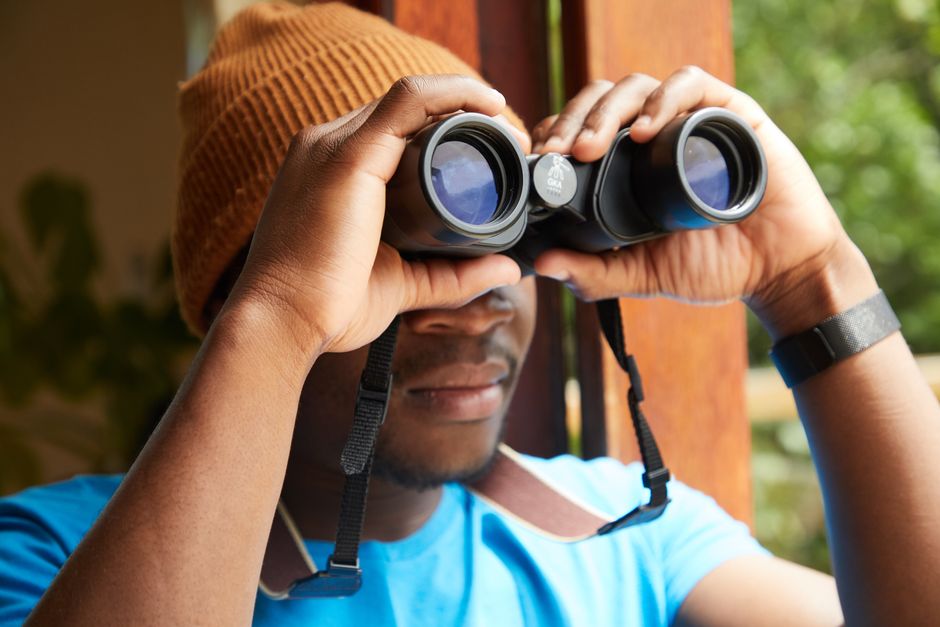
Binocular vision is the ability to use both eyes together as a single coordinated team. It allows the brain to merge two slightly different images from each eye into one three-dimensional picture. This process gives us depth perception, accurate hand-eye coordination, and the ability to judge distances quickly.
How Does Binocular Vision Work?
Each eye sees the world from a slightly different angle. The difference between these two images is called retinal disparity. Your brain takes these two separate images and fuses them into one single image. This fusion process is called binocular summation or sensory fusion.
The visual cortex, located at the back of the brain, handles this merging work. It compares the two images, measures the tiny differences, and calculates depth. This calculation is what tells you whether a ball is coming toward your face or moving past your shoulder.
For binocular vision to work properly, several conditions must be met. Both eyes must point at the same target. The images must be clear enough for the brain to match them. And the brain must be able to process both images at the same speed.
What Is Binocular Vision vs. Monocular Vision?
Monocular vision uses only one eye. People with monocular vision still see depth, but they rely on different cues. These include object size, overlapping shapes, shadows, and motion parallax — the way nearby objects seem to move faster than distant ones when you turn your head.
Binocular vision adds a stronger depth cue that monocular vision cannot provide. This is called stereopsis. Stereopsis is the fine, precise depth perception that comes from comparing the two retinal images. It is what allows you to thread a needle or catch a fast-moving object.
Some animals have eyes on the sides of their heads. This gives them a wide field of view but limited binocular overlap. Predators like hawks and cats have forward-facing eyes with large binocular fields. Humans fall into this category. Our binocular field covers roughly the central 120 degrees of our visual field.
What Are the Three Levels of Binocular Vision?
Eye care professionals describe binocular vision in three levels. Each level builds on the previous one.
Simultaneous perception is the first level. This means both eyes are seeing at the same time. At this stage, the brain is not yet merging the images. It simply receives input from both eyes.
Fusion is the second level. The brain now combines the two images into one. Fusion can be sensory, which is the neural merging of images, or motor, which is the physical alignment of the eyes. Both types of fusion must work together for stable vision.
Stereopsis is the third and highest level. This is the fine depth perception that comes from retinal disparity. Not everyone with fusion achieves full stereopsis. Some people have fusion without strong stereopsis, and they still function well in daily life.





What Causes Binocular Vision Problems?
Binocular vision disorders occur when the two eyes do not work together smoothly. The most common cause is strabismus, a condition where the eyes are misaligned. One eye may turn inward, outward, upward, or downward. This misalignment prevents the brain from fusing the two images.
Amblyopia, often called lazy eye, is another common disorder. In amblyopia, the brain favors one eye and ignores signals from the other. This usually develops in childhood. If left untreated, the ignored eye can lose vision permanently.
Convergence insufficiency is a separate condition. Here, the eyes have trouble working together when looking at close objects. Reading or doing close work becomes difficult. The eyes tend to drift outward, and the person may see double or experience eye strain.
Head injuries, stroke, and neurological conditions can also disrupt binocular vision in adults. These cases are different from childhood disorders because the brain has already learned to use both eyes together. When that ability is lost suddenly, the symptoms can be severe.
What Are the Symptoms of Binocular Vision Dysfunction?
Symptoms vary depending on the underlying cause. Common complaints include double vision, eye strain, headaches, and difficulty reading. Some people report that words appear to move or float on the page. Others feel dizzy or nauseous in busy visual environments.
Children may not complain about symptoms directly. Instead, they may avoid reading, rub their eyes frequently, or close one eye to see better. They might have trouble catching a ball or judging distances on stairs. Poor school performance can sometimes trace back to an undiagnosed binocular vision problem.
Adults with acquired binocular vision problems often describe a sudden change. Driving becomes harder. Crowded spaces feel overwhelming. The world may seem to shift or tilt. These symptoms deserve a full eye examination, not just a vision screening.
How Is Binocular Vision Tested?
An eye care professional tests binocular vision through a series of specific assessments. The cover test is one of the most basic. The examiner covers one eye and watches how the uncovered eye moves. This reveals whether the eyes are properly aligned.
The stereopsis test measures depth perception. You wear special glasses and look at images that appear to pop out at different depths. This test is quick and works well for both children and adults.
The Worth 4-dot test checks whether both eyes are seeing at the same time. You look through special glasses at four lights. Depending on what you see, the examiner can tell if one eye is being suppressed or if double vision is present.
More advanced testing may include measuring the phoria, which is the natural resting position of the eyes. This measurement helps diagnose conditions like convergence insufficiency. These tests are typically done by optometrists or ophthalmologists who specialize in binocular vision.
Can Binocular Vision Problems Be Treated?
Yes. Treatment depends on the specific condition and its cause. Prism glasses are a common treatment. Prisms bend light in a way that helps the eyes align without extra effort. They do not fix the underlying problem, but they can relieve symptoms quickly.
Vision therapy is another treatment option. This is a structured program of eye exercises designed to improve coordination between the eyes and the brain. Some studies support its use for convergence insufficiency. Evidence for other conditions is more mixed.
For amblyopia in children, the standard treatment is patching the stronger eye. This forces the brain to use the weaker eye. Patching works best when started early, typically before age seven, though some research suggests older children can also benefit.
Surgery is an option for strabismus that does not respond to other treatments. The surgeon adjusts the muscles that control eye position. Surgery can improve alignment, but it does not guarantee that the brain will fuse images afterward. Vision therapy is often recommended after surgery.
Can Adults Improve Their Binocular Vision?
Yes, but the approach differs from children. The adult brain is less adaptable, but it remains capable of change. This is called neuroplasticity. Research has shown that adults can improve binocular function with targeted therapy.
The success rate depends on the cause of the problem. Adults with convergence insufficiency often respond well to vision therapy. Adults with long-standing amblyopia face more challenges. The brain has spent years suppressing one eye, and breaking that habit takes time.
Some digital tools and apps claim to train binocular vision at home. A few have published studies behind them, but many have not. If you are considering this approach, ask your eye doctor whether the specific program has clinical evidence to support it.
When Should You See an Eye Doctor?
See an eye doctor if you have persistent double vision, frequent headaches with visual tasks, or difficulty reading that is not corrected by glasses. Children should have a comprehensive eye exam before starting school, even if they pass a vision screening.
Vision screenings in schools typically check for visual acuity — how clearly you see. They often miss binocular vision problems. A child can have 20/20 vision in each eye and still have poor eye teaming. Comprehensive eye exams include the binocular vision tests described above.
Frequently Asked Questions
What is binocular vision in simple terms?
Binocular vision is using both eyes together to see one clear, three-dimensional image. It gives you depth perception and accurate distance judgment.
Can binocular vision be corrected in adults?
Yes, adults can improve binocular vision with prism glasses or vision therapy. Success depends on the cause and how long the problem has existed.
What happens if binocular vision is not treated?
Untreated binocular vision problems can cause persistent eye strain, headaches, and double vision. In children, it can lead to permanent vision loss in one eye.
Is binocular vision the same as 20/20 vision?
No. A person can have 20/20 vision in each eye and still have a binocular vision disorder. The two are separate measures of visual function.
