
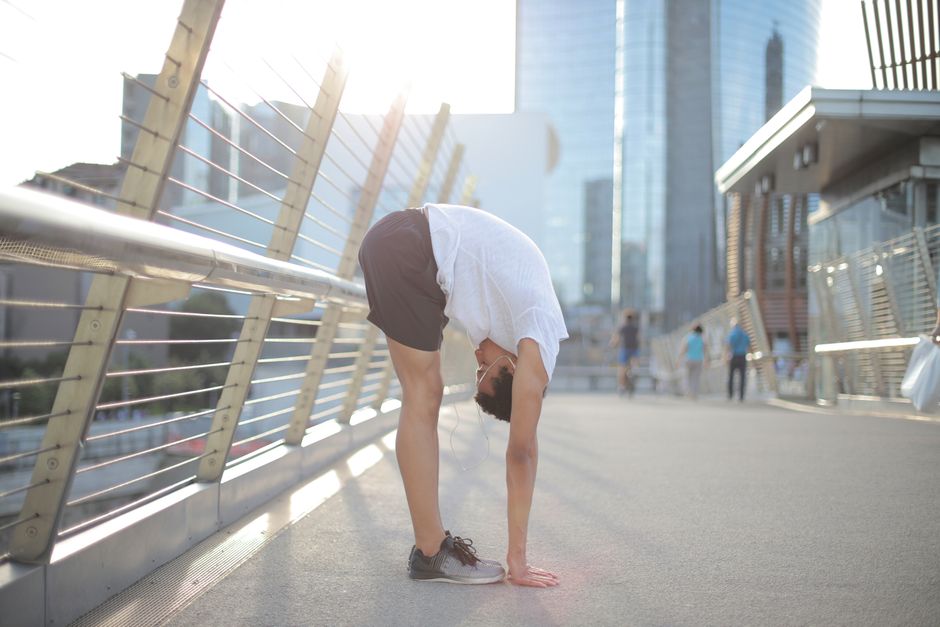
Tight hip flexors are one of the most common complaints among people who sit for long hours, run, cycle, or train hard. The fix is not complicated, but it does require doing the right movements in the right order. A step-by-step routine starts with a gentle warm-up, moves into static stretches that target the iliopsoas and rectus femoris, and finishes with a few active movements that help the new range stick. Done consistently, this approach can meaningfully reduce the pulling sensation in the front of the hip.
What Are the Hip Flexors and Why Do They Get Tight?
The hip flexors are a group of muscles that pull the thigh toward the torso. The most important ones are the iliopsoas (psoas major and iliacus), the rectus femoris (one of the four quadriceps muscles), the sartorius, and the tensor fasciae latae. The iliopsoas is the primary hip flexor and connects the lower spine to the femur.
These muscles get tight for a few well-understood reasons. Prolonged sitting holds the hip in a flexed position for hours. Over time, the muscle adapts to that shortened length. Repetitive activities like running and cycling also keep the hip flexors in a shortened state without much time spent in extension. Weak glutes can make it worse, because the hip flexors take over work the glutes should be doing.
It is worth separating two things that get lumped together. A muscle can feel tight because it is actually short and stiff, or it can feel tight because it is overworked, guarding, or neurologically sensitized. Stretching helps the first situation. The second often responds better to strengthening and load management. That distinction matters when a stretch routine is not producing results.
What Should You Do Before You Start Stretching?
Warm up first. Stretching cold tissue is less effective and more likely to irritate the area. Five minutes of easy movement is enough.
- A brisk walk or light jog in place
- Ten slow bodyweight squats
- Leg swings forward and back, controlled, about ten per side
- Gentle hip circles, five in each direction
The goal is not fatigue. You want increased blood flow and a little warmth in the tissue. If you have a known hip injury, recent surgery, or a diagnosed condition like hip impingement or a labral tear, check with a clinician before starting. Some hip positions that feel like a good stretch can aggravate those conditions.
How To Stretch Tight Hip Flexors Step By Step
This sequence targets the iliopsoas and rectus femoris directly. Move through the steps in order. Hold each stretch for 30 seconds. Two to three rounds per side is a reasonable starting point.
Step 1: Half-Kneeling Hip Flexor Stretch
Kneel on your right knee with your left foot flat on the floor in front of you, knee bent to about 90 degrees. Place a cushion under the kneeling knee if it is uncomfortable. Tuck your pelvis slightly — think about tilting your tailbone down and gently tightening your right glute. This posterior pelvic tilt is what actually lengthens the iliopsoas. Without it, you are mostly arching your lower back. Shift your weight forward an inch or two until you feel a stretch in the front of your right hip. Hold 30 seconds. Switch sides.
Step 2: Half-Kneeling With a Reach
From the same position, raise your right arm overhead and lean slightly to the left. This adds a lengthening component through the hip and side of the torso. Keep the pelvis tucked. Hold 30 seconds per side. If you feel pinching in the front of the hip rather than a stretch, back off the lean.
Step 3: Couch Stretch (Advanced)
Place your right knee on the floor near a wall or couch, with your right shin pointing up the wall behind you. Your left foot is flat on the floor in front. Tuck the pelvis and stay upright. This is a strong stretch. Start with 20 seconds and build up. Skip this one if you have knee pain or hip impingement.
Step 4: Standing Lunge Stretch
Step into a long lunge with your right foot back, heel lifted. Tuck the pelvis and press the hips forward slightly. Keep the torso upright. Hold 30 seconds. This is a good option for people who cannot kneel.
Step 5: Supine Hip Flexor Stretch
Lie on your back near the edge of a bed or table. Pull your left knee to your chest and let your right leg hang off the edge. Let gravity do the work. Hold 30 seconds per side. This is gentle and useful for people with sensitive knees.
Step 6: Active Hip Extension
Finish with movement, not more stretching. Lie face down and slowly lift one leg off the floor a few inches, using your glute. Hold for two seconds and lower. Ten reps per side. This teaches the nervous system to use the newly available range.





How Often Should You Stretch Tight Hip Flexors?
Daily is reasonable and generally well tolerated. Muscles respond to regular, moderate input. Two sessions a day is fine if the stretches are not causing pain. What matters more than frequency is consistency — a short daily routine beats an aggressive session once a week.
Expect changes in how the hip feels within a couple of weeks. Actual changes in muscle length take longer. Research on static stretching suggests that measurable increases in range of motion typically require several weeks of regular practice. The feeling of looseness right after a stretch is mostly a temporary neuromuscular effect, not a permanent change in tissue length.
If nothing changes after four to six weeks of consistent work, the problem is probably not a short muscle. Look at glute strength, hip joint mobility, and daily sitting time. A physical therapist can help sort out which is which.
What Else Helps Beyond Stretching?
Stretching alone rarely fixes tight hip flexors. The muscles are tight for a reason, and if that reason stays in place, the tightness returns.
Strengthen the glutes. Weak glutes let the hip flexors dominate. Glute bridges, hip thrusts, and split squats are common choices. This is arguably the most important piece most people skip.
Break up sitting time. Standing up every 30 to 45 minutes and moving for a minute or two reduces the time the hip spends in a shortened position. A standing desk helps some people, but standing still for hours has its own issues.
Check your running or cycling setup. A saddle that is too low or a stride that overstrides can keep the hip flexors working overtime. A bike fit or gait assessment can be useful if the tightness keeps returning.
Address the lower back. The psoas attaches to the lumbar spine. Lower back stiffness and hip flexor tightness often travel together. Some clinicians find that treating one helps the other, though the evidence for this relationship is not as strong as the anatomy suggests.
Common Mistakes That Keep Hip Flexors Tight
Arching the lower back instead of tucking the pelvis is the most common error. It feels like a stretch, but most of the movement is happening in the spine, not the hip. Tuck first, then move.
Pushing into pain is another. A stretch should feel like a strong pull, not a sharp or pinching sensation. Pinching in the front of the hip often means the joint is being compressed, not the muscle being lengthened.
Bouncing is a third. Ballistic stretching has its place in some athletic warm-ups, but for tight hip flexors, slow holds are more effective and safer.
Skipping the strengthening work is the fourth. Stretching a muscle that is already being overworked by weak neighbors is a short-term fix. The muscle will tighten up again.
Frequently Asked Questions
How long does it take to loosen tight hip flexors?
Many people notice a difference in how the hip feels within two to four weeks of daily stretching. Measurable changes in range of motion usually take longer, often several weeks of consistent practice.
Should I stretch tight hip flexors every day?
Daily stretching is generally well tolerated and often recommended for tight hip flexors. If a stretch causes pain or leaves the hip sore the next day, reduce the intensity or frequency.
Can tight hip flexors cause lower back pain?
The psoas attaches to the lumbar spine, and tight hip flexors can contribute to an anterior pelvic tilt that stresses the lower back. The relationship is real but not the only cause of back pain, so a proper assessment matters.
Is it better to stretch or strengthen tight hip flexors?
Most people benefit from both. Stretching addresses the shortened muscle, while strengthening the glutes and core addresses the underlying reason the hip flexors are overworked.
