
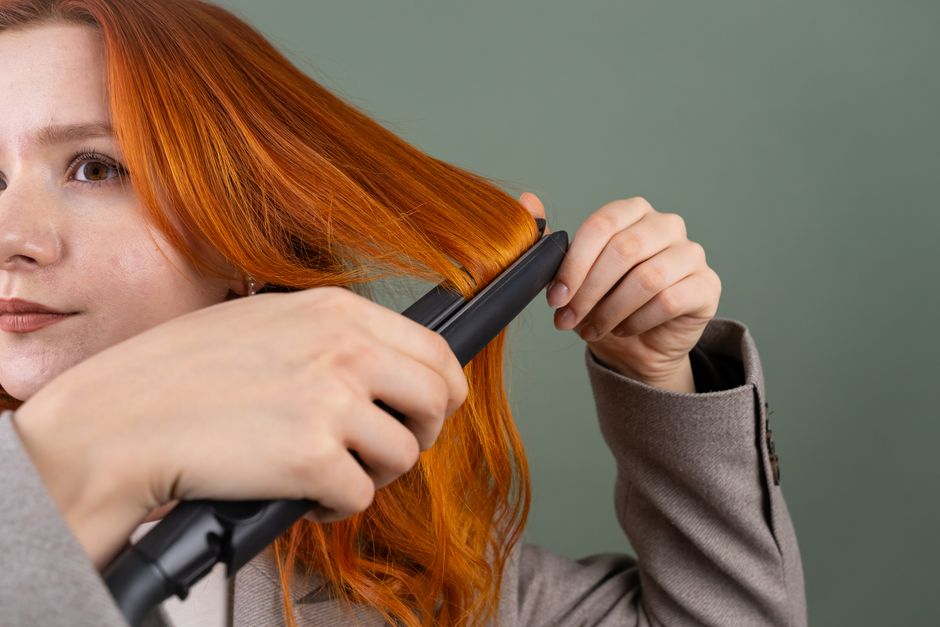
Heat styling tools like flat irons can damage hair over time, causing breakage, split ends, and dryness. You can straighten hair without heat using techniques like wrapping, banding, and using weighted products, though results are typically less sleek and may not last as long. These methods are gentler on the hair shaft and are a practical option for those looking to reduce heat damage.
Why Heat Damages Hair and What to Do Instead
Heat styling is not inherently harmful when used correctly. The problem is that repeated high temperatures weaken the protein structure of the hair.
Hair is made of a protein called keratin. When you apply heat above a certain temperature, it breaks the hydrogen bonds that give hair its shape. This is how a flat iron works. The issue is that extreme heat also breaks disulfide bonds, which are much stronger and harder to repair. Once those break, the hair becomes brittle and prone to splitting.
Heat-free methods rely on a different principle. They use tension, moisture, and time to stretch the hair while it dries. The hair sets in a straighter position as it loses moisture. This is why most heatless methods work best on damp or wet hair, not dry hair.
If you have naturally curly or coily hair, heatless straightening will not produce the same result as a flat iron. It can reduce volume and elongate the curl pattern, but it will not remove all texture. Managing expectations matters here.
How to Straighten Hair Without Heat Using the Wrap Method
The wrap method is one of the oldest and most reliable heatless techniques. It works best on hair that is already straight to wavy in texture.
Start with freshly washed, damp hair. Apply a leave-in conditioner or a lightweight styling cream to smooth the cuticle. Then comb the hair straight back from your forehead.
Wrap the hair tightly around your head in a circular pattern, securing it with bobby pins as you go. The goal is to create a smooth, flat surface against your scalp. Cover the wrapped hair with a silk or satin scarf and leave it overnight.
In the morning, remove the scarf and pins. The hair should be dry, smooth, and relatively straight. A quick pass with your fingers or a wide-tooth comb is usually enough to finish. Avoid brushing it aggressively, as this can create frizz.
This method works because the hair dries in a stretched position against the head. The tension keeps the hair shaft flat while it sets. The result is not pin-straight, but it is noticeably smoother and more polished.
Banding Method: A Better Option for Curly and Coily Hair
Banding is a technique that uses elastic hair ties to stretch hair while it dries. It is often used on natural hair to achieve a straighter look without heat.
Start with damp hair that has been sectioned into four to six parts. Apply a smoothing cream or leave-in conditioner to each section. Then take a hair tie and place it near the roots of each section.
Wrap the tie down the length of the hair, adding more ties every few inches. The tension from the ties pulls the hair taut and prevents it from curling up as it dries. Leave the bands in overnight or until the hair is completely dry.
Remove the bands carefully and separate the hair with your fingers. The result is stretched, elongated hair with less curl and volume. It will not be perfectly straight, but it will be significantly smoother.
This method is popular among people with type 3 and type 4 hair because it does not rely on heat to reshape the curl. It works with the hair’s natural texture rather than fighting it. Some research suggests that frequent heat styling on textured hair increases the risk of breakage, making heatless options particularly valuable for this group.


Setting Hair With Rollers and Pins for a Smooth Finish
Large rollers can straighten hair without heat by stretching the hair shaft as it dries. The key is to use rollers that are large in diameter, at least two inches or more.
Small rollers create curls. Large rollers create volume and smoothness. The hair wraps around the roller in a wide curve, which reduces the appearance of waves and kinks.
Apply the rollers to damp hair in sections. Comb each section smooth before rolling it under or over, depending on the look you want. Secure the rollers and allow the hair to dry completely. This can take several hours, so it is often done overnight.
Once the rollers are removed, the hair will have a soft, bouncy straightness. It will not be as sleek as a flat iron result, but it will have movement and body without the damage.
For best results, use a setting lotion or mousse before rolling. These products help the hair hold its shape while drying. Avoid using heavy oils, as they can weigh the hair down and leave it looking greasy.
Using Weight and Products to Stretch Hair While It Dries
Weight is an underappreciated tool for heatless straightening. Heavier hair naturally hangs straighter because gravity pulls it down.
You can use this principle by applying a heavier styling cream or hair oil to damp hair and then allowing it to air dry. The extra weight stretches the hair shaft and reduces curl bounce. This works best on hair that is not tightly coiled.
Another approach is to pull damp hair into a low, tight ponytail at the nape of the neck. The tension from the ponytail holds the hair straight while it dries. Once dry, the hair will have less wave and more sleekness.
Products with smoothing ingredients like silicones can help in the short term. They coat the hair shaft and reduce friction between strands, which limits frizz. However, these products do not permanently change the hair structure. The effect lasts only until the next wash.
Be careful with product buildup. Heavy creams and oils can clog the hair follicle if left on the scalp for days. Wash them out regularly to keep the scalp healthy.
Overnight Straightening: What Works and What Does Not
Most heatless straightening happens overnight because the hair needs time to set. The drying process takes hours, and sleeping is the most convenient time to let that happen.
The overnight wrap and banding methods are effective because they keep the hair in a stretched position for six to eight hours. This gives the hair time to dry completely in that shape.
One mistake people make is removing the styling too early. If the hair is still damp when you take out the bands or rollers, it will revert to its natural texture quickly. The hair must be fully dry before you release the tension.
Another common error is using cotton pillowcases or scarves. Cotton absorbs moisture from the hair and creates friction, which leads to frizz. Silk and satin are smoother and help the hair stay sleek overnight.
There is no clinical evidence that any specific overnight method is superior to another. The best technique is the one that works with your hair type and that you can perform consistently. What matters is that the hair is stretched and held in place while it dries completely.
How Long Do Heatless Straightening Results Last?
Heatless straightening is temporary. The results typically last until the next time the hair gets wet or exposed to high humidity.
For people with wavy hair, the effect may last one to two days. For people with curly or coily hair, it may last only a few hours if the hair is not fully set. Humidity is the biggest factor in how long the style holds. Water vapor in the air can re-form the hydrogen bonds in the hair, causing it to revert to its natural texture.
You can extend the results by sleeping on a silk pillowcase and avoiding excess moisture. Some people also use a light hairspray or finishing mist to help hold the style, though this adds stiffness.
If you need straight hair for a special event and cannot use heat, start the process the night before. This gives the hair maximum time to dry and set. Rushing the process rarely produces good results.
Frequently Asked Questions
Can I straighten my hair without heat permanently?
No heatless method permanently straightens hair. Chemical treatments like relaxers or keratin treatments can alter hair structure for months, but these involve chemicals, not heat, and carry their own risks.
How long does it take to straighten hair without heat?
Most methods take six to eight hours because the hair must dry completely while held in a stretched position. This is why overnight styling is the most common approach.
Does the wrap method work on thick curly hair?
It can reduce volume and stretch the curl, but it will not make thick curly hair completely straight. Banding is often more effective for tightly curled hair.
Will heatless straightening damage my hair?
No, these methods do not damage the hair structure because they do not break protein bonds. However, tight bands or aggressive brushing can cause mechanical breakage, so handle the hair gently.
