
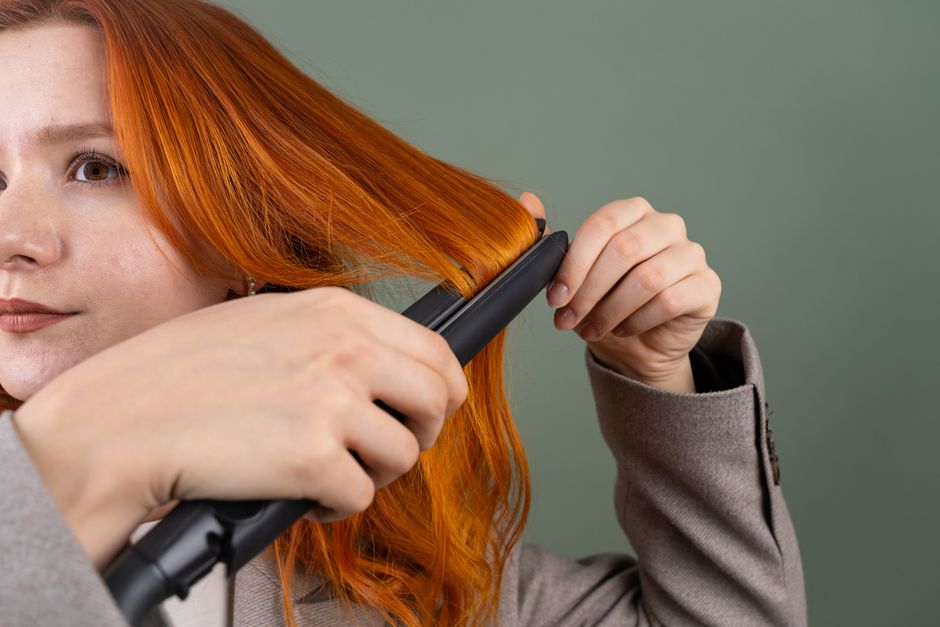
Yes, there is. Chemical hair straightening treatments—specifically those using keratin or formaldehyde-based solutions—can permanently alter the internal structure of your hair until it grows out. No method makes new growth straight, so the “permanent” result lasts only on the treated strands. The hair that grows from your scalp afterward will have your natural texture again.
What Does “Permanent” Hair Straightening Actually Mean?
The word permanent is misleading in hair care. No treatment changes the shape of the hair follicle under your scalp. The follicle decides whether your hair is straight, wavy, or curly. That decision happens below the skin and no topical product can reach it.
What chemical straighteners do is break and reform the bonds inside each individual hair shaft. The hair that has already grown out can be reshaped. New hair that emerges from the follicle weeks later is untouched. So the result is permanent on treated hair but temporary in the sense that it lasts only until that hair sheds or is cut off.
Most people need touch-up treatments every few months as regrowth appears. The frequency depends on how fast your hair grows and how obvious the contrast is between your natural texture and the straightened strands.
What Are the Main Types of Chemical Straightening?
There are three main categories of chemical straightening. They differ in strength, ingredients, and how long the effect lasts.
Relaxers are the strongest option. They use high-pH chemicals like sodium hydroxide or calcium hydroxide to break the disulfide bonds in hair. These bonds give hair its shape. Once broken, the hair is smoothed into a straighter form and the bonds are neutralized. Relaxers work on very curly and coily hair. They permanently alter the hair structure until new growth appears.
Keratin treatments are different. They coat the hair with a protein layer and use heat to seal it in. The hair appears smoother and less frizzy, but the effect is not truly permanent. It washes out gradually over two to six months. Keratin treatments often contain formaldehyde or formaldehyde-releasing compounds, which is a separate safety concern.
Japanese thermal straightening combines chemicals with high heat. A solution breaks the bonds, a flat iron reshapes the hair, and a neutralizer resets the bonds in the straight position. This method produces very sleek results and lasts until the hair grows out.
Brazilian blowouts are a milder version of keratin treatments. They reduce frizz and add shine but do not fully straighten very curly hair. The effect lasts about three months.
Which Method Is Safest for Your Hair?
No chemical straightener is completely safe. Every method damages the hair to some degree. The question is how much damage and what risks you accept.
Relaxers cause the most structural damage. They break strong bonds in the hair cortex. Overuse or leaving the product on too long can cause breakage, thinning, and scalp burns. Some research has raised concerns about long-term use of lye-based relaxers and health risks, but the evidence on this remains incomplete and studies have not reached a clear consensus.
Keratin treatments carry a different risk. Many contain formaldehyde, a known carcinogen. When heated with a flat iron, formaldehyde gas is released into the air. This can irritate the eyes, nose, and throat. Some products labeled “formaldehyde-free” still contain compounds that release formaldehyde when heated. The U.S. Occupational Safety and Health Administration has warned salon workers about this exposure. If you are considering a keratin treatment, ask for the ingredient list and check for formalin, methylene glycol, or other formaldehyde-releasing agents.
Japanese thermal straightening falls between relaxers and keratin treatments in terms of damage. It works best on hair that is already straight or slightly wavy. It can cause significant damage on very curly hair because the process requires more chemical application and higher heat.



How Much Does It Cost and How Long Does It Last?
Costs vary widely by salon, city, and hair length. Relaxers are the most affordable option, typically ranging from $50 to $150 per session. Keratin treatments usually cost $150 to $400. Japanese thermal straightening is the most expensive, often $300 to $800 or more.
Duration depends on the method. Relaxers last until new growth appears, roughly six to eight weeks for noticeable regrowth on tightly curled hair. Japanese thermal straightening also lasts until new growth appears, which can be four to six months before the roots become visible. Keratin treatments fade gradually over two to four months. Brazilian blowouts last about three months.
Hair growth rate matters more than any other factor. The average scalp hair grows about half an inch per month. If your hair grows faster, you will need touch-ups sooner.
Can You Straighten Hair Permanently Without Chemicals?
No. Heat styling with flat irons or blow dryers is temporary. The effect lasts until the hair gets wet, absorbs humidity, or the bonds relax back to their natural shape. Heat does not permanently restructure the hair shaft.
Some tools marketed as “permanent straightening brushes” or “ionic straighteners” do not actually change the hair structure. They temporarily smooth the cuticle and reduce frizz. The claims are marketing language, not scientific fact.
There is no evidence that any natural oil, mask, or home remedy permanently straightens hair. Coconut oil, argan oil, and shea butter condition the hair and reduce frizz temporarily. They do not alter the internal bonds that determine curl pattern.
Is There A Way To Permanently Straighten Your Hair Without Damage?
No method exists that permanently straightens hair without causing some damage. The chemistry required to break and reform disulfide bonds inevitably stresses the hair fiber. The damage can range from mild dryness to severe breakage depending on the product, the technician, and your hair’s starting condition.
Some salons advertise “damage-free” straightening. This is not supported by evidence. Every chemical process that alters the hair cortex removes or rearranges protein structure. Heat-based methods also degrade the hair’s keratin proteins over time.
The safest approach is to start with healthy hair. If your hair is already damaged, chemically treated, or over-processed from color, straightening it increases the risk of breakage. Most stylists will recommend waiting until the hair has grown out and been trimmed before attempting chemical straightening.
What Should You Ask Before Getting a Treatment?
Before you book an appointment, ask specific questions. A good salon will answer them clearly without pressure.
- What exact chemicals are in the product?
- Does the product contain formaldehyde or formaldehyde-releasing agents?
- How long has the stylist performed this specific treatment?
- What is the aftercare routine?
- What happens if the treatment damages my hair?
Ask to see the product label yourself. Do not rely on a verbal description. Some brands use vague terms like “keratin complex” or “natural smoothing formula” that hide the active ingredients.
Also ask about your hair type. Relaxers and Japanese straightening are not suitable for everyone. Fine hair, damaged hair, or hair that has been bleached may not tolerate the process. A responsible stylist will assess your hair and may turn you away if it is too fragile.
How to Care for Chemically Straightened Hair
After a chemical straightening treatment, your hair requires different care than before. The bonds that were reformed are sensitive to certain products and conditions.
Avoid washing your hair for at least 48 to 72 hours after the treatment. This allows the new bonds to set. Use sulfate-free shampoos because sulfates are harsh detergents that can strip the treatment and cause the hair to revert.
Do not use heat tools above medium settings. The hair is already weakened from the chemical process. High heat increases the risk of breakage and split ends.
Clarifying shampoos, chlorine, and salt water can all shorten the life of the treatment. If you swim, wet your hair with fresh water first and wear a swim cap. Deep conditioning treatments once a week help maintain moisture, but they will not repair broken bonds.
What Are the Long-Term Risks?
The long-term risks of chemical straightening include cumulative hair damage, scalp irritation, and hair loss. Repeated treatments over years can lead to permanent thinning in some people. This is especially concerning for individuals who straighten their hair every few months without giving the hair time to recover.
Formaldehyde exposure is the most serious health concern. The U.S. Environmental Protection Agency classifies formaldehyde as a probable human carcinogen. Salon workers who perform these treatments regularly have higher exposure than clients who receive them occasionally. If you are pregnant or planning to become pregnant, most health authorities advise avoiding formaldehyde-based treatments because the evidence on inhalation risks during pregnancy is not sufficient to call them safe.
No clinical guidelines currently exist that define a “safe” frequency for chemical hair straightening. The general clinical direction is to minimize frequency, maximize intervals between treatments, and prioritize hair health over cosmetic results.
Alternatives to Permanent Straightening
If you want straighter hair but are not ready for chemicals, consider alternatives. Temporary heat styling is the most flexible option. You can straighten your hair one day and wear it curly the next. The main downside is that heat styling also causes damage over time, especially if you do it daily.
Blow-drying with a round brush produces a smooth look without the intensity of a flat iron. Using a heat protectant spray before any heat styling reduces but does not eliminate damage.
Wigs, extensions, and weaves offer a straight look without altering your natural hair at all. This is the only truly reversible option that causes zero chemical damage to your own strands.
Frequently Asked Questions
How long does permanent hair straightening last?
Chemical straightening lasts until the treated hair grows out, which is typically four to six months before regrowth becomes visible. Relaxers may need touch-ups every six to eight weeks on tightly curled hair.
Can I permanently straighten my hair at home?
Home relaxer kits exist, but they carry higher risks of uneven application, scalp burns, and hair breakage. Professional application is strongly recommended because the timing and neutralization steps require precision.
Does keratin treatment permanently straighten hair?
No. Keratin treatments smooth and reduce frizz but wash out over two to four months. They do not permanently alter the hair’s internal structure the way relaxers or Japanese thermal straightening do.
Is chemical straightening safe during pregnancy?
Most health authorities advise avoiding formaldehyde-based treatments during pregnancy due to inhalation risks. Relaxers that do not contain formaldehyde may carry less risk, but no clinical guidelines currently establish them as safe during pregnancy.
