
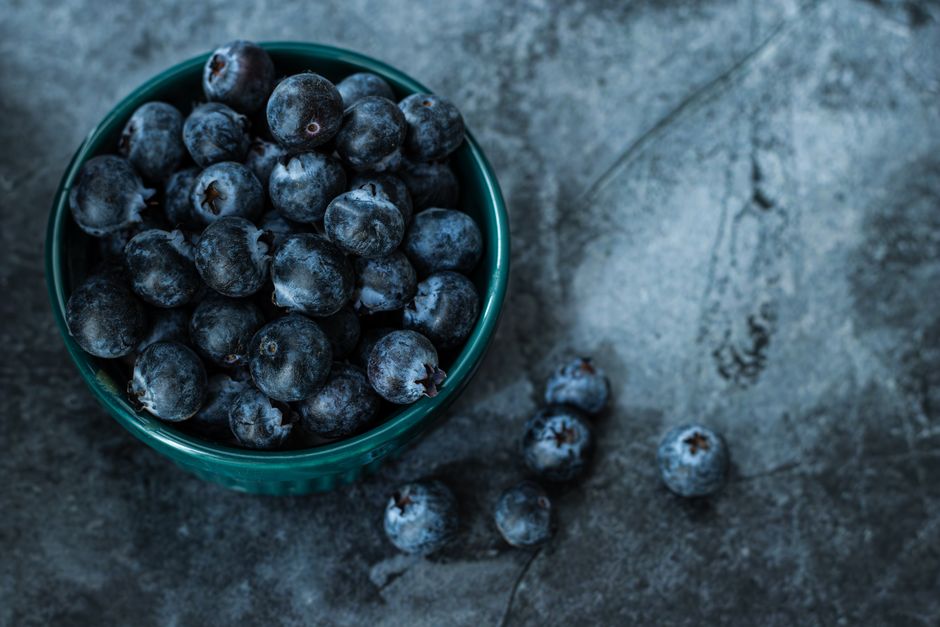
Fresh blueberries last longest when you keep them dry, cold, and unwashed until the moment you eat them. Put them in the refrigerator in a breathable container lined with a paper towel, and most berries will hold up for one to two weeks. Wash them only right before eating or freezing, because added moisture is the main thing that speeds up spoilage.
Why Do Blueberries Spoil So Quickly?
Blueberries are thin-skinned fruit with a high water content. That combination makes them vulnerable the moment they leave the bush.
The fuzzy gray coating you see on fresh berries is called bloom. It is a natural waxy layer that helps hold in moisture and offers some protection against microbes. Handling and rinsing can strip it away. Once the skin is compromised, water escapes and mold spores find an easy entry point.
Moisture is the biggest driver of spoilage. When berries sit in a wet container, water collects around them. That damp environment encourages mold and softens the fruit. The same happens when berries are packed too tightly and crush each other.
Temperature matters too. At room temperature, blueberries ripen and break down quickly. In the refrigerator, that process slows down considerably. The cold does not stop spoilage, but it buys meaningful time.
Spoilage is not always about mold. A berry can look fine and still taste flat or mushy. That is a sign the cell walls have broken down and the sugars have changed. Once that happens, no storage method will bring the berry back.
Should You Wash Blueberries Before Storing Them?
No. Washing before storage is one of the most common mistakes people make with fresh berries.
When you rinse blueberries, you leave a film of water on the skin. Even if you pat them dry, some moisture stays behind in the crevices around the stem. That trapped water creates the exact conditions mold needs to grow. Berries that are washed and then refrigerated tend to develop mold faster than berries that go into the fridge dry.
The better approach is to wash only what you plan to eat right away. Rinse them under cool running water, drain them, and eat them within a short time. If you are serving a bowl at a meal, wash just that portion.
There is a practical reason this matters beyond mold. Blueberries are often eaten raw, so washing does help remove surface dirt and residue. That is worth doing. It just needs to happen at the right moment, not before storage.
If you must wash a whole batch, dry the berries thoroughly. Spread them in a single layer on a clean towel and let them air dry completely before they go back in the fridge. Even then, expect a shorter shelf life than dry-stored berries.
What Is the Best Container for Storing Blueberries?
The best container lets a little air move while keeping the berries from getting crushed. It also keeps them from sitting in their own moisture.
The original clamshell container from the store is actually a good option. It was designed with ventilation holes and a shape that protects the fruit. If the berries came in a clamshell, you can often keep using it.
If you transfer the berries, choose a container with some airflow. A colander-style bowl, a container with a loose lid, or a shallow dish covered lightly will all work. What you want to avoid is a sealed, airtight container that traps moisture and humidity.
A paper towel is a simple and effective tool. Line the bottom of the container with one, and add another on top if you like. The paper absorbs excess moisture that the berries release over time. Replace the towel if it becomes damp.
- Keep the container shallow rather than deep, so berries are not piled and crushed.
- Leave a little space between berries when you can.
- Avoid sealing the container tightly.
- Discard any berry that is already soft, leaking, or moldy before storing the rest.
One berry that is starting to break down can spread mold to the ones around it. Sorting through the batch before you store it takes a minute and can save the whole container.





Where Should Blueberries Go in the Refrigerator?
The main compartment of the refrigerator is the right place, not the door.
The door is the warmest part of most refrigerators because it is opened and closed often. Temperature swings there are larger. Berries stored in the door tend to age faster than berries kept on a shelf.
Place the container toward the middle or back of a shelf where the temperature is more stable. If your refrigerator has a crisper drawer, that can work well, but check the setting. Some crispers are designed to hold higher humidity for vegetables, and high humidity is not ideal for berries. A low-humidity setting is generally better for fruit.
Keep the berries away from strong-smelling foods. Blueberries can absorb odors from nearby items like onions or leftovers. That will not make them unsafe, but it can change how they taste.
A stable temperature in the refrigerator is what matters most. Frequent opening of the container, or moving it around, exposes the berries to warmer air and adds moisture. Once the berries are stored, leave them alone until you are ready to eat them.
How Long Do Blueberries Last in the Fridge?
Stored properly and dry, fresh blueberries typically keep for about one to two weeks in the refrigerator. The exact time depends on how fresh they were when you bought them and how they were handled before that.
Berries that were already a few days old at the store will not last as long as berries picked and chilled quickly. This is why buying from a source with good turnover helps. Look for firm, dry berries with a healthy bloom and no soft spots.
Once you notice mold, the batch is compromised. Mold spreads through spores that move easily between berries. If you see mold on a few berries, it is safest to discard the whole container rather than pick out the visible ones. The spores may already be on berries that still look fine.
Softness is a separate signal. A berry that is mushy but not moldy is past its best texture. It is not necessarily unsafe, but it will not taste good. Those berries are better used in cooking or baking than eaten raw.
Can You Freeze Blueberries to Make Them Last Longer?
Yes. Freezing is the most reliable way to keep blueberries for months rather than weeks.
Frozen blueberries keep well for a long time, though quality does decline slowly. They are best used in smoothies, baked goods, oatmeal, and sauces. Thawed berries lose their firm texture, so they are not ideal for eating fresh out of hand after freezing.
The key step is to freeze them dry and separated. Wash the berries and dry them completely first. Then spread them in a single layer on a baking sheet and put the sheet in the freezer. Once the berries are frozen solid, transfer them to a freezer bag or container. This method, often called flash freezing, keeps the berries from clumping into a solid block.
If you skip the single-layer step, the berries will freeze together. You can still use them, but you will have to thaw the whole clump at once. That limits how much you can take out at a time.
Label the container with the date. Frozen berries are safe for a long time, but their flavor and texture are best within the first several months. After that, they are still usable but less appealing.
What About Room Temperature and Counter Storage?
Blueberries do not need to be refrigerated if you plan to eat them within a day or two, but the refrigerator clearly extends their life.
At room temperature, berries soften and lose quality faster. Warmth speeds up the natural breakdown of the fruit. If you leave a container on the counter, plan to use it soon.
If your berries are underripe and firm, a short time at room temperature can help them soften slightly. This is a small effect and does not apply to berries that are already ripe. Once they are ripe, cold storage is the better choice.
For most people, the refrigerator is the default. The counter is fine only when you know the berries will be eaten quickly.
Does the Bloom or Coating Matter for Storage?
The bloom is a sign of freshness. Berries with a visible, even coating were likely handled gently and stored well before you bought them.
You do not need to remove the bloom before storing. In fact, leaving it intact is better because it is part of the berry’s natural protection. The bloom will fade over time as the berries age, so a dull, shiny, or rubbed-off coating can be a hint that the berries are older.
Some people mistake bloom for mold or pesticide residue. It is neither. It is a natural waxy layer produced by the plant. A quick rinse before eating removes it, which is one reason washing right before eating makes sense.
Frequently Asked Questions
Should I wash blueberries right after buying them?
No. Washing adds moisture that speeds up mold growth, so it is best to wash only what you are about to eat. Store the rest dry.
How long do blueberries last in the refrigerator?
Stored dry and cold, fresh blueberries usually keep for about one to two weeks. The exact time depends on how fresh they were when you bought them.
Can I freeze fresh blueberries without washing them?
It is better to wash and dry them first so dirt and residue are removed before freezing. Dry them completely, then freeze in a single layer before transferring to a container.
Is it safe to eat blueberries with a little mold on them?
It is safest to discard the whole container once you see mold, because spores can spread to berries that still look fine. Picking out only the visible moldy berries is not a reliable way to make the rest safe.
