
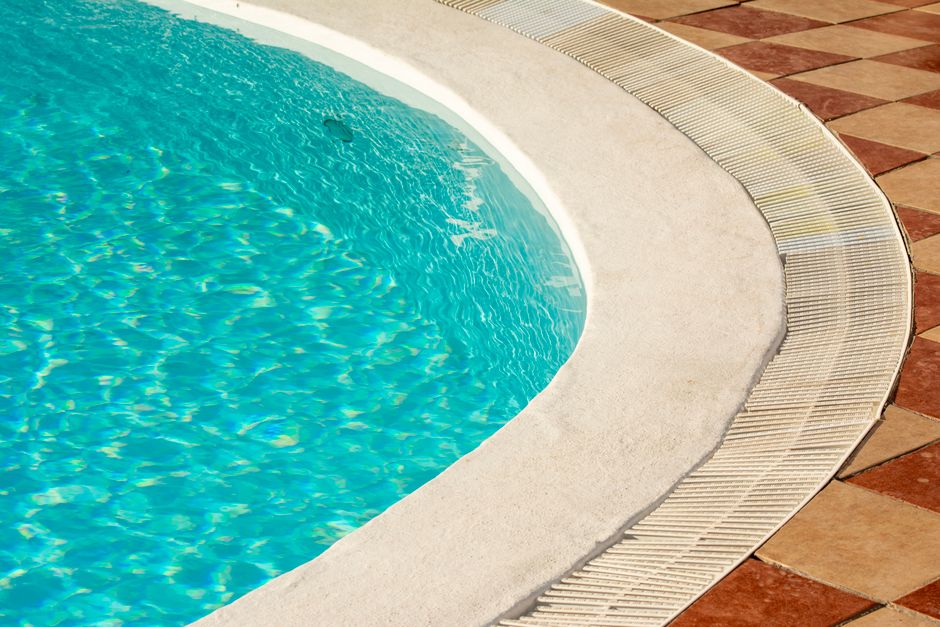
Rounding concrete edges is called edging, and it is done with a tool called an edger while the concrete is still wet. On an existing slab, the same rounded profile is created by grinding or sanding the hard edge with a masonry wheel or diamond pad. Fresh concrete is shaped before it sets. Old concrete is cut back after it has fully cured.
The two situations share a goal but almost nothing else. Wet concrete moves easily and holds whatever shape you press into it. Cured concrete is closer to stone. Knowing which situation you are in determines the tool, the timing, and how much effort the job will take.
Why Do Concrete Edges Need To Be Rounded At All?
A sharp concrete edge is a weak edge. The 90-degree corner where a slab’s top meets its side has very little material behind it, and that thin section chips when something heavy rolls over it or when the slab shifts against the ground.
Rounding removes that fragile corner and replaces it with a curved surface that distributes impact across more material. The same principle applies to why the edge gets rounded rather than left square: a curve has no single weak point to catch a blow.
There is a second reason that has nothing to do with strength. A rounded edge is far less likely to cut skin, snag a hose, or chip the paint on a car door. For driveways, patios, and walkways, that matters.
One clarification worth making: rounding an edge is not the same as adding a decorative border. An edger creates the profile. A groover cuts control joints. They are separate tools doing separate jobs, and confusing them is one of the most common mistakes for first-time concrete work.
How To Round Concrete Edges On A Fresh Pour
Timing is the whole job. You need the concrete stiff enough to hold a shape but soft enough that the edger glides instead of tearing.
That window is usually described as when the surface has lost its sheen and a thumb pressed into it leaves a shallow dent without sticking. If water still pools on the surface, it is too early. If the edger drags and leaves crumbs, it is too late.
The basic sequence looks like this:
- Float the surface first. Edging before floating pushes aggregate toward the edge and creates a rough line.
- Place the edger flat on the surface with the lip against the form or edge.
- Move it along the edge in one steady pass, keeping the tool flat. Do not tilt it.
- Lift straight up at the end of the pass rather than sliding the tool sideways.
- Repeat with overlapping passes until the profile is uniform.
Most edgers have a lip depth of roughly 1/4 inch to 3/8 inch, which produces the rounded profile. Deeper lips exist for decorative work. A standard edger is what most flatwork calls for.
If the edge is against a form, run the edger with the lip riding the form board. If the slab is a free edge with no form, you control the line by hand, which takes more practice.
One detail that catches people: edging too early pulls a ridge of mortar up along the edge. That ridge dries and becomes a hard lip that looks like a mistake. If it happens, wait for the concrete to firm up slightly and re-run the edger to press the ridge back down.
How To Round Concrete Edges On An Old Slab
Cured concrete cannot be reshaped. It has to be removed. The tool for the job is an angle grinder fitted with a diamond cup wheel or a masonry grinding wheel.
A diamond cup wheel removes material fast and leaves a fairly smooth curve if you keep the tool moving. A standard masonry wheel works too but wears down quickly and tends to leave a flatter, more faceted edge.
The process is straightforward but dusty:
- Wear eye protection, a dust mask rated for silica, and hearing protection.
- Hold the grinder at roughly a 45-degree angle to the edge.
- Work in short passes along the length of the edge rather than grinding in one spot.
- Check the profile often. It is easy to take off more than intended.
- Finish with a finer grit pad to smooth the curve.
Crystalline silica dust is the real hazard here. It is a known cause of silicosis and other lung disease with repeated exposure, and dry grinding concrete produces a lot of it. A wet grinder or a grinder with a water feed attachment cuts the dust dramatically. If you are doing more than a small repair, that setup is worth using.
For a long edge, a concrete edging tool that runs on a track or a router-style edge profiler produces a much more consistent curve than freehand grinding. Those tools cost more, but they remove the guesswork.





What Tools Do You Actually Need?
The tool list splits cleanly by whether the concrete is wet or cured.
| Job | Tool | When To Use |
|---|---|---|
| Fresh pour | Hand edger with lip | While concrete is plastic |
| Fresh pour, large area | Walk-behind edger | Long runs, driveways |
| Cured slab | Angle grinder + diamond cup wheel | Small to medium edges |
| Cured slab, long runs | Track-guided edge profiler | Consistency matters |
| Finishing either | Fine diamond pad | Final smoothing pass |
Hand edgers come in different lip radii. A smaller radius gives a tighter curve, a larger one gives a softer, more gradual round. There is no single correct radius. It depends on the look you want and how much material the slab can spare.
Can You Round An Edge That Has Already Chipped?
A chipped edge can be rounded, but you are working with less material than you started with. Grinding a chip smooth often means removing more of the edge than you planned, which can leave the slab looking thinner at the border.
For small chips, a patching compound made for concrete can rebuild the edge before you grind it. These products vary a lot in how well they hold up outdoors and under freeze-thaw cycles. Some bond well and last years. Others fail within a season. The evidence on long-term performance is not uniform across brands, and there is no single product that reliably outperforms the rest in every climate.
For larger damage, replacing the section is often more reliable than patching. That is a bigger job and usually calls for a contractor.
What Goes Wrong And How To Avoid It
Most failures trace back to timing or tool angle.
On fresh concrete, edging too early pulls a ridge. Edging too late tears the surface. The window is narrow, and on a hot, windy day it can close in minutes. Working in shade or using an evaporation retarder can widen it.
On cured concrete, the common error is grinding at too steep an angle, which gouges a notch instead of a curve. Keeping the grinder at a shallow angle and moving constantly prevents this.
Another issue is leaving the edge with a rough texture after grinding. That rough surface collects dirt and looks unfinished. A final pass with a finer pad fixes it.
One thing that is often overlooked: rounding an edge does not seal it. Concrete is porous, and a rounded edge still absorbs water. A sealer applied after the edge is finished is what limits water intrusion, and that is a separate step from shaping.
Frequently Asked Questions
Can you round the edge of concrete after it has dried?
Yes, but it has to be ground rather than shaped. An angle grinder with a diamond cup wheel removes the hard corner and creates the rounded profile.
What tool is used to round concrete edges on a fresh pour?
A hand edger with a lip is the standard tool. The lip depth, usually around 1/4 inch to 3/8 inch, determines how rounded the finished edge looks.
How soon after pouring can you edge concrete?
You edge it once the surface loses its wet sheen and a thumb press leaves a shallow dent without sticking. If water still pools on top, it is too early.
Is grinding concrete edges dangerous?
The dust is the main hazard. Dry grinding releases crystalline silica, which can cause lung disease with repeated exposure, so a properly rated respirator and dust control are essential.
