
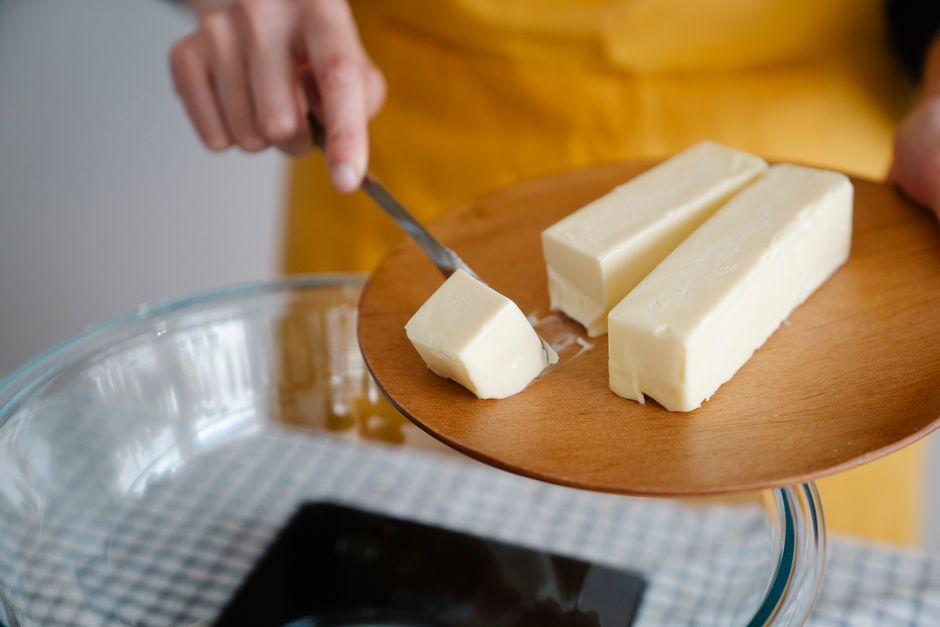
Freezing is the most reliable way to keep butter fresh for months instead of weeks. Wrap it tightly to block air and moisture, seal it in a freezer bag or airtight container, and label it with the date. Stored that way, butter holds its quality for about six to nine months, and it stays safe to eat well beyond that.
Butter is mostly fat, and fat is far less vulnerable to freezer damage than meat or produce. That is why freezing works so well here. The catch is air. Expose butter to it long enough and the fat picks up off-flavors and odors from everything around it. Handle that one problem and the rest is easy.
How To Store Butter In The Freezer And Keep It Fresh
Air is the enemy, and the fix is a tight seal. Butter absorbs smells from its surroundings because fat molecules bind to volatile compounds floating in the freezer. A good wrap blocks that exchange.
Start with the original foil or wax wrapper if it is intact. That wrapper alone is not enough for long storage, so add a layer. Plastic wrap pressed directly against the surface, then a freezer bag with the air pushed out, works well. A rigid airtight container does the same job. The goal is a barrier with no gaps.
Label every package with the date. Freezer time adds up quietly, and a date removes the guesswork later.
Keep these points in mind:
- Press wrapping against the butter so no air pockets remain.
- Use a freezer bag or airtight container as the outer layer.
- Squeeze out excess air before sealing.
- Write the date on the package.
- Store away from strong-smelling foods like fish, onions, or garlic.
How Long Does Frozen Butter Last?
For best quality, use frozen butter within about six to nine months. That range reflects how long the texture and flavor hold up, not how long the butter stays safe.
Food safety guidance from the U.S. Department of Agriculture notes that frozen butter keeps indefinitely from a safety standpoint. The freezer does not allow the growth of the bacteria that cause foodborne illness. So the real question is quality, not safety. Past the six-to-nine-month window, the butter is still fine to eat. It may just taste a little flatter or pick up a faint freezer odor.
This distinction matters. Many people throw out frozen food because they confuse “past peak quality” with “unsafe.” For butter, those are two very different lines.
Should You Freeze Butter In Sticks, Blocks, Or Smaller Pieces?
Smaller portions freeze and thaw better than one large block. The reason is simple. You only take out what you need, so the rest stays sealed and cold instead of being thawed and refrozen repeatedly.
Whole sticks and one-pound blocks freeze fine if you plan to use them all at once. If you bake or cook in smaller amounts, cut the butter into usable portions first. Wrap each one, then bag them together. A single stick or a half-cup portion is a practical size for most kitchens.
Repeated thawing and refreezing is the main thing to avoid. Each cycle exposes the butter to air and temperature swings, and the quality drops a little each time.




Does Frozen Butter Change Texture Or Flavor?
Texture can shift slightly, but the change is minor. Butter holds up to freezing better than most dairy because it contains so little water compared with milk or cream.
When butter freezes, the small amount of water in it forms ice crystals. In a well-wrapped package, those crystals stay small and do the butter little harm. Poorly wrapped butter can develop larger crystals and a slightly grainy feel once thawed. The flavor can also turn a bit stale if air reaches it over a long stretch.
For spreading on toast, you may notice a small difference. For baking, cooking, and melting, frozen-then-thawed butter behaves much like fresh. That is one reason freezing is such a low-risk move for this particular food.
How Do You Thaw Frozen Butter?
Thaw butter in the refrigerator overnight for the best result. Slow thawing keeps the texture even and limits the moisture that can separate out.
If you need it sooner, a few options work:
- Leave it on the counter in its wrapper. A single stick softens in a couple of hours at room temperature.
- Grate the frozen butter with a cheese grater if a recipe calls for cold, cut-in pieces.
- Use it frozen for cooking, since it melts in the pan anyway.
Avoid thawing butter in warm water or a hot spot. Rapid heat can melt the outer layer while the center stays hard, and the melted part may separate. Once thawed, use the butter within a reasonable time, the same as you would fresh butter. Do not refreeze it just to save it.
Can You Freeze Butter You Already Bought Wrapped?
Yes, and it is the easiest case of all. Most butter comes already wrapped in foil or waxed paper, and that packaging is a decent starting point.
The original wrapper is not airtight enough for months of storage on its own. Add an outer layer. Slip the wrapped sticks into a freezer bag or a sealed container, press out the air, and label the date. That extra step is what separates butter that tastes fresh at month six from butter that tastes like the freezer.
If the original wrapper is torn or loose, rewrap the butter first. Press plastic wrap or foil snugly against the surface, then bag it. The tighter the contact, the better the protection.
What About Salted Versus Unsalted Butter?
Both freeze well. Salt does not meaningfully change how butter behaves in the freezer, so you can store either type the same way.
One practical note: unsalted butter has a shorter shelf life in the refrigerator than salted butter, because salt slows the growth of some spoilage organisms. In the freezer, that difference largely fades. Cold temperatures pause the clock for both. If you keep unsalted butter on the counter or in the fridge, use it sooner. If you freeze it, the salt content stops being a factor in how long it keeps.
Some people freeze unsalted butter specifically for baking and keep salted butter in the fridge for everyday use. That is a sensible split, but it comes down to how you cook, not to any storage rule.
Common Freezer Storage Mistakes To Avoid
Most butter that goes wrong in the freezer goes wrong for the same few reasons. All of them are easy to fix.
Wrapping loosely is the biggest one. A single layer of wax paper with gaps lets air reach the fat, and the butter slowly takes on other flavors. Skipping the date is another. Without it, you are guessing, and guessing leads to either tossing good butter or eating stale butter.
Storing butter next to strong-smelling foods is a third. Even well-wrapped butter can pick up odors over time in a crowded freezer. Keep it in its own spot when you can. Finally, thawing and refreezing the same package over and over wears down the quality. Portion it up front so you only thaw what you will use.
Frequently Asked Questions
How long can you keep butter in the freezer?
For best quality, use it within about six to nine months. It stays safe to eat well beyond that, because freezing prevents the growth of illness-causing bacteria.
Can you freeze butter in its original wrapper?
Yes, but add an outer layer like a freezer bag or airtight container. The original wrapper alone is not airtight enough for long storage.
Does frozen butter taste different after thawing?
Well-wrapped butter tastes much like fresh butter, especially in cooking and baking. Poorly wrapped butter can pick up freezer odors or a slightly stale flavor over time.
Can you refreeze butter after thawing it?
It is safe to refreeze, but quality drops with each thaw-and-refreeze cycle. Portion butter before freezing so you only thaw what you need.
