
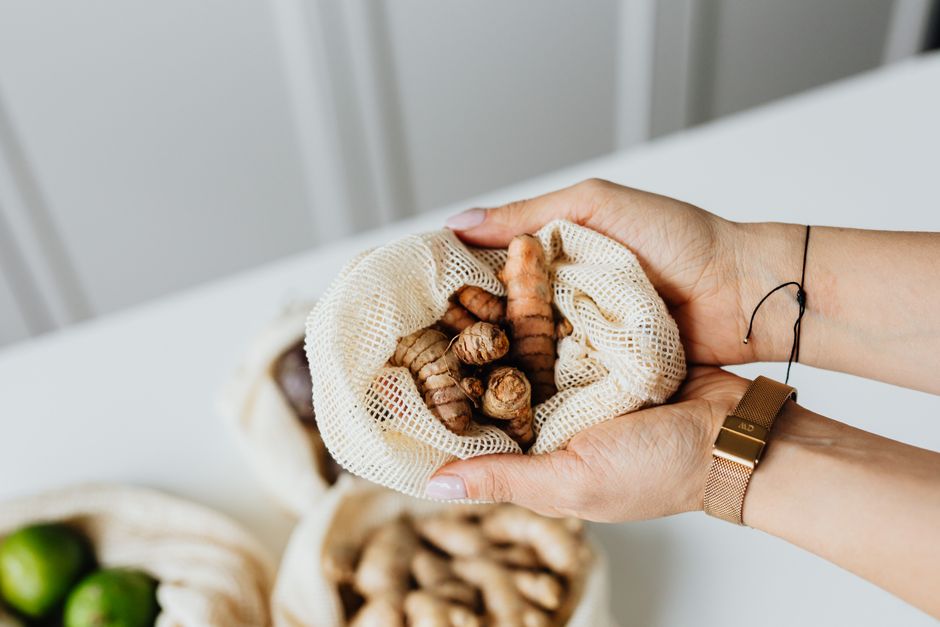
Fresh turmeric root looks like a small, bright orange cousin of ginger. You can peel it, grate or slice it, cook it into soups, rice, and curries, or blend it raw into smoothies and teas. Store it in the refrigerator wrapped in paper towel for about two weeks, or freeze it whole for up to six months. The dried powder in your spice cabinet is a different product with a much longer shelf life.
That is the short version. The details matter more than most people expect, because fresh turmeric behaves differently from the powder in almost every way — in flavor, in potency, and in how long it lasts.
What Is Fresh Turmeric Root and How Is It Different From Powder?
Fresh turmeric is the underground stem, or rhizome, of the Curcuma longa plant. It is the same plant that produces the orange powder sold as a spice. The difference is processing. Powder is made by boiling, drying, and grinding the rhizomes, which concentrates the color and changes the flavor.
Fresh root is juicy and firm with a warm, peppery bite and a faintly bitter finish. Powder is earthier and more concentrated. If you swap one for the other in a recipe without adjusting, you will notice it.
The active compounds are called curcuminoids, with curcumin being the most studied. Fresh and dried turmeric contain these compounds, but the amounts vary widely by root, by age, and by growing conditions. No reliable standard exists for how much curcumin is in a given piece of fresh turmeric, and labels on fresh root do not list it.
How Do You Peel and Prep Fresh Turmeric Root?
You do not always need to peel it. Young, thin-skinned rhizomes can be scrubbed clean under running water and used as-is. Older roots develop a tougher skin that is easier to remove.
A spoon works better than a peeler here. The rhizome has knobby fingers and curves that a standard vegetable peeler cannot follow. Scrape the edge of a metal spoon along the surface and the skin comes off in soft strips with very little waste.
A few practical notes:
- Protect your surfaces. Turmeric stains. The yellow-orange pigment binds strongly to cutting boards, countertops, and fabric. Use a glass or plastic cutting board rather than wood, and wear an apron if you care about your shirt.
- Protect your hands. The stain on skin fades over a few days but does not wash off immediately. Some people wear gloves. Rubbing with oil before washing with soap can help lift it.
- Grate, do not chop, for maximum flavor release. A fine grater or microplane breaks open more cells and releases more color and aroma than a knife.
- Use less than you think. Fresh turmeric is more pungent than powder. A rough starting point is to begin with about a one-inch piece for a dish serving four, then adjust.
One detail worth knowing: the stain on equipment is not permanent on most non-porous surfaces, but it can be stubborn on plastic. Sunlight exposure helps break it down. So does a paste of baking soda and water.
How Do You Cook With Fresh Turmeric?
Fresh turmeric works anywhere ginger works, and often alongside it. The two are frequently used together in South Asian and Southeast Asian cooking, and they pair well because turmeric’s bitterness balances ginger’s heat.
Heat changes turmeric. Cooking it in fat — oil, ghee, coconut milk — draws out the fat-soluble compounds and deepens the color and flavor. This is why many traditional recipes add turmeric early in the cooking process rather than at the end.
Some common uses:
- Soups and broths. Grate directly into simmering liquid. A little goes a long way.
- Rice. Add grated turmeric to the cooking water for color and a mild earthy flavor.
- Curries and stews. Add with aromatics at the start, before liquid goes in.
- Smoothies and juices. Use raw. The flavor is sharp, so pair it with something sweet or creamy.
- Tea. Simmer thin slices in water for about ten minutes. Add black pepper and a fat source if you want to follow the most common traditional preparation.
That last point deserves a direct explanation, because it is one of the most repeated claims about turmeric and one of the most misunderstood.
Curcumin is poorly absorbed on its own. Research has consistently shown that adding black pepper, specifically a compound in it called piperine, increases the amount of curcumin that reaches the bloodstream. Adding fat also helps because curcumin dissolves in fat, not water. These are real effects documented in absorption studies.
What those studies do not show is that adding pepper and fat makes turmeric a treatment for anything. Improved absorption is a pharmacokinetic finding. It says nothing about whether the absorbed curcumin produces a clinical benefit. Those are separate questions, and the human trial evidence on curcumin for most health outcomes remains limited and mixed. Some studies suggest effects in specific areas; results vary, and many trials have been small or short.
So use pepper and fat because it is traditional and because it helps you absorb more of what you are eating. Do not treat it as a switch that turns a spice into a medicine.





How Should You Store Fresh Turmeric?
Fresh turmeric keeps well if you store it correctly, and poorly if you do not. The main enemies are moisture, air, and heat.
Refrigerator
Wrap the root loosely in a paper towel, then place it in a loosely closed plastic bag or a container with the lid ajar. The paper towel absorbs excess moisture, which is what causes mold. Stored this way, fresh rhizomes typically last about two to three weeks. Check them periodically and discard any piece that is soft, moldy, or smells sour.
Do not seal them tightly in a plastic bag with no ventilation. Trapped moisture speeds up spoilage.
Freezer
Freezing is the most practical option if you bought more than you can use. You can freeze whole rhizomes, sliced rounds, or grated paste. Frozen turmeric keeps for roughly six months before quality declines. You do not need to thaw it before cooking — grate or slice it straight from frozen.
A useful trick: grate a large batch, press it into an ice cube tray, and freeze. Each cube becomes a pre-measured portion you can drop into a pot.
Countertop
Fresh turmeric does not need refrigeration for short periods. Left in a cool, dark, dry spot, it will keep for about a week. Beyond that, the refrigerator is the better choice.
Fresh vs. Dried Turmeric: Which Should You Use?
Neither is better in every situation. They serve different purposes.
| Fresh Root | Ground Powder | |
|---|---|---|
| Flavor | Bright, peppery, slightly bitter | Earthy, concentrated, milder bite |
| Shelf life | About 2–3 weeks refrigerated | Typically 1–2 years if kept dry and dark |
| Best for | Teas, smoothies, fresh dishes, garnishes | Dry rubs, baking, everyday cooking |
| Curcumin content | Varies widely, not standardized | Varies by brand; some labels list curcumin percentage |
| Convenience | Requires peeling and grating | Ready to use |
One clarification that surprises people: fresh turmeric is not simply “stronger” than powder. Gram for gram, dried powder is more concentrated because the water has been removed. But fresh root has a different flavor profile and a different texture that powder cannot replicate. Use fresh when you want brightness and moisture. Use powder when you want convenience and shelf stability.
Are There Risks or Limits to Using Fresh Turmeric?
Turmeric used as a spice in food is generally considered safe for most people. That is the well-established position, and it applies to normal culinary amounts.
Concentrated curcumin supplements are a different matter. High-dose supplements have been linked to digestive upset and, in some cases, liver injury. Cases of liver damage associated with curcumin supplements have been reported in the medical literature, though they are uncommon. This is a genuine concern that has received increased attention from regulators and researchers. If you take curcumin supplements, that is worth discussing with a clinician, especially if you take other medications or have liver conditions.
Turmeric can also interact with blood-thinning medications. If you take warfarin or a similar drug, talk to your doctor before increasing your turmeric intake substantially — including in food, if the amount is large.
For pregnancy and breastfeeding, turmeric in normal food amounts is generally regarded as safe. No clinical guidelines support taking concentrated curcumin supplements during pregnancy or breastfeeding, and those should be avoided unless a clinician specifically recommends them.
One more limit worth stating plainly: no clinical evidence currently confirms that eating turmeric treats or prevents any specific disease. It is a flavorful, colorful spice with a long culinary history. That is a real and worthwhile thing. It is not the same as a proven therapy.
Frequently Asked Questions
How long does fresh turmeric last in the fridge?
Wrapped in a paper towel and stored in a loosely closed bag, fresh turmeric typically lasts two to three weeks in the refrigerator. Discard any piece that becomes soft, moldy, or sour-smelling.
Do you have to peel fresh turmeric before using it?
No, young roots with thin skin can be scrubbed clean and used whole. Older roots have tougher skin that is easier to remove with the edge of a spoon.
Does adding black pepper to turmeric actually help?
Yes, for absorption. Research has consistently shown that piperine in black pepper increases how much curcumin reaches the bloodstream. That does not mean it makes turmeric a treatment for any disease.
Can you freeze fresh turmeric?
Yes, and it freezes well. Whole roots, slices, or grated paste keep for roughly six months, and you can use them straight from the freezer without thawing.
