
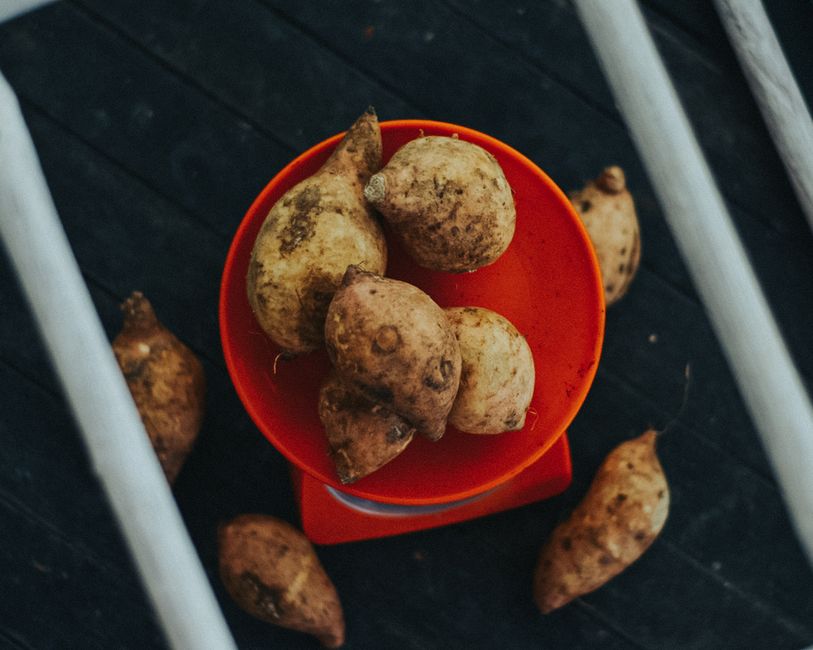
Cut sweet potatoes turn brown because of a process called enzymatic browning. When you slice into the flesh, you break open cells and release an enzyme called polyphenol oxidase. That enzyme reacts with oxygen in the air and with natural plant compounds called phenols, and the reaction creates brown pigments. The fix is simple: slow the enzyme down or block its contact with oxygen. Soaking cut pieces in cold water, adding an acid like lemon juice, or cooking them right away all work. The browning is a cosmetic problem, not a safety one.
Why Do Cut Sweet Potatoes Turn Brown?
Enzymatic browning is the same chemistry that turns a sliced apple or a peeled banana brown. It is not spoilage, and it is not a sign the potato has gone bad.
Inside an intact sweet potato, the enzyme and the phenol compounds sit in separate compartments. Cutting breaks those compartments open and lets them mix. Oxygen from the air completes the reaction. The result is melanin-like pigments that darken the surface of the cut.
Several things speed this up. Warmth makes enzymes work faster. A dull knife causes more cell damage than a sharp one, which releases more enzyme. Leaving pieces exposed to air on the counter is the worst case. A cut sweet potato left at room temperature will visibly brown within a short time.
One clarification worth knowing: sweet potatoes and white potatoes are different plants. White potatoes belong to the nightshade family and contain solanine, a compound that can be toxic in large amounts, especially in green skin and sprouts. Sweet potatoes are in the morning glory family and do not produce solanine. The browning you see on a cut sweet potato is not a toxicity signal. That distinction matters because people sometimes apply white potato food-safety rules to sweet potatoes, and the two do not behave the same way.
How To Keep Cut Sweet Potatoes From Turning Brown
The most reliable method is a cold water soak. Put the cut pieces in a bowl of cold water so they are fully submerged, and the water blocks oxygen from reaching the surface. This works for peeled whole potatoes too.
How long you can hold them depends on what you plan to do next. For a short pause while you finish prepping, cold water is enough. For longer storage, you need to add something that slows the enzyme itself.
Here are the approaches that actually work, from simplest to most effective:
- Cold water soak: Submerge cut pieces fully. Change the water if you are holding them for more than a short while.
- Acidulated water: Add lemon juice or vinegar to the soaking water. Acid lowers the pH, and polyphenol oxidase works poorly in acidic conditions.
- Salt water: A light salt solution can slow browning, though it will not stop it indefinitely.
- Cook immediately: Heat denatures the enzyme permanently. Once a sweet potato is cooked, it will not brown from this reaction.
- Vacuum sealing: Removing air removes the oxygen the reaction needs. Effective but not practical for most home kitchens.
What does not work well: wrapping cut sweet potatoes tightly in plastic wrap and leaving them out. You reduce some oxygen contact, but not enough, and trapped moisture plus warmth can encourage other problems.
There is a real limit to how long any of these methods hold. Acidulated water buys you more time than plain water, but it is not indefinite. If you need to store cut sweet potatoes for more than a day, cooking and refrigerating them is the safer path.
Does Lemon Juice or Vinegar Really Stop the Browning?
Yes, and the mechanism is well understood. Polyphenol oxidase has an ideal pH range near neutral, roughly around pH 6 to 7. Drop the pH with an acid, and the enzyme’s activity falls off sharply.
Lemon juice is the most common choice because it is acidic and widely available. Vinegar works on the same principle. The tradeoff is flavor. Lemon juice on sweet potato is usually fine because the vegetable is already sweet. Vinegar can taste out of place depending on the dish.
You do not need much. The goal is to make the soaking water noticeably acidic, not to pickle the potatoes. A splash in a bowl of water is typically enough. If you overdo it, you can rinse the pieces before cooking.
One caveat: acid slows browning but does not fully stop it forever. It extends your working window. It does not replace refrigeration or cooking for longer storage.





Can You Soak Cut Sweet Potatoes Overnight?
You can refrigerate cut sweet potatoes in water overnight, and this is common practice. Cover the bowl and keep it cold. Cold temperatures slow the enzyme, and the water blocks oxygen.
But there is a quality cost. Sweet potatoes are starchy, and soaking leaches some of that starch and some water-soluble nutrients into the water. The longer they soak, the more the texture and flavor can change. Pieces can turn softer and slightly less sweet.
For most home cooking, an overnight soak is fine if you drain and cook them the next day. If you want the best texture, a shorter soak is better. Cook them the same day when you can.
This is where the honest answer matters more than a tidy rule. There is no official guideline that sets a maximum safe soak time for cut sweet potatoes. The practical limits are quality, not safety. If the water looks cloudy or the pieces smell off, discard them.
Does Browning Mean the Sweet Potato Is Bad?
No. Surface browning from enzymatic browning is a cosmetic change. It does not mean the potato has spoiled, and it does not make it unsafe to eat.
That said, browning is not the only thing that can happen to a cut sweet potato, and you should not confuse the two. Enzymatic browning is harmless. Spoilage is different.
Signs that a cut sweet potato should be thrown out:
- A sour, fermented, or otherwise unpleasant smell
- Slimy or sticky texture on the surface
- Mold, which looks fuzzy and can be any color
- Soft, mushy spots that were not there when you cut it
- Water that has turned cloudy and smells wrong after soaking
Browning alone, with normal smell and texture, is not a reason to discard. You can cook browned pieces and they will be safe to eat, though the color may carry into the finished dish. If the appearance bothers you, trim the browned surface before cooking.
What About Black Spots Inside a Sweet Potato?
Dark spots inside a raw sweet potato are a different issue from surface browning, and they deserve attention. Some internal darkening is caused by bruising or by a condition growers call black spot, which is a fungal or bacterial infection of the root.
Not every dark patch is the same thing, and it is not always possible to tell from appearance alone what caused a specific spot. That uncertainty is worth stating plainly rather than guessing at a diagnosis.
The practical guidance is straightforward. Small dark spots can be cut away with a generous margin of clean flesh around them. If the darkening is widespread, if the flesh is soft and foul-smelling, or if there is any sign of mold, throw the potato out. Do not try to salvage a sweet potato that smells bad.
Surface browning on a freshly cut, otherwise healthy potato is not the same as internal black spot. Keep the two separate in your mind.
Which Method Should You Use?
Match the method to your timeline. That is the whole decision.
| Your situation | Best approach |
|---|---|
| Cooking within the hour | Cold water soak |
| Holding for a few hours | Acidulated water, refrigerated |
| Storing overnight | Water soak, covered and refrigerated |
| Storing longer than a day | Cook first, then refrigerate |
| Already browned but smells fine | Cook as normal or trim the surface |
For most people, cold water is enough. Reach for acid when you need more time. Cook when you want the problem gone for good.
Frequently Asked Questions
Is it safe to eat cut sweet potatoes that turned brown?
Yes, if the browning is from enzymatic browning and the potato smells and feels normal. Brown color alone does not indicate spoilage. Throw it out if there is a bad smell, slime, or mold.
How long can cut sweet potatoes sit in water?
You can refrigerate them in water overnight, but quality drops the longer they soak. For the best texture, cook them the same day. No official guideline sets a maximum soak time.
Does putting cut sweet potatoes in water stop them from turning brown?
Yes, cold water blocks oxygen from reaching the cut surface, which slows the browning reaction. Adding lemon juice or vinegar makes it more effective by lowering the pH.
Why do my cut sweet potatoes turn brown so fast?
Warmth, air exposure, and a dull knife all speed up enzymatic browning. A sharp knife causes less cell damage, and cold temperatures slow the enzyme down.
