
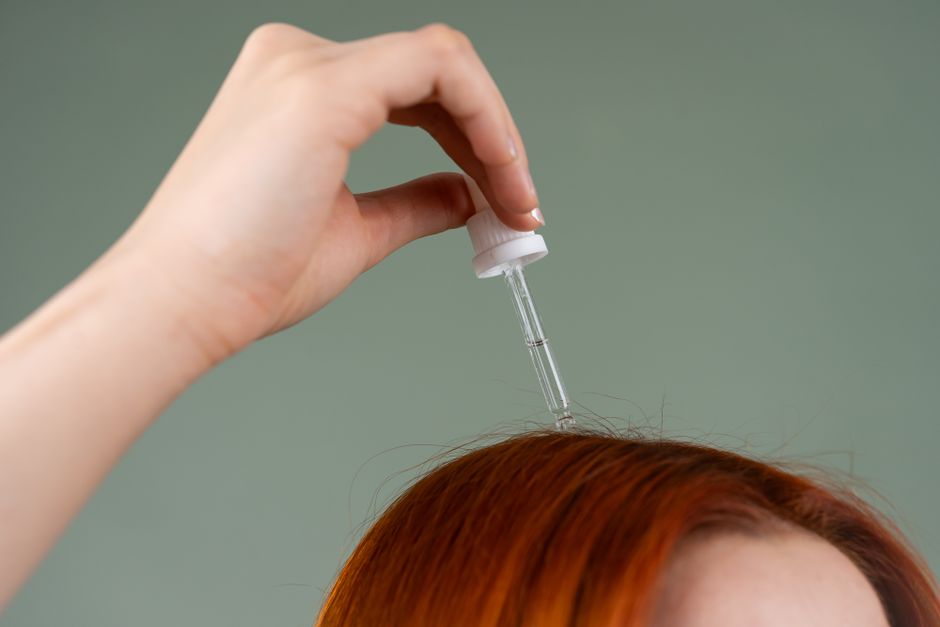
Hair loss affects roughly 50 million men and 30 million women in the United States. While some causes require medical treatment, many cases respond to a combination of proven treatments and lifestyle changes. The most effective approach depends on what type of hair loss you have and whether you catch it early. Minoxidil and finasteride remain the only FDA-approved medications proven to regrow hair, though newer treatments and natural interventions show promise for specific types of hair loss.
What Actually Causes Hair Loss?
Androgenetic alopecia accounts for more than 95% of hair loss in men and is the most common cause in women. This genetic condition makes hair follicles sensitive to dihydrotestosterone (DHT), a hormone that gradually shrinks follicles until they stop producing visible hair. The pattern differs by sex: men typically lose hair at the temples and crown, while women experience diffuse thinning across the top of the scalp.
Telogen effluvium triggers temporary shedding 2-3 months after a stressful event—surgery, high fever, childbirth, or extreme weight loss. The stress pushes a large number of follicles into the resting phase simultaneously. Most people recover fully within 6-9 months without treatment once the trigger resolves.
Nutritional deficiencies can contribute to hair loss, though they rarely act alone. Iron deficiency is the most common, particularly in premenopausal women. Low vitamin D, zinc, and protein also correlate with increased shedding in some studies. Autoimmune conditions like alopecia areata cause the immune system to attack hair follicles, creating round bald patches that may spread.
Does Minoxidil Actually Work for Hair Loss?
Minoxidil is one of two FDA-approved treatments for androgenetic alopecia. It works by prolonging the growth phase of hair follicles and increasing blood flow to the scalp. Studies show that 5% minoxidil foam or solution stops hair loss progression in about 85% of users and produces moderate regrowth in roughly 40%.
Results take time. Most people see reduced shedding after 8-12 weeks and new growth around 4-6 months. The treatment works best on the crown and less effectively at the frontal hairline. You need to use it indefinitely—stopping minoxidil causes any regrown hair to fall out within 3-4 months.
Side effects remain mild for most users. Scalp irritation and flaking occur in about 6% of people. Some women experience unwanted facial hair growth if the solution runs onto the face. The foam formulation causes less irritation than the liquid version.
What Does Research on Finasteride Show?
Finasteride blocks the enzyme that converts testosterone to DHT, reducing scalp DHT levels by roughly 60%. Clinical trials found that 1mg daily stops further hair loss in 90% of men and produces visible regrowth in about 65% after two years.
This medication works only for men with androgenetic alopecia. Women of childbearing age cannot use it due to birth defect risks. Some data suggests low-dose finasteride may help postmenopausal women, though this remains off-label use as of 2026.
Sexual side effects occur in 1-2% of users according to clinical trials, though some men report higher rates. These typically resolve when stopping the medication. A small percentage experience persistent side effects that continue after discontinuation, though the actual incidence remains debated. Mental health effects have been reported but causation has not been established in controlled studies.





Can Lifestyle Changes Stop Hair Loss?
Reducing physical stress on hair helps minimize breakage and traction alopecia. Tight hairstyles that pull on the hairline—braids, ponytails, extensions—can permanently damage follicles over years. Switching to loose styles and varying your part line reduces this risk. Heat styling and chemical treatments weaken the hair shaft, making it prone to breakage though they do not typically cause permanent follicle damage.
Nutritional optimization supports hair growth when deficiencies exist. If you have confirmed low iron or vitamin D, supplementation may reduce shedding. Taking supplements without a known deficiency shows little benefit in research. Protein intake matters—hair is mostly keratin, a protein structure. Consistently eating less than 50 grams of protein daily can contribute to diffuse thinning.
Stress management may help with telogen effluvium though evidence remains limited for androgenetic alopecia. Chronic psychological stress elevates cortisol, which some research links to increased shedding. Sleep quality correlates with hair growth in small studies, possibly through its effects on immune function and hormone regulation.
What Natural Remedies Have Evidence Behind Them?
Rosemary oil performed similarly to 2% minoxidil in one six-month trial with 100 participants. Both groups showed comparable hair count increases, though this remains a single small study. People using rosemary oil experienced less scalp itching than the minoxidil group. You would apply it the same way as minoxidil—directly to the scalp daily.
Saw palmetto blocks 5-alpha-reductase, the same enzyme finasteride targets, though far less effectively. A few small studies showed modest improvement in men taking 320mg daily for 4-6 months. The effect appears significantly weaker than prescription options, but side effects are also rare.
Pumpkin seed oil produced a 40% increase in hair count in one study of 76 men after 24 weeks, compared to 10% in the placebo group. Participants took 400mg daily. The proposed mechanism involves phytosterols that may block DHT, though this has not been confirmed. No major studies have replicated these findings.
| Treatment | Evidence Level | Time to Results | Key Consideration |
|---|---|---|---|
| Minoxidil 5% | Strong (FDA approved) | 4-6 months | Must use indefinitely |
| Finasteride 1mg | Strong (FDA approved) | 3-6 months | Men only, prescription required |
| Rosemary oil | Limited (one trial) | 6 months | Less irritation than minoxidil |
| Saw palmetto | Weak (small studies) | 4-6 months | Much less effective than finasteride |
| Pumpkin seed oil | Very limited (one study) | 6 months | Needs replication research |
When Should You See a Doctor About Hair Loss?
Sudden hair loss over weeks rather than months suggests telogen effluvium or an underlying medical condition. Thyroid disorders, autoimmune diseases, and hormonal imbalances can all trigger rapid shedding. Patchy bald spots or hair loss accompanied by scalp scaling, redness, or pain requires medical evaluation to rule out infections or inflammatory conditions.
Hair loss before age 30 tends to progress more aggressively. Starting treatment earlier generally produces better results because more follicles remain viable. Once a follicle has been dormant for several years, reactivating it becomes significantly harder.
Blood tests can identify nutritional deficiencies, thyroid problems, or hormonal imbalances contributing to hair loss. A dermatologist may perform a scalp biopsy if the diagnosis remains unclear. Trichoscopy, a noninvasive examination using a specialized camera, helps distinguish between different types of hair loss without requiring a biopsy.
What Hair Loss Treatments Should You Avoid?
Biotin supplements are heavily marketed for hair growth but rarely help unless you have a true biotin deficiency, which is extremely uncommon. Taking high-dose biotin can interfere with lab tests for thyroid function and heart attack markers, potentially leading to misdiagnosis.
Laser caps and helmets claim to stimulate follicles through low-level light therapy. A few studies show modest improvements in hair density, but the devices cost $200-900 and require 20-30 minutes of use several times weekly. The effect appears much smaller than FDA-approved medications. Some research suggests they may work better when combined with minoxidil rather than used alone.
Scalp massage increases blood flow temporarily but has not shown consistent benefit for hair regrowth in controlled studies. It will not harm anything, but expecting significant regrowth from massage alone sets unrealistic expectations. The same applies to most vitamins marketed specifically for hair—they work only if you have a deficiency in that nutrient.
Many shampoos claim to prevent hair loss through caffeine, ketoconazole, or various plant extracts. Ketoconazole shampoo does have some limited evidence as an add-on to other treatments, possibly through its anti-inflammatory effects. As of 2026, there is no clinical evidence that caffeine shampoos regrow hair despite widespread marketing claims. The contact time is too brief for meaningful absorption.
Frequently Asked Questions About How to Stop Hair Loss
How long does it take to see results from hair loss treatment?
Most treatments require 3-6 months before you notice reduced shedding and 6-12 months for visible regrowth. Hair grows slowly at about half an inch per month, so changes happen gradually rather than suddenly.
Can stress alone cause permanent hair loss?
Stress typically causes temporary shedding called telogen effluvium, which resolves once the stressor is removed. Chronic stress does not directly cause the permanent follicle miniaturization seen in androgenetic alopecia, though it may worsen existing genetic hair loss.
Will wearing hats or using hair products cause hair loss?
Regular hats and most hair products do not cause hair loss. Extremely tight hats worn daily might contribute to traction alopecia at the hairline, and heavy styling products can cause breakage, but neither affects the follicle itself.
Does hair loss from medication grow back?
Hair loss from chemotherapy and most medications grows back within 3-6 months after stopping the drug. The regrowth sometimes differs in texture or color initially but usually returns to its original state over time.
