
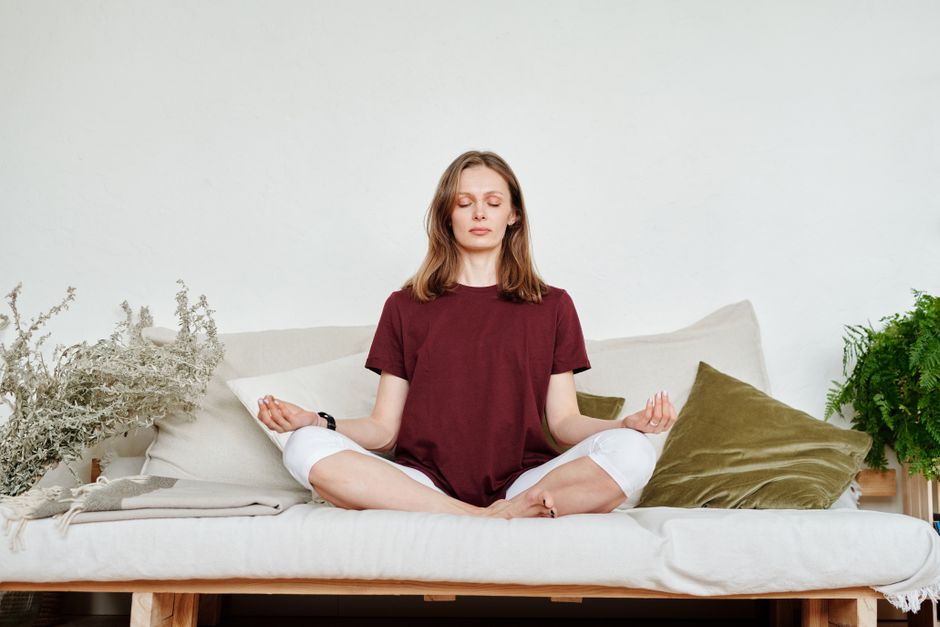
You can slow down your breathing for calm relief by extending your exhale longer than your inhale, a method called resonant breathing at about five to six breaths per minute. This directly activates the vagus nerve, which tells your nervous system to shift out of fight-or-flight mode. Research published in the journal Frontiers in Psychology confirms that controlled slow breathing reliably reduces anxiety and lowers heart rate within minutes. It is one of the few wellness techniques with consistent, measurable effects on the body.
What Exactly Happens in Your Body When You Breathe Slowly?
When you slow your breathing down to around five or six breaths per minute, something specific happens. Your heart rate variability (HRV) increases. HRV is the natural variation in time between each heartbeat. A higher HRV is linked to better stress resilience and emotional regulation.
The mechanism is tied to a process called respiratory sinus arrhythmia. Your heart speeds up slightly when you inhale and slows down when you exhale. Slow, deliberate breathing amplifies this effect. The vagus nerve, which runs from your brainstem to your abdomen, picks up on this rhythm and signals your body to relax.
Your blood pressure also drops modestly. A 2017 study in the Journal of Clinical Medicine found that slow breathing at six breaths per minute reduced systolic blood pressure by an average of 8 mmHg in people with hypertension. This is not a cure for high blood pressure, but it is a real, measurable change.
Does How To Slow Down Your Breathing For Calm Relief Actually Work?
Yes, the evidence is strong. The American Heart Association has stated that slow breathing can help lower blood pressure and reduce anxiety. The key is consistency. One session might lower your heart rate for a few minutes, but regular practice builds lasting changes in your autonomic nervous system.
A 2022 meta-analysis in Scientific Reports looked at 15 controlled trials on slow breathing for anxiety. The researchers found that slow breathing significantly reduced state anxiety — the kind you feel in a stressful moment. The effect was moderate but consistent across different breathing techniques.
What does not work is forcing yourself to breathe slowly while distracted. If you are scrolling your phone or watching television, your brain does not register the breathing change the same way. Focus matters. Even thirty seconds of intentional slow breathing with your eyes closed produces a stronger effect than five minutes of half-hearted practice.
What Is the Correct Breathing Rate for Calm Relief?
The most researched rate is five to six breaths per minute. This is often called resonant breathing or coherence breathing. At this rate, your heart rate variability synchronizes with your breathing rhythm, creating a state called cardiac coherence.
For comparison, a normal resting breathing rate for adults is twelve to twenty breaths per minute. Cutting that in half takes effort at first. You are not trying to get to three breaths per minute, which can feel suffocating. Five to six is the sweet spot.
Here is a simple breakdown of what different breathing rates do:
| Breaths per Minute | Effect |
|---|---|
| 12–20 | Normal resting rate, minimal relaxation effect |
| 8–10 | Mild relaxation, often used in meditation |
| 5–6 | Peak heart rate variability, strongest calm response |
| 3–4 | Possible dizziness, not recommended for beginners |
If you are new to this, start at eight breaths per minute and work down to six over a week. Your body needs time to adjust to the longer exhales.


Which Breathing Technique Is Best for Slowing Down?
The simplest method that works is the 4-7-8 technique. Inhale through your nose for four seconds. Hold for seven seconds. Exhale through your mouth for eight seconds. The long exhale is what triggers the relaxation response. This technique was popularized by Dr. Andrew Weil, and several small studies support its effectiveness for falling asleep and reducing acute anxiety.
Box breathing is another strong option. Inhale for four seconds, hold for four, exhale for four, hold for four. This method is used by Navy SEALs and emergency room doctors because it works fast and is easy to remember under stress.
Pursed-lip breathing is the most accessible. Inhale through your nose for two seconds. Purse your lips as if you are going to whistle and exhale slowly for four seconds. This naturally extends your exhale without counting. It is recommended by the American Lung Association for people with respiratory conditions, but it works for anyone.
Avoid forceful exhales. The goal is a smooth, steady release of air. If you push the air out hard, you activate your sympathetic nervous system — the opposite of what you want.
What Common Mistakes Make Slow Breathing Less Effective?
The biggest mistake is holding your breath too long. Many people think that holding the breath is the key to relaxation. It is not. The exhale is what matters. A long exhale signals safety to your brain. A breath hold, especially a forced one, can spike your heart rate and create tension.
Another mistake is breathing too deeply. Taking a huge inhale fills your lungs completely, which can overstimulate your stretch receptors and make you feel jittery. Aim for a medium-sized inhale, about 70 percent of your lung capacity. Then focus on a slow, complete exhale.
People also try to force slow breathing while in a panic attack. If you are already hyperventilating, telling yourself to breathe slowly often backfires. Your body is gasping for air, and fighting that urge increases panic. Instead, try a short breath hold — three or four seconds — to reset your carbon dioxide levels. Then attempt a slow exhale.
Some people report feeling lightheaded when they first try slow breathing. This is usually because they are breathing too slowly or holding their breath too long. If you feel dizzy, return to your normal breathing rate and try again later at a slightly faster pace.
How Often Should You Practice Slow Breathing for Lasting Relief?
Research suggests that five minutes of slow breathing twice a day produces measurable changes in heart rate variability after two weeks. A study in the journal Applied Psychophysiology and Biofeedback found that participants who practiced slow breathing for ten minutes daily for eight weeks had lower cortisol levels and reported fewer anxiety symptoms.
You do not need to set aside a separate meditation session. Slow breathing works during everyday activities. Do it while waiting for your coffee to brew. Do it at a red light. Do it before a difficult conversation. The cumulative effect of many short sessions is just as strong as one long session.
Consistency matters more than duration. Practicing for two minutes every day is better than twenty minutes once a week. Your nervous system learns the pattern and starts to default toward calm more quickly over time.
If you miss a day, do not stress about it. That defeats the purpose. Just restart the next day. The benefits rebuild quickly.
What Does the Research Actually Show About Long-Term Benefits?
Studies have found that regular slow breathing practice reduces baseline anxiety levels. A 2020 review in the journal Neuroscience & Biobehavioral Reviews analyzed 21 studies and concluded that slow breathing training significantly reduced symptoms of anxiety and depression. The effect was stronger in people who practiced for more than eight weeks.
Blood pressure reductions from slow breathing are modest but real. A 2019 study in the Journal of Hypertension found that slow breathing at six breaths per minute for fifteen minutes daily lowered systolic blood pressure by an average of 6 mmHg over eight weeks. That is comparable to some lifestyle changes like reducing sodium intake.
Some studies suggest slow breathing improves focus and cognitive performance. A 2018 study in the journal Psychophysiology found that participants who did slow breathing before a stressful test performed better on working memory tasks. The theory is that slow breathing calms the amygdala, the brain’s fear center, allowing the prefrontal cortex to function more efficiently.
There is no evidence that slow breathing cures any disease. It does not replace medication for anxiety, depression, or high blood pressure. But it is a free, side-effect-free tool that works for most people when done correctly.
Frequently Asked Questions
How long does it take for slow breathing to calm you down?
Most people feel calmer within 60 to 90 seconds of starting slow breathing. The full effect on heart rate and blood pressure takes about three to five minutes.
Can slow breathing help with panic attacks?
It can help once the initial panic wave passes, but forcing slow breathing during a full panic attack may increase discomfort. Start with a short breath hold first.
Is it safe to do slow breathing every day?
Yes, slow breathing is safe for daily practice. Stop if you feel dizzy and breathe normally until the feeling passes.
What is the best time of day to practice slow breathing?
Morning and evening are ideal because your nervous system is more responsive to changes then. Any time you feel stressed also works well.
