
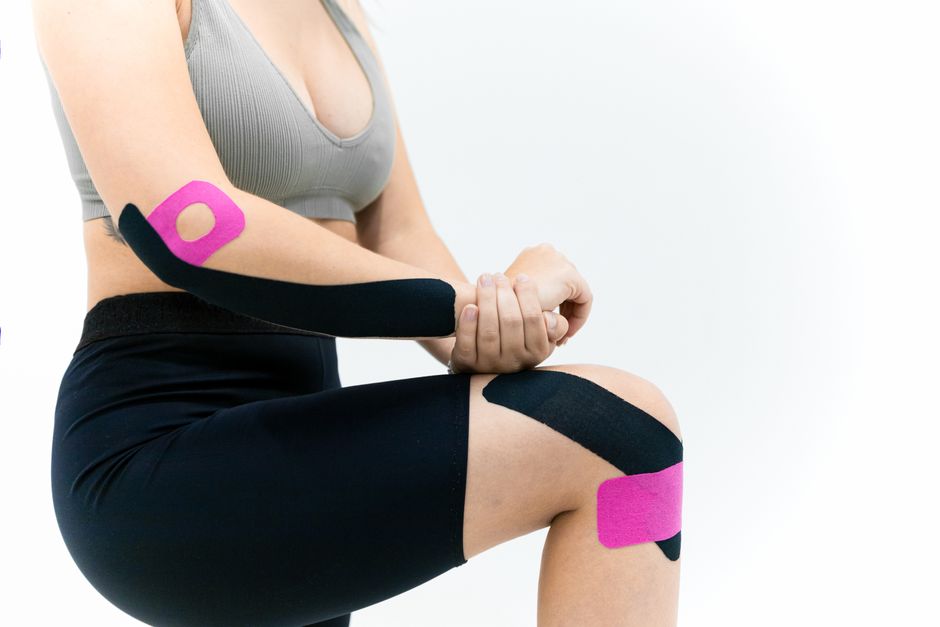
Knee taping is a widely used technique for managing pain during activity. When applied correctly, it can provide temporary support, improve your awareness of joint position, and reduce strain on specific tissues. The right method depends entirely on why your knee hurts. This guide explains the main taping techniques, what each one is designed to do, and the key mistakes to avoid.
What Does Knee Taping Actually Do?
Knee tape does not hold the joint in place like a brace or a cast. The force it provides is too small for that. Instead, tape works primarily through sensory feedback. It stimulates nerves in your skin, which changes how your brain perceives the joint.
This can reduce the feeling of instability. It can also help you avoid movements that aggravate an injury. Some research suggests taping can improve muscle activation timing, meaning your muscles fire slightly earlier to protect the joint. The effect is real, but it is temporary. Tape does not fix the underlying problem.
For most people, taping is a tool for symptom relief during sport or daily tasks. It is not a treatment on its own. It works best when combined with strengthening exercises and proper rehabilitation.
What Type of Tape Should You Use?
There are two main types of tape used for knees: rigid athletic tape and kinesiology tape. They work differently.
Rigid tape (like zinc oxide tape) does not stretch. It limits movement at the joint. This is useful when you want to stop a specific motion, like the kneecap sliding too far to one side. It is often used for patellar tracking issues and ligament sprains.
Kinesiology tape is elastic and stretches with movement. It provides lighter support and is mainly used for sensory feedback, swelling management, and muscle support. It is more comfortable to wear for extended periods and allows a full range of motion.
For most knee pain, kinesiology tape is the more common choice because it is easier to apply correctly without training. Rigid tape requires more precision and can restrict movement if applied too tightly.
How To Tape Your Knee Correctly For Pain Relief
Before you start, prepare the skin. The area should be clean, dry, and free of lotion or oil. Shave excessive hair if needed. Tape sticks best to bare skin.
The most common taping method for general knee pain focuses on the kneecap. This is called patellar taping. It is used when the kneecap tracks poorly during bending and straightening.
Here is a basic method for patellar support with kinesiology tape:
- Cut a strip of tape long enough to span from the outer side of your knee to the inner side, crossing over the kneecap.
- Bend your knee to about 30 degrees. This is the position where the kneecap sits most securely in its groove.
- Apply the middle of the strip directly over the kneecap with light tension. The ends of the tape should have no tension at all.
- Rub the tape firmly to activate the adhesive.
For a different effect, you can apply tape to pull the kneecap in a specific direction. If your kneecap drifts outward, apply tape from the outer side pulling inward. If it drifts inward, apply from the inner side pulling outward. The direction of pull should be toward the midline of your leg.
Rigid tape works differently. It is applied with the knee slightly bent. The tape is anchored above and below the knee, and the middle section crosses the joint without stretching. This limits the end range of motion.
The exact strip placement matters. If you are not sure where to place the tape, seek guidance from a physical therapist. Incorrect placement can increase pain or provide no benefit at all.





Taping for Specific Knee Conditions
Different knee problems require different taping approaches. A one-size-fits-all method does not work.
Patellofemoral pain (pain around or behind the kneecap) is the most common condition treated with tape. The goal is to change how the kneecap moves in its groove. Research shows taping can reduce pain during squats, stairs, and running in the short term. The effect is often immediate, which makes it useful for getting through an activity.
Ligament sprains, like an MCL or ACL injury, require a different approach. Tape can provide some external support, but it cannot replace the ligament. For these injuries, taping is used more for proprioception — helping you feel where your knee is in space — than for structural support. A brace is often more effective for ligament injuries.
Patellar tendinopathy (pain at the tendon below the kneecap) responds to taping in some cases. The tape is placed to unload the tendon. This can reduce pain during jumping or running activities. However, the evidence for taping in tendinopathy is less consistent than for patellofemoral pain.
If your knee is swollen, hot, or painful to touch, see a doctor before taping. These signs may indicate an injury that requires proper diagnosis, not just tape.
Common Mistakes That Worsen Knee Pain
Poor taping technique can make things worse. The most common error is applying tape too tightly. This can restrict blood flow, cause numbness, or irritate the skin. The tape should feel snug, not constricting. If your toes tingle or your leg feels cold, the tape is too tight.
Another mistake is leaving tape on too long. Kinesiology tape can stay on for several days, but you should remove it if it causes skin irritation or blistering. Rigid tape should be removed after each session. Do not sleep in rigid tape.
Applying tape over broken skin, a rash, or an allergic reaction site is also a problem. Adhesive allergies are common. Test a small piece of tape on your thigh before applying it to your knee.
Finally, do not rely on tape as your only treatment. Taping can mask pain, which means you might push through activities that are aggravating the injury. If taping allows you to exercise without pain, that is good. But you also need to address the root cause, which is usually muscle weakness or poor movement patterns.
Does the Evidence Support Knee Taping?
The evidence for knee taping is strongest for patellofemoral pain. Multiple studies have shown that taping reduces pain during activity in the short term. The effect is often immediate and can last for hours.
For other knee conditions, the evidence is weaker. Some studies show benefit for patellar tendinopathy, while others show no difference compared to sham taping. For ligament injuries, there is little evidence that tape provides meaningful structural support.
It is important to understand what taping can and cannot do. It cannot strengthen muscles. It cannot heal damaged tissue. It cannot prevent injuries on its own. It is a temporary intervention that may help you stay active while you work on the underlying problem.
Some research suggests that the benefit of taping is partly due to a placebo effect. This does not mean the pain relief is imaginary. Placebo effects are real physiological responses. But it does mean that the tape itself may not be doing what you think it is doing.
How Long Should You Wear Knee Tape?
Kinesiology tape can be worn for up to five days if it stays in place and does not irritate the skin. Many people remove it after two to three days because the edges start to peel or the adhesive becomes uncomfortable.
Rigid tape should be removed after each activity or at the end of the day. It is not designed for extended wear.
You should not tape your knee every day for months. If you need tape to function without pain on a daily basis, that is a sign that you need a more comprehensive treatment plan. Use tape to get through the rehabilitation phase, then gradually reduce your reliance on it as your muscles get stronger.
If the tape does not reduce your pain, it is probably not the right approach for your condition. Stop using it and see a professional.
Frequently Asked Questions
Can knee tape cause damage?
Properly applied tape causes no damage. Tape that is too tight can restrict circulation or irritate the skin, so remove it immediately if you feel numbness, tingling, or increased pain.
How long does knee tape stay on?
Kinesiology tape can stay on for two to five days. Rigid athletic tape should be removed after each use, typically within a few hours.
Should you see a doctor before taping your knee?
Yes, if your knee is swollen, unstable, or has been painful for more than a few days. Taping is not appropriate for every knee condition, and some injuries require proper medical treatment.
Does knee tape work for arthritis pain?
Some people with knee arthritis report reduced pain with taping, but the evidence is limited. Tape may provide sensory feedback that reduces the perception of pain, but it does not change the underlying joint condition.
