
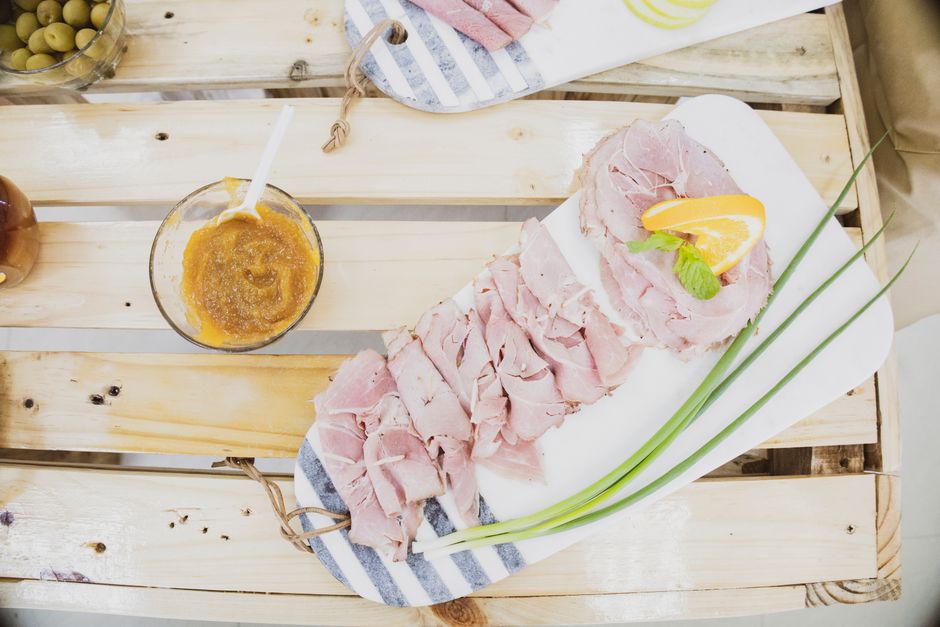
Deli meat is not a food you can hand a baby straight from the package. It is a choking hazard in its whole form, it can carry bacteria that are especially dangerous to infants, and it is high in sodium. The safe approach is to serve it only after heating it until steaming, then cutting it into very small, soft pieces or a thin spread. Even then, most health authorities suggest offering it only occasionally rather than as a regular protein.
This guide explains why each of those steps matters, what the actual risks are, and how to serve deli meat to baby safely if you decide to include it.
Why Is Deli Meat Risky For Babies?
There are three separate concerns, and they are often confused with each other. Each has a different cause and a different fix.
The first is choking. Deli meat is dense, fibrous, and holds its shape. A round slice of ham or turkey is roughly the size and firmness of a baby’s airway, and it does not dissolve with saliva the way a cracker does. This is a mechanical problem, not a nutritional one.
The second is foodborne bacteria. Deli meat is a ready-to-eat product, meaning it is not cooked again after processing. During slicing and packaging it can pick up Listeria monocytogenes, a bacterium that is uncommon in healthy adults but can cause severe illness in newborns and infants because their immune systems are still developing. Pregnant women are also advised to avoid deli meat for this reason, since the infection can pass to the fetus.
The third is sodium and additives. A typical slice of deli turkey contains a meaningful share of an infant’s daily sodium limit. Processed meats also commonly contain nitrates and nitrites, which are used for preservation and color.
At What Age Can Babies Have Deli Meat?
There is no official age at which deli meat becomes a recommended food for infants. It is not on any standard list of first foods, and no major pediatric body promotes it as a routine part of a baby’s diet.
That absence is worth understanding. Around 6 months, babies become ready for solid foods alongside breast milk or formula, and the foods recommended first are soft, low-sodium, and easy to mash — things like cooked vegetables, soft fruit, iron-fortified cereal, and well-cooked pureed or shredded meat. Deli meat does not fit that profile well.
If a family chooses to offer it, it generally happens after a baby is comfortably eating other solids and has good chewing and swallowing skills. That is usually closer to 9 to 12 months than to 6. This is a common-sense sequencing, not a guideline, so treat it as a practical starting point rather than a rule.
One clarification worth making: the concern is not that a baby will suddenly be “too young” at one age and fine the next day. It is that younger babies have smaller airways, weaker swallowing coordination, and less mature immune defenses. Those factors improve gradually, which is why timing is a judgment call rather than a cutoff.
How Do You Prepare Deli Meat Safely For A Baby?
Heating is the step that addresses the bacteria risk. The CDC has advised that people at higher risk of Listeria — including pregnant women — heat deli meat until it is steaming hot, which is generally described as reaching an internal temperature of 165°F (74°C). The same logic applies to serving it to an infant.
Here is a workable sequence:
- Heat the deli meat until it is steaming throughout. A quick pass in a pan, a microwave with a splash of water, or a steamer all work.
- Let it cool completely before serving. Hot food is a burn risk.
- Cut it into pieces no larger than a pea, or shred it finely with a fork.
- For a smoother texture, blend or mash it into a puree or a soft spread and mix it into a food your baby already eats.
- Never serve it as a whole slice, a rolled slice, a strip, or a cube.
The heating step is not optional if you are serving deli meat to an infant. Skipping it removes the main safeguard against Listeria.





What Are The Best And Worst Deli Meats To Choose?
If you are going to serve deli meat, the choice of product matters less than the preparation, but it still matters. Lower-sodium options and plainer varieties are generally a better fit than heavily seasoned or cured ones.
Here is a general comparison of common deli options. These are broad patterns, not exact figures — sodium content varies widely by brand and by how the meat is sliced.
| Type | Sodium level | Nitrates/nitrites | Notes for babies |
|---|---|---|---|
| Fresh-roasted turkey or chicken (unsliced, cooked at home) | Lower | Usually none added | Best option — you control salt and cooking |
| Low-sodium deli turkey | Moderate | Often present | Reasonable if heated and finely cut |
| Standard deli ham | High | Commonly present | Higher sodium; offer rarely |
| Bologna, salami, hot dogs | High | Commonly present | Not recommended for infants |
The most reliable label check is sodium per serving. Comparing two packages side by side often reveals a large difference. Nitrate-free labels do not automatically mean low sodium, and “uncured” products frequently still contain naturally occurring nitrates from celery or other vegetable sources.
How Often Should A Baby Eat Deli Meat?
Occasionally is the honest answer. Deli meat is not a food that needs to be part of a baby’s regular rotation, and there are better sources of protein and iron for infants.
Cooked and pureed or finely shredded fresh meat, well-cooked eggs, soft beans and lentils, plain full-fat yogurt, and iron-fortified cereals all provide protein and key nutrients without the sodium load or the Listeria concern. If deli meat appears once in a while as part of a mixed meal, that is a very different situation from relying on it daily.
It is also worth noting that repeated exposure to very salty foods during infancy may shape taste preferences later. That is a reasonable concern supported by general nutrition research, though the long-term effects are not fully established.
What Should You Watch For After Serving It?
Most of the time, nothing happens. But because Listeria is the main concern with deli meat, it is worth knowing what to watch for in the days after.
Listeria infection in infants can cause fever, poor feeding, irritability, vomiting, or lethargy. Symptoms may not appear immediately — the incubation period can range from a few days to several weeks, which makes the connection easy to miss. If a baby develops a fever or unusual lethargy after eating deli meat, contact a pediatrician.
This is not meant to alarm. The risk of any single serving causing illness is low. But the consequences of Listeria in a newborn are serious enough that the heating step is worth taking every time, not just sometimes.
Can You Serve Deli Meat Without Heating It?
No. If you are serving deli meat to a baby, heating it until steaming is the one step that should never be skipped. Unheated deli meat is the specific form linked to the Listeria risk, and the CDC’s guidance for high-risk groups is built around that step.
Some parents ask whether freezing the meat first helps. It does not reliably kill Listeria, and it does not make the meat safer. Freezing may slightly change the texture, but it is not a substitute for heat.
What About Nitrates And Nitrites?
Processed meats commonly contain added nitrates and nitrites, which are used to prevent bacterial growth and preserve color. Their use in food is regulated, and the amounts are considered safe for the general adult population within established limits.
For infants, the picture is less clear. Babies are more sensitive to nitrate exposure in general because their bodies handle it differently than adults, and there have been documented cases of nitrate-related illness in infants from other sources, such as well water. Whether the low levels in deli meat pose a meaningful risk to an infant eating small amounts occasionally is not well established. The evidence here is limited, and the honest position is that no one knows with confidence.
That uncertainty is one more reason deli meat is not a food worth pushing for a baby when better options exist.
Frequently Asked Questions
Can I give my 6-month-old deli meat?
Deli meat is not a recommended first food, and most guidance suggests waiting until a baby is eating other solids well and has stronger chewing skills. If you do offer it, heat it until steaming and cut it into pea-sized pieces.
Does heating deli meat make it safe for babies?
Heating until steaming hot addresses the main bacterial risk, which is why the CDC recommends this step for high-risk groups. It does not remove the choking hazard or the sodium content, so cutting and portion size still matter.
Is turkey or ham better for a baby?
Plain, lower-sodium turkey is generally a better choice than ham, which tends to be saltier. Fresh meat cooked at home is a better option than either if you want to control sodium and additives.
Can a baby choke on deli meat?
Yes, deli meat is a choking hazard in its whole or sliced form because it is firm and holds its shape. Cutting it into pea-sized pieces or mashing it into a spread reduces that risk.
