
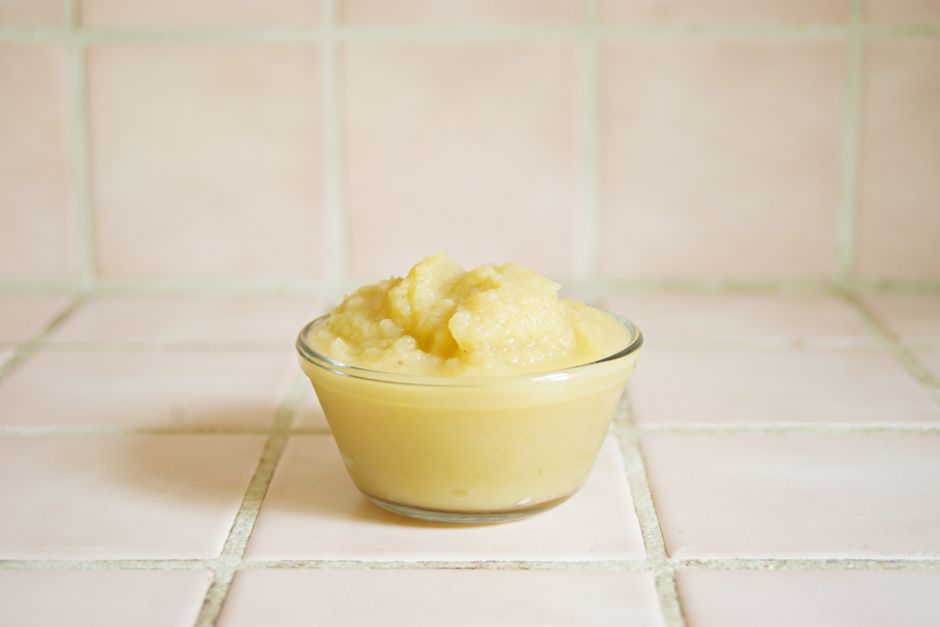
To thicken baby food purees, add infant cereal, pureed fruits, vegetables, or yogurt. To thicken baby formula, you must only do so under a doctor’s guidance — and even then, only with infant cereal or a medical-grade thickener specifically designed for formula. Never add cereal or thickeners to a bottle without medical advice because it can be a choking hazard and may lead to serious health risks.
Why Thicken Baby Food Purees?
Babies start with thin purees around 4–6 months. As they grow, thicker textures help them learn to move food in their mouth and swallow safely. This is called texture progression. It supports oral motor development and prepares a baby for lumpy foods and eventually table food.
Some parents also thicken purees to add calories or nutrition, especially if a baby needs extra weight gain. But the main reason is developmental. Pediatric feeding guidelines recommend gradually increasing texture from smooth to mashed to soft finger foods.
How To Thicken Baby Purees
The simplest method is to stir in infant cereal — rice, oat, or barley — a teaspoon at a time until you reach the desired consistency. Infant cereal is designed to mix smoothly with breastmilk, formula, or water and does not change the taste much. It also adds iron and zinc.
You can also blend in a thicker puree of another vegetable or fruit. For example, mix pear puree with thinner apple puree. Avocado, mashed banana, or full-fat yogurt (after 6 months) work well too. These add natural creaminess and healthy fats.
Avoid adding honey to thicken. Honey can cause infant botulism in babies under 12 months. Also skip cornstarch and flour unless a doctor specifically recommends them. They are not designed for infant feeding and can be hard to digest.
Can You Thicken Baby Formula?
Thickening formula is sometimes used to treat gastroesophageal reflux (spitting up) in babies. However, it is not recommended for routine use. Research shows that thickening formula does not always reduce reflux episodes, and it can pose risks. These include choking, too much weight gain from extra calories, and a serious bowel condition called necrotizing enterocolitis in premature infants if the wrong thickener is used.
Do not thicken formula with anything unless a pediatrician or feeding specialist tells you to. The American Academy of Pediatrics advises against adding cereal to bottles without medical supervision. If your baby spits up a lot, talk to your doctor first. The cause could be reflux, allergy, or a mechanical issue like a tongue tie — and those require different treatments.





How To Safely Thicken Baby Formula
If a doctor recommends thickening, they will tell you which product to use. Two common options are:
- Infant rice or oat cereal — Add 1 teaspoon of cereal per 1 ounce of formula, or as directed by your doctor. Mix well and use a cross‑cut nipple or a nipple with a larger hole so the baby can suck the thicker liquid.
- Commercial thickeners — Products like Gelmix (xanthan gum) or Thick‑It (for medical use) are designed for formula. Follow the instructions exactly. Do not use adult thickeners or anything labeled for dysphagia in older adults.
Always mix the thickener with the liquid before serving. Never leave a bottle of thickened formula sitting out — it can separate or thicken further and become unsafe. Throw away any unused portion after 1 hour.
When To Talk To A Doctor
Talk to your pediatrician if your baby spits up forcefully, arches their back during feeding, cries excessively after eating, or is not gaining weight. These can be signs of gastroesophageal reflux disease (GERD) or other conditions. A doctor can determine whether thickening formula is appropriate or if medication, a different formula, or another approach is needed.
Also talk to your doctor if your baby has trouble swallowing thin liquids, coughs or chokes during feeds, or gets frequent lung infections. These may indicate a swallowing disorder that requires a speech‑language pathologist or feeding therapy.
Common Mistakes To Avoid
Adding honey — High risk of infant botulism. Never use honey for any purpose in babies under 12 months.
Using cornstarch or flour — These are not designed for infant feeding. Cornstarch is mostly starch with no nutrients. Flour may contain raw bacteria and can cause digestive upset.
Over‑thickening — Purees should be thick enough to hold shape on a spoon but not so thick that they cannot fall off easily. Formula should be no thicker than the consistency of yogurt. If it is too thick, the baby cannot suck it and is at risk of choking.
Using the wrong nipple — Thickened formula requires a nipple with a larger hole (cross‑cut or variable flow). A standard nipple will collapse or frustrate the baby, leading to poor intake.
Thickening without medical advice — This is the most common and most dangerous mistake. Thickening formula can mask underlying problems, delay proper treatment, and cause serious harm.
Frequently Asked Questions
Can I thicken baby formula with baby cereal at home?
Only if your doctor has instructed you to do so and given you the exact ratio. Adding cereal to a bottle without medical guidance can cause choking and overfeeding.
What is the best thickener for baby purees?
Infant cereal (rice, oat, or barley) is the safest and most nutrient‑dense option. You can also use pureed fruits, vegetables, avocado, or plain yogurt for older babies.
Is it safe to thicken baby food with cornstarch?
No. Cornstarch is not designed for infant feeding and can be hard to digest. It also adds empty calories with no vitamins or minerals. Use infant cereal instead.
Can thickening formula help with reflux?
It may reduce visible spitting up in some babies, but evidence does not show it treats the reflux itself. Talk to your pediatrician about proper reflux management before trying any thickener.
